

All
Female Chest Pain Left Side: Causes, Symptoms and Treatment Options
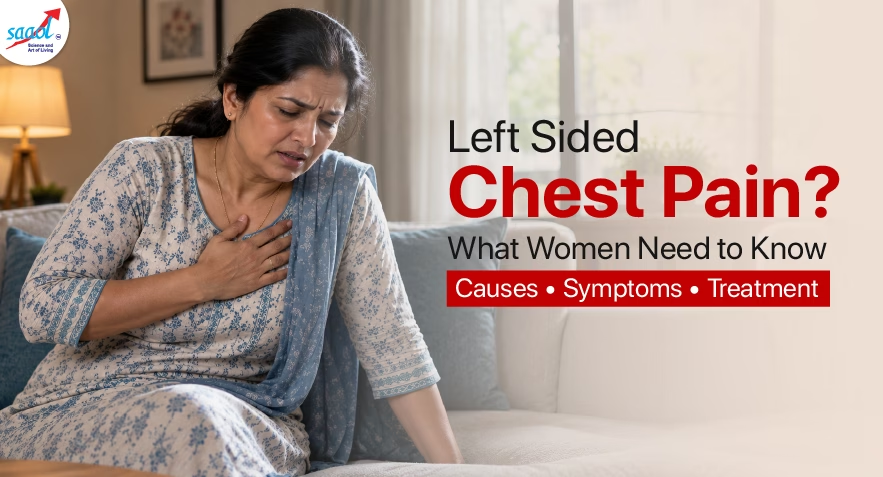
Left-sided chest pain in women can have several causes, each needing different care. Heart conditions, acid reflux, muscle strain or lung problems may cause pressure, burning or sharp pain. Treatment depends on the cause. Sudden or persistent discomfort with breathlessness, sweating or faintness needs emergency medical attention.
You may notice it while climbing stairs, after a meal or when lifting something. Is it acidity, a strained muscle or a heart problem? This blog explains the possible causes, symptoms to watch for and treatment options, so you know when to seek help.
What Is Left-Sided Chest Pain in Women?
Left-sided chest pain in women refers to pain or discomfort anywhere on the left side of the chest. It may feel like pressure, tightness, burning, a dull ache or a sharp, stabbing sensation.
It is a symptom, not a diagnosis. The discomfort may come from the heart, lungs, digestive system, chest muscles, ribs or breast tissue. Its location alone cannot determine the cause.
What Causes Chest Pain in a Woman?
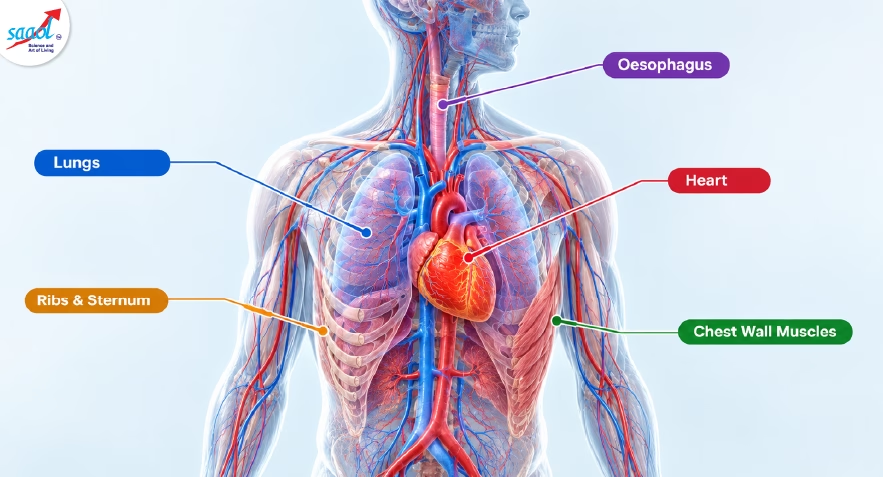
Chest pain can have several causes, and many feel similar. The following patterns may help your doctor assess the problem, but they cannot confirm the cause on their own.
Heart-related causes
Angina occurs when the heart muscle does not get enough oxygen-rich blood. It can cause chest discomfort during activity or emotional stress. A heart attack happens when interrupted blood supply damages the heart muscle and requires emergency treatment.
Pericarditis is inflammation of the sac around the heart. It can cause sharp pain that worsens when you breathe deeply or lie down. The US National Library of Medicine lists these among the heart-related causes of chest pain.
Digestive and chest-wall causes
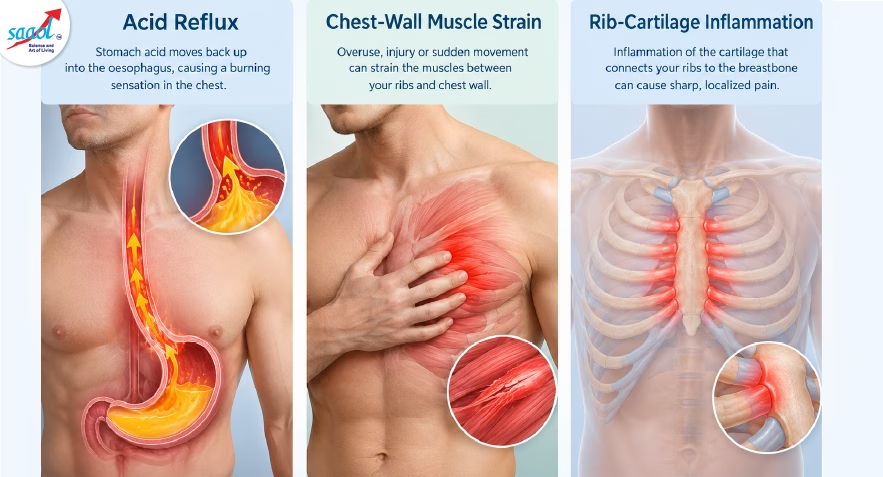
Acid reflux happens when stomach contents flow back into the food pipe, causing burning behind the breastbone. Muscle strain after lifting or unfamiliar exercise can make the chest hurt, especially with movement. Costochondritis, inflammation where the ribs meet the breastbone, can cause soreness or tenderness to touch.
Lung, nerve and anxiety-related causes
Pneumonia or inflammation around the lungs may cause pain when breathing or coughing. A pulmonary embolism, a blood clot blocking a lung blood vessel, or a collapsed lung can cause sudden chest pain and breathing difficulty. Both require urgent medical attention.
Shingles may cause burning pain on one side of the chest, followed by a rash. Panic attacks can also cause chest tightness, but new symptoms should not automatically be dismissed as anxiety. Cleveland Clinic explains why these overlapping symptoms need careful assessment.
How Can Chest Pain in Women Differ?
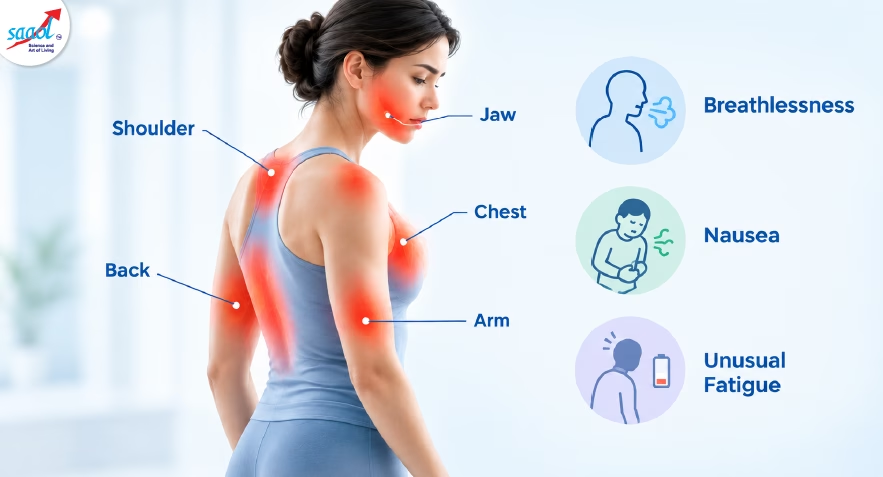
Chest pain or discomfort remains the most common heart-attack symptom in both women and men. Women may also experience nausea, breathlessness, unusual fatigue or discomfort in the back, shoulder or jaw. Having additional symptoms does not make the chest discomfort less important.
The US National Heart, Lung, and Blood Institute highlights coronary microvascular disease: problems affecting the heart’s tiny blood vessels. It is more common in women and may need further assessment even when larger arteries show no major blockage.
Tell your doctor about diabetes, smoking, cholesterol, family history and other cardiovascular risk factors. Previous pregnancy-related high blood pressure, gestational diabetes and early menopause also matter.
Is The Pain Coming from the Breast?
Hormonal breast tenderness usually affects both breasts and changes around periods. A painful, red breast may suggest inflammation or infection. The NHS guidance on breast pain distinguishes these possibilities. Persistent focal pain or a new breast change needs examination, rather than an assumption that hormones explain it.
How Do Doctors Investigate Left-sided Chest Pain?
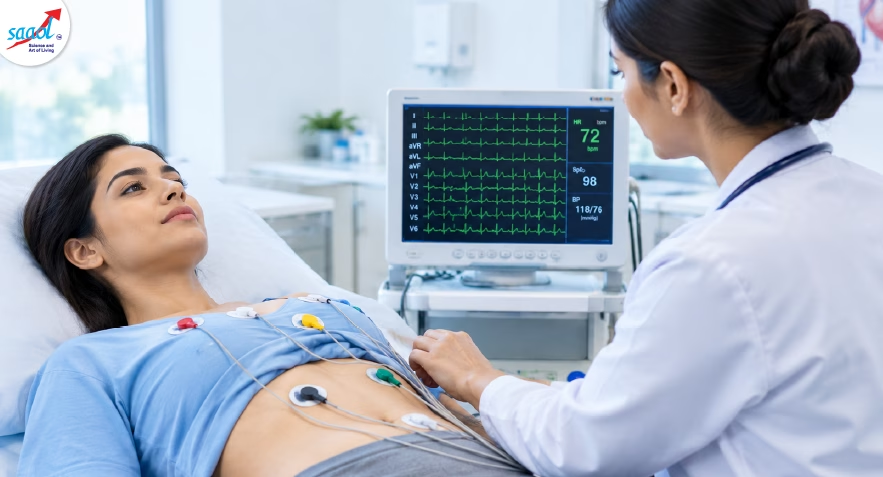
Doctors assess the onset, duration, triggers and associated symptoms, then examine you and select tests according to risk.
The 2021 AHA/ACC chest-pain guideline recommendations support:
- ECG: Records the heart’s electrical activity. A normal initial ECG alone cannot exclude a heart attack. Knowing what an ECG can and cannot detect helps explain why further tests may follow.
- High-sensitivity troponin: A blood test for heart-muscle injury, sometimes repeated to assess changes.
- Targeted imaging: An echocardiogram uses ultrasound to examine heart structure and pumping. Selected patients may need stress imaging or CT coronary angiography to assess coronary arteries.
Not everyone needs every test. Lung or breast symptoms may require a different investigation pathway.
What Treatment Options Can Help?
The right treatment depends on what is causing the chest pain. Treating acid reflux, for example, is very different from treating a heart condition.
For acid reflux, doctors may suggest changes to meal timing, portion sizes and foods that trigger symptoms, along with acid-reducing medicines. Muscle or chest-wall pain may improve with temporary changes to activities, suitable pain relief and physiotherapy when needed. Infections and anxiety-related chest pain need treatment tailored to the condition after medical assessment.
For coronary artery disease, treatment may include prescribed medicines, managing cholesterol and blood pressure, quitting tobacco and following a suitable diet and activity plan. Some patients may need angioplasty with a stent or bypass surgery, depending on their condition. A suspected heart attack needs immediate hospital care.
For selected patients whose angina continues despite medicines and who have no other treatment options, EECP may help relieve symptoms. EECP uses inflatable cuffs around the legs to help blood flow towards the heart. A specialist must assess whether it is suitable. It does not treat a heart attack or replace an evaluation of unexplained chest pain.
Conclusion: Get Clarity Before Choosing Treatment
Left-sided chest pain deserves attention, but it does not automatically mean heart disease. The safest next step depends on your symptoms and clinical assessment.
For recurring, non-emergency discomfort, book a consultation with SAAOL Heartcare Delhi to discuss your symptoms and appropriate evaluation. For emergency warning signs, seek hospital care immediately.
FAQs
Q1. Can a woman have a heart attack without severe chest pain?
Yes. A heart attack can cause mild discomfort, pressure, heaviness or burning rather than severe pain. Women may also experience breathlessness, nausea, sweating or unusual weakness. Do not wait for intense pain before seeking emergency help if symptoms are concerning.
Q2. Can pain in the middle of the chest be related to the heart?
Yes. Heart-related pain can occur in the middle of the chest, not just on the left. Reflux and chest-wall conditions can cause discomfort there too. The location alone cannot identify the cause, so unexplained or concerning symptoms need medical assessment.
Q3. Does a normal ECG mean my chest pain is harmless?
No. A normal initial ECG does not rule out a heart attack or every heart condition. Doctors consider your symptoms, medical history and examination alongside test results. Depending on the situation, you may need repeat ECGs, troponin tests or imaging.
Q4. Can pressing on a painful area confirm that the pain is muscular?
No. Pain that worsens when you press the chest may suggest a muscle or rib-cartilage problem, but it does not confirm the diagnosis. Seek assessment for unexplained pain, particularly if it occurs with breathlessness, sweating, nausea or discomfort spreading elsewhere.
Q5. Should chest pain that disappears still be checked?
Yes. Chest discomfort that goes away can still need assessment, especially if it returns or occurs during activity. Heart-related symptoms can come and go. Seek emergency help if episodes involve pressure, breathlessness, sweating, faintness or pain spreading beyond the chest.
Q6. Can women under 40 develop heart-related chest pain?
Yes. Heart problems can affect younger women, although age influences overall cardiovascular risk. Diabetes, smoking, family history and certain pregnancy complications can also matter. New or concerning chest symptoms deserve assessment rather than reassurance based only on being under forty.
Q7. Does pain in the left breast mean breast cancer?
No. Breast pain alone is unlikely to indicate cancer, according to the NHS. However, persistent pain or a new breast change needs examination. A clinician can assess whether discomfort comes from breast tissue, the chest wall or another underlying cause.
Disclaimer: This article provides general health information and cannot diagnose chest pain or replace individual medical advice. Seek emergency care for concerning symptoms.
Book Appointment


In This Article
- What Is Left-Sided Chest Pain in Women?
- What Causes Chest Pain in a Woman?
- Heart-related causes
- Digestive and chest-wall causes
- Lung, nerve and anxiety-related causes
- How Can Chest Pain in Women Differ?
- Is The Pain Coming from the Breast?
- How Do Doctors Investigate Left-sided Chest Pain?
- What Treatment Options Can Help?
- Conclusion: Get Clarity Before Choosing Treatment
- FAQs
- Q1. Can a woman have a heart attack without severe chest pain?
- Q2. Can pain in the middle of the chest be related to the heart?
- Q3. Does a normal ECG mean my chest pain is harmless?
- Q4. Can pressing on a painful area confirm that the pain is muscular?
- Q5. Should chest pain that disappears still be checked?
- Q6. Can women under 40 develop heart-related chest pain?
- Q7. Does pain in the left breast mean breast cancer?
×
Request for a Call Back
Thank You! We'll get back to you shortly.