

All
Can Heart Attack Symptoms Appear Days Before? Early Warning Signs to Know
Can a heart attack give warning signs days before it happens?
Sometimes, but there is no reliable countdown. Some people experience symptoms such as chest discomfort, unusual fatigue, shortness of breath, nausea or sweating before a heart attack, while others develop symptoms suddenly or have few noticeable warning signs.
The symptoms did not feel dramatic. They felt like normal everyday problems and that is exactly why early signs can be missed.
Recognising new or unexplained symptoms is important because early medical evaluation can help determine whether the heart is involved.
This blog explains the early warning signs of a heart attack, how symptoms may differ in women and men, when to seek emergency help, and how doctors check whether the heart is involved.
What Are the Early Signs of Heart Attack?
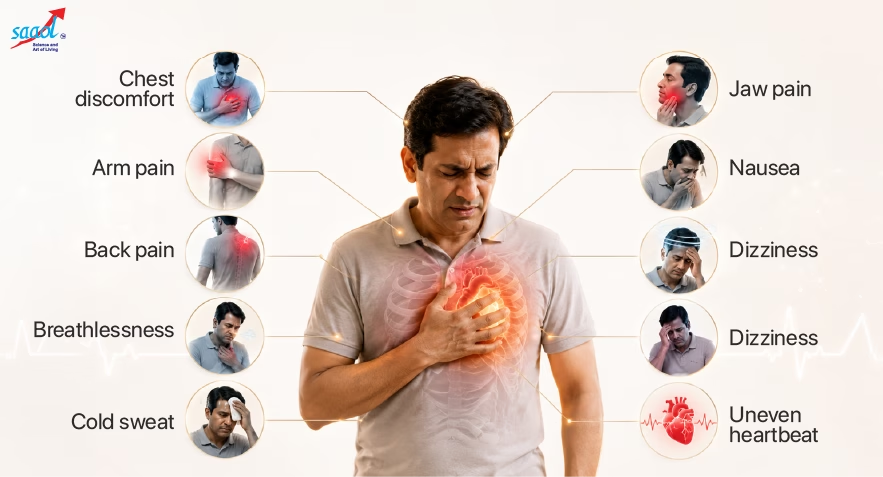
According to the National Heart, Lung, and Blood Institute, heart attack symptoms may start slowly, feel mild, or come and go.
Watch for these possible warning signs:
- Chest pressure or discomfort: Your chest may feel heavy, tight, squeezed, full or burning. The feeling is often in the centre or left side of the chest.
- Pain in other parts of the body: Discomfort may spread to one or both arms, the shoulders, upper back, neck, jaw or upper stomach.
- Shortness of breath: You may struggle to breathe while resting or doing an activity that is normally easy for you.
- Unusual tiredness: You may feel very weak or exhausted even without doing much. Rest may not make you feel better.
- Cold sweats: You may suddenly become sweaty or clammy even when the weather is not hot and you are not exercising.
- Nausea or an upset stomach: You may feel sick, vomit, or mistake the discomfort for gas or indigestion—especially when it occurs with chest pressure, sweating or breathlessness.
- Dizziness: You may suddenly feel light-headed, weak or close to fainting.
- A fast or uneven heartbeat: This becomes more concerning when it occurs with chest discomfort, breathing trouble or dizziness.
One symptom alone does not always mean a heart attack. However, these symptoms are common and can also have many other causes. They cannot confirm that a heart attack is about to happen.
But do not ignore symptoms that are new, unexplained, keep returning or are getting worse, especially if several happen together or begin during physical activity.
Image: All the symptoms with text- Early Signs of Heart Attack
Early Warning Symptoms vs Heart Attack Symptoms vs Silent Heart Attack
| Condition | When it occurs | What it may feel like |
| Early Warning (Prodromal) Symptoms | May appear before a heart attack, but cannot reliably predict if or when one will occur | Unusual fatigue, mild chest discomfort, breathlessness, disturbed sleep or indigestion-like discomfort |
| Heart Attack Symptoms | Occur during an active heart attack | Chest pressure or pain, breathlessness, sweating, nausea or pain spreading to the arm, back, shoulder, neck or jaw |
| Silent Heart Attack | Occurs without clearly recognised symptoms | No obvious symptoms, or mild signs that are overlooked or mistaken for acidity, tiredness or another problem |
Can Heart Attack Warning Signs Really Appear Days Before?
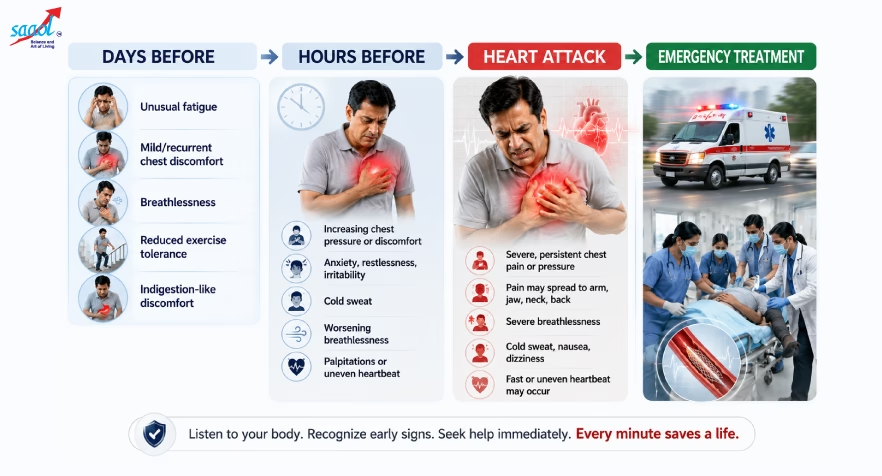
Yes, warning signs can sometimes appear days before a heart attack. However, this does not happen to everyone, and symptoms cannot tell you exactly when a heart attack may occur.
Some heart attacks happen suddenly. Others begin slowly with mild discomfort, according to the American Heart Association.
What Causes Early Heart Attack Warning Signs?
A heart attack occurs when blood flow to part of the heart becomes blocked, depriving the heart muscle of oxygen and causing damage.
Before an acute event, some people may experience symptoms that appear, disappear and return. These symptoms may be related to reduced or unstable blood flow to the heart, but they should not be treated as a reliable countdown to a heart attack.
In a study indexed in PubMed involving 1,145 adults aged 55 or younger who experienced acute coronary syndrome, 85% of women and 72% of men recalled having symptoms beforehand.
The safest rule is simple: do not count the days or wait for severe pain. Repeated chest pressure, unexplained breathlessness or a sudden drop in your ability to perform normal activities should be checked by a doctor.
Are the Signs in Women and Men?
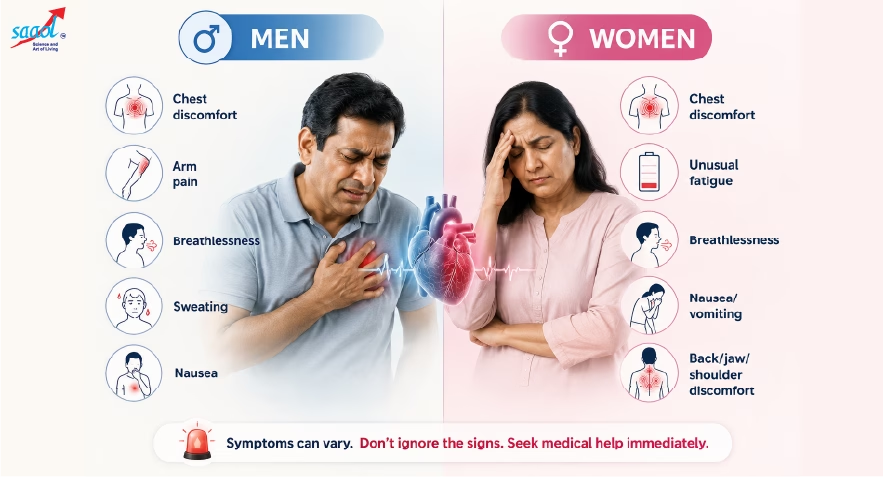
Chest pain or discomfort is the most common heart attack symptom in both women and men.
However, according to the AHA/ACC Chest Pain Guideline, the warning signs of a heart attack in women may also include:
- unusual tiredness;
- shortness of breath;
- nausea or vomiting;
- discomfort in the back, shoulder or jaw; or
- indigestion-like discomfort.
Symptoms can also be easy to miss in older adults and people with diabetes. Some people have a silent heart attack, with very mild signs or no signs they recognise.
Can Young and Healthy-Looking People Have a Heart Attack?
Yes. Being young, active or looking healthy does not completely protect you from a heart attack. Younger adults may mistake early symptoms for stress, acidity or a pulled muscle after exercise.
Understanding the heart attack warning signs in younger adults can help you recognise unusual changes sooner.
Whatever your age or gender, do not ignore symptoms that are new, unexplained or keep returning
When Is It an Emergency?
Treat chest pressure, tightness, heaviness or pain as an emergency when it:
- lasts for more than a few minutes or goes away and comes back;
- happens while resting or doing very little activity;
- is new, severe or getting worse;
- spreads to the arm, jaw, neck, back or upper stomach; or
- comes with shortness of breath, cold sweat, nausea, extreme weakness, dizziness or fainting.
What to Do During an Emergency?
- Stop what you are doing and sit or lie down somewhere safe.
- Keep your phone close and follow the emergency operator’s instructions.
- Do not drive yourself to the hospital. An ambulance team can begin checking and treating you on the way.
- Do not wait to see whether the symptoms become worse.
- Do not take aspirin or someone else’s heart medicine unless a doctor or emergency professional tells you to. Aspirin is not safe for everyone.
Gas, muscle pain and panic attacks can sometimes feel like heart trouble. But knowing about panic attack vs heart attack symptoms may help you understand the differences.
How Do Doctors Check Whether It Is a Heart Attack?
Doctors usually evaluate a suspected heart attack step by step:
- Understand the symptoms: The doctor asks what you felt, when it started, how long it lasted and what you were doing at the time. Your medical history and heart-risk factors are also reviewed.
- Perform an ECG: This quick test records the heart’s electrical activity and may show reduced blood flow or heart-muscle injury. However, it cannot show the location or percentage of an artery blockage.
- Check troponin levels: Heart-muscle damage releases troponin into the blood. This heart enzyme test may be repeated because levels can take time to rise.
- Echocardiogram: Shows how well the heart is pumping and whether any area has been damaged. It may be advised after the initial ECG and blood tests.
- CT Coronary Angiography: Shows narrowing or blockages in the coronary arteries. It may be advised when symptoms continue but the initial tests do not provide a clear answer.
Can You Prevent a Heart Attack?
Not every heart attack can be prevented, but you can lower your risk by:
- Checking your blood pressure, blood sugar and cholesterol.
- Avoiding tobacco in every form.
- Staying physically active.
- Eating heart-healthy foods.
- Maintaining a healthy weight.
- Taking prescribed medicines regularly.
- Getting checked earlier if heart disease runs in your family.
Early signs do not provide an exact timeline, but they can be a chance to recognise possible heart blockage symptoms and act before a crisis.
Final Insights
Don’t Wait for a Warning to Become an Emergency.
Recurring chest discomfort, unexplained breathlessness or a sudden decline in your usual energy deserves attention, even if the symptoms come and go.
If you have repeated or unexplained symptoms but no emergency signs right now, book a consultation at SAAOL Heartcare Delhi for a personalised heart assessment.
If symptoms are happening now or feel severe, call emergency services instead of waiting for a clinic appointment.
FAQs
Q1. Can a “mild” heart attack damage the heart?
Yes. Even a mild heart attack can damage the heart muscle. The amount of damage depends on which artery is blocked, how long blood flow is reduced and how quickly treatment begins. Every suspected heart attack requires immediate medical care.
Q2. Can a smartwatch detect a heart attack?
No. Some smartwatches can record an ECG, but this is not the same as the diagnostic ECG and blood testing performed in a medical setting. A proper medical assessment is necessary when a heart attack is suspected. Never delay emergency care because your smartwatch shows a normal reading.
Q3. Can coughing stop a heart attack?
No. Coughing cannot stop a heart attack or reopen a blocked artery. “Cough CPR” is not a recommended self-treatment. If you suspect a heart attack, call emergency services immediately, stop all activity and follow the emergency operator’s instructions.
Q4. Can a heart attack happen while sleeping?
Yes. A heart attack can happen at any time, including during sleep. Warning signs may include chest pressure, shortness of breath, cold sweats, nausea, dizziness or pain in the arm, jaw, neck or back. If you wake up with these symptoms, call emergency services immediately.
Q5. How does family history affect heart attack risk?
Yes. Your risk may be higher if a parent or sibling developed heart disease at an early age, before 55 in men or before 65 in women. Share your family history with your doctor, as you may need earlier screening and closer monitoring of your heart-health risk factors.
Book Appointment



In This Article
- What Are the Early Signs of Heart Attack?
- Early Warning Symptoms vs Heart Attack Symptoms vs Silent Heart Attack
- Can Heart Attack Warning Signs Really Appear Days Before?
- What Causes Early Heart Attack Warning Signs?
- Are the Signs in Women and Men?
- Can Young and Healthy-Looking People Have a Heart Attack?
- What to Do During an Emergency?
- How Do Doctors Check Whether It Is a Heart Attack?
- Can You Prevent a Heart Attack?
- Final Insights
- FAQs
×
Request for a Call Back
Thank You! We'll get back to you shortly.