

All
Mild Heart Attack Symptoms You Should Not Ignore
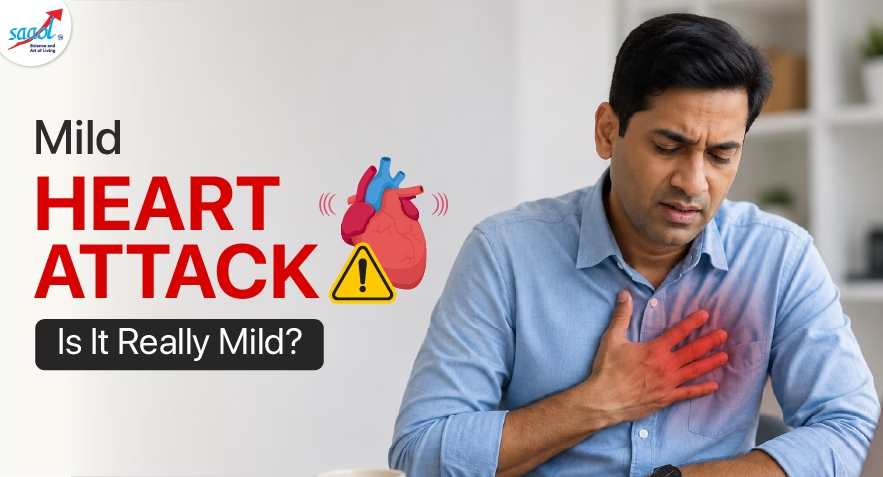
A mild heart attack is a heart attack with less-intense symptoms or comparatively limited heart-muscle damage but it is still a medical emergency. The warning may be as subtle as acidity-like discomfort, unusual fatigue or slight breathlessness. However, mild symptoms can still signal a serious emergency, making early recognition and immediate medical care essential.
It started with a slight heaviness in his chest after lunch.
At 38, he was busy, active and certain it was only gas. He took an antacid and returned to work. By evening, the pressure had reached his jaw, and climbing the stairs left him unusually breathless. Still, he blamed stress and went to sleep.
A few hours later, he woke up drenched in sweat, struggling to breathe. His family rushed him to the hospital, where tests confirmed a heart attack.
The warning signs had been there all day but because they felt mild, he had ignored them. That delay meant more time without adequate blood flow and potentially greater damage to his heart muscle.
This blog explains the mild heart attack symptoms people commonly overlook, how they may differ from acidity or anxiety, who is more likely to experience subtle signs and when you should seek emergency medical help. Let’s begin.
What is a Mild Heart Attack?
A mild heart attack refers to a heart attack that causes less-intense symptoms or comparatively limited damage to the heart muscle. In some cases, it may be an NSTEMI, a type of heart attack in which blood flow to the heart becomes severely reduced.
People sometimes call it a “mini heart attack” because its symptoms may feel less dramatic. However, it is still a serious medical emergency that requires immediate treatment.
What Doctors Mean by a Heart Attack and a Mild Heart Attack
“Mild heart attack” is not a precise medical diagnosis. People commonly use the term when symptoms are less intense or when testing shows comparatively limited heart-muscle damage.
A heart attack, medically called a myocardial infarction, occurs when blood flow to part of the heart muscle becomes severely reduced or blocked. Without enough oxygen, heart-muscle cells begin to suffer damage.
Importantly, how mild or severe the symptoms feel does not always reveal:
- How much of the heart is affected
- Whether an artery is completely or partially blocked
- Whether a dangerous heart rhythm may develop
- How quickly the condition might worsen
The National Heart, Lung, and Blood Institute explains that heart attack symptoms can begin slowly, remain mild or come and go over several hours. Therefore, “I can tolerate the pain” is not a safe way to judge the situation.
Typical Heart Attack Vs Mild Heart Attack
| Typical Heart Attack | Mild heart Attack | |
| Symptoms | Strong chest pressure, spreading pain, sweating, breathlessness | Mild pressure, acidity-like discomfort, fatigue, nausea |
| Diagnosis | ECG, Troponin tests and imaging | Same tests, symptoms can not confirm severity |
| Outcome | Heart damage and serious complications | Heart damage can still occur |
| Treatment | Immediate emergency treatment | Immediate emergency treatment |
What Are the Mild Heart Attack Symptoms You Should Notice?
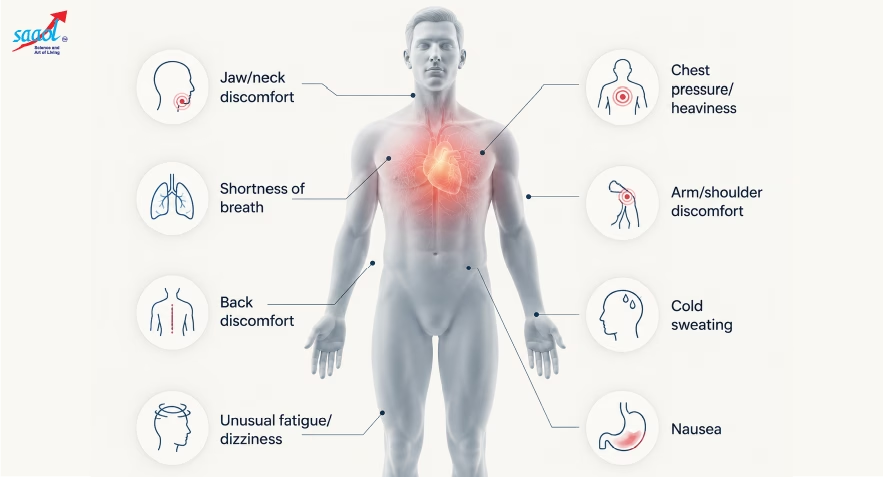
A mild heart attack may not cause the dramatic pain people expect. Symptoms can feel less intense, appear gradually or come and go, making them easy to mistake for acidity, tiredness or stress.
Common signs may include:
Chest pain, pressure or tightness
Chest discomfort may feel like pressure, squeezing, heaviness, fullness or burning rather than sharp pain. It may last for several minutes or disappear and return.
Shortness of breath
Breathlessness may begin during routine activity or while resting. It can occur with chest discomfort or appear on its own.
Pain in the arm, jaw, neck or back
Heart-related discomfort does not always remain in the chest. It may spread to one or both arms, the shoulders, jaw, neck, upper back or upper abdomen.
Sudden or excessive sweating
Breaking into a cold sweat without exercise, heat or another clear reason can be a warning sign, especially when combined with chest discomfort or breathlessness.
Unusual fatigue or weakness
A sudden lack of energy, unexplained weakness or difficulty completing normal activities may occur before or during a heart attack. This symptom can be particularly easy to overlook.
Nausea or vomiting
Some people experience unexplained nausea, vomiting or an unsettled stomach. These symptoms deserve attention when they occur with sweating, chest discomfort, breathlessness or upper-body pain.
Indigestion or heartburn-like discomfort
A heart attack may cause burning, pressure or discomfort that feels like acidity. New, persistent or unexplained indigestion should not automatically be treated as a digestive problem., particularly when other warning signs are present.
Light-headedness, dizziness or fainting
Feeling suddenly unsteady, faint or light-headed may occur when the heart is unable to maintain adequate blood circulation. Fainting or near-fainting with chest discomfort or breathlessness requires immediate emergency care.
These symptoms do not confirm a heart attack on their own. However, if they are new, unexplained, persistent or occur together, seek emergency medical help, even when they feel mild.
The American Heart Association’s guidance for women notes that chest discomfort remains common, but women may also experience shortness of breath, an upset stomach, back or arm pain, and unusual tiredness.
For a closer look at these patterns, see the warning signs of a heart attack in women.
Can Mild Heart Attack Symptoms Feel Like Gas or Anxiety?

Yes, but symptoms alone cannot safely confirm the cause.
| Possible clue | Indigestion or muscle pain | Possible heart-related symptom |
| Sensation | Local burning, tenderness or pain linked to movement | Pressure, squeezing, heaviness or burning |
| Trigger | Particular food, posture or muscle movement | May begin during activity, stress or at rest |
| Spread | Usually remains localised | May spread to the arm, jaw, neck or back |
| Other signs | Bloating, sour taste or tender muscle | Breathlessness, cold sweat, nausea or dizziness |
| Response | May improve with antacid or position change | May persist, return or worsen |
These are clues, not diagnostic rules. Heart attacks can resemble indigestion, while panic attacks can also cause chest pain, sweating and breathlessness. The differences between a panic attack and heart attack cannot always be recognised without medical testing.
If the discomfort is new, unexplained, persistent or accompanied by other warning signs, treat it as an emergency.
Who Is More Likely to Overlook Subtle Symptoms?
Anyone can experience mild symptoms, but they may be especially difficult to recognise in:
- People with diabetes, particularly those with nerve damage
- Older adults
- Women
- People who frequently experience acidity or anxiety
- People with high blood pressure or high cholesterol
- Smokers
- Those with a family history of early heart disease
Diabetic nerve damage can reduce the ability to feel pain normally. This may contribute to an unrecognised or silent heart attack. A silent heart attack does not always mean there were no symptoms; the signs may simply have been mild, unusual or misunderstood.
People in their 20s, 30s and 40s should not dismiss concerns purely because of age. The risk factors behind heart attacks at a young age include smoking, diabetes, high cholesterol, high blood pressure and inherited risk.
How Do Doctors Detect a Heart Attack When Symptoms Are Mild?
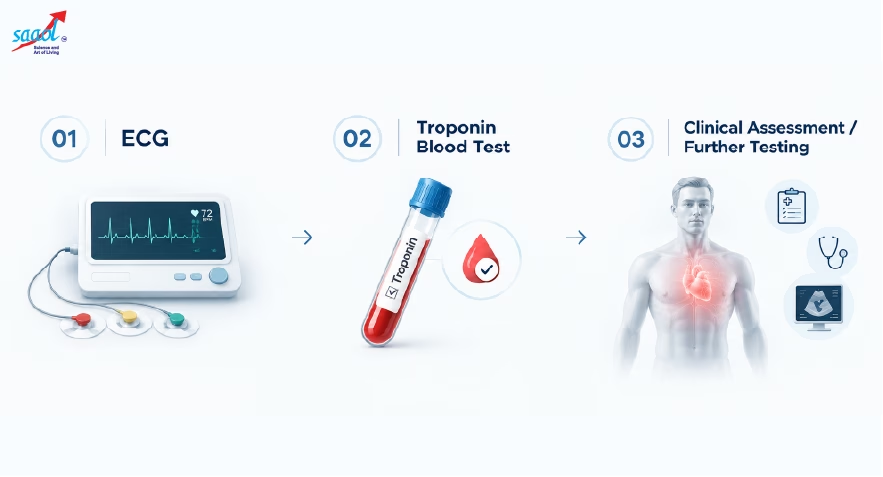
Doctors cannot tell how serious a heart attack is from the pain alone. In the emergency room, they may begin necessary care while performing tests to understand what is happening.
These tests may include:
- ECG: Checks the heart’s electrical activity and looks for signs of a STEMI.
- Troponin test: Checks the blood for proteins released when the heart muscle is damaged.
- Clinical assessment: Reviews the symptoms, their timing, medical history and heart risk factors.
- Heart imaging: An echocardiogram or CT coronary angiography may be advised when needed.
The ECG and troponin test may need to be repeated because a heart attack may not always appear clearly in the first results. According to the NHLBI’s diagnostic guidance, doctors assess the findings step by step before confirming the type of heart attack.
Treatment and recovery depend on the type of heart attack, location of the blockage, extent of heart-muscle damage and the patient’s overall health. The available heart blockage treatment options are considered only after a detailed medical evaluation.
The tests may take time, but do not let that stop you from going to the hospital.
Even a mild heart attack is an emergency, and early treatment can help limit further heart damage.
What Should You Do If You Notice Symptoms?
Call India’s emergency or arrange an ambulance immediately if you develop new chest pressure, heaviness or burning, especially when it:
- Lasts more than a few minutes or repeatedly returns
- Spreads to the arm, jaw, neck, shoulder or back
- Occurs with breathlessness, cold sweating, nausea or dizziness
- Begins during minimal activity or while resting
- Feels different from your usual acidity, anxiety or angina
Do not drive yourself if an ambulance is available.
Do not wait for the discomfort to become severe, attempt to “walk it off” or rely on an antacid.
Take nitroglycerin only if it has already been prescribed and follow your doctor’s directions.
Do not delay emergency care to take aspirin; take it only when an emergency professional or doctor advises that it is safe for you.
The Final Insights
A heart attack does not have to feel dramatic to be dangerous. Even mild chest pressure, unexplained breathlessness, nausea or unusual fatigue may signal that part of the heart is not receiving enough blood.
If symptoms are present or repeatedly returning, seek emergency hospital care immediately. If the episode has passed but chest discomfort, breathlessness, unusual fatigue or reduced stamina continues, do not ignore it or try to identify the cause at home.
Book your heart consultation with SAAOL Delhi for a detailed medical assessment and clear guidance on the next steps for your heart health.
FAQs
Q1. Can an ECG be normal during a heart attack?
Yes. A heart attack may not always cause clear changes on the first ECG, especially in some cases of NSTEMI. Doctors may therefore repeat the ECG and perform troponin blood tests over time before ruling out a heart attack.
Q2. What is the difference between a mild and silent heart attack?
A mild heart attack may cause noticeable but less-intense symptoms, such as slight chest pressure, breathlessness or nausea. A silent heart attack causes no obvious warning signs, or symptoms so subtle that they are overlooked or mistaken for acidity, fatigue or muscle pain. Both can damage the heart and require medical evaluation.
Q3. Can a mild heart attack go away on its own?
No. The symptoms may ease or come and go, but a heart attack does not resolve safely without medical care. Reduced blood flow may continue to damage the heart muscle, so seek emergency evaluation even if you start feeling better.
Q4. Can blood pressure remain normal during a heart attack?
Yes. Blood pressure can be normal, high or low during a heart attack. Therefore, a normal blood pressure reading cannot rule out a heart attack when warning symptoms are present.
Q5. Can coughing stop a heart attack?
No. Coughing cannot open a blocked heart artery or stop a heart attack. Instead of trying “cough CPR,” call emergency medical services immediately, as delaying treatment can increase heart-muscle damage.
Book Appointment



In This Article
- What is a Mild Heart Attack?
- What Doctors Mean by a Heart Attack and a Mild Heart Attack
- Typical Heart Attack Vs Mild Heart Attack
- What Are the Mild Heart Attack Symptoms You Should Notice?
- Chest pain, pressure or tightness
- Shortness of breath
- Pain in the arm, jaw, neck or back
- Sudden or excessive sweating
- Unusual fatigue or weakness
- Nausea or vomiting
- Indigestion or heartburn-like discomfort
- Light-headedness, dizziness or fainting
- Can Mild Heart Attack Symptoms Feel Like Gas or Anxiety?
- Who Is More Likely to Overlook Subtle Symptoms?
- How Do Doctors Detect a Heart Attack When Symptoms Are Mild?
- The Final Insights
- FAQs
×
Request for a Call Back
Thank You! We'll get back to you shortly.