

Health Tips
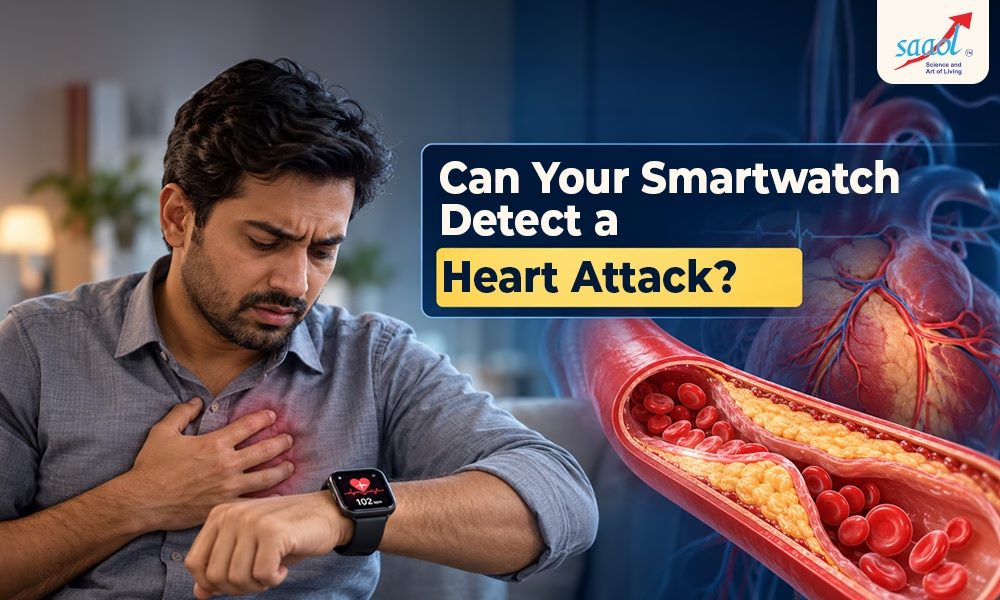
Can a Smartwatch Detect a Heart Attack? What Your Watch Can Really Tell You
No smartwatch can reliably detect or rule out a heart attack. Some smartwatches can measure heart rate, record a single-lead ECG or alert you to certain irregular rhythms, but these features are not designed to determine whether a coronary artery is blocked or whether heart muscle is being damaged. Apple and Samsung both say their watch ECG apps cannot look for signs of a heart attack.
Imagine feeling pressure in your chest while travelling to work. You check your watch: your heart rate looks normal, and the ECG app says your rhythm is regular. It is natural to wonder, “Does that mean my heart is fine?”
It doesn’t. A regular heartbeat cannot tell you what is causing chest pressure. So, can a smartwatch detect a heart attack? This article explains what your watch readings mean, what they cannot tell you, and when to seek medical help.
What Does a Smartwatch Actually Measure?
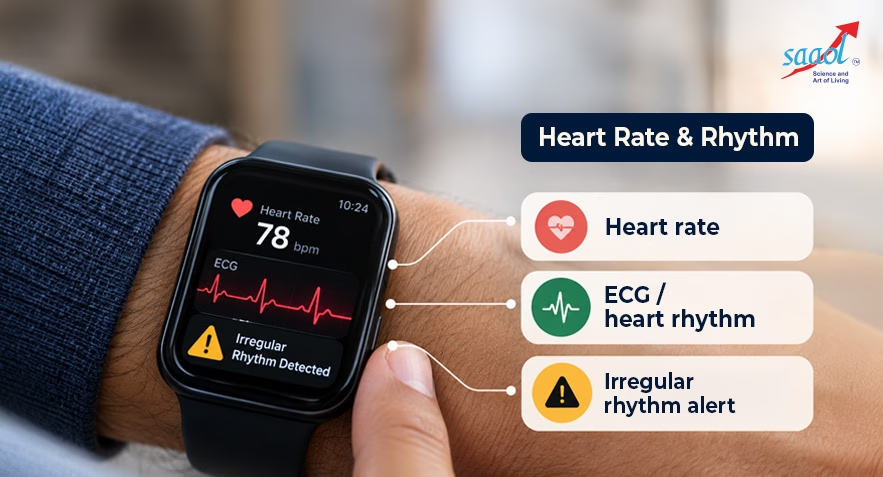
Different watches have different features. Many measure your heart rate, how many times your heart beats in a minute. Some can also alert you when your pulse seems irregular. Watches with an ECG app can make a short recording of the electrical signals that control your heartbeat.
For example, the ECG apps on compatible Apple Watches, Samsung Galaxy Watches and Google Pixel Watches or Fitbit devices focus largely on heart rhythm. They may find signs of atrial fibrillation, often called AFib. AFib means the heart is beating in an irregular pattern. It is not the same thing as a heart attack.
Google explains that its ECG app looks for signs of AFib and cannot detect every heart condition.
The features available depend on the watch model, app and country. Some smartwatches do not have an ECG app at all.
Having more heart features does not turn a watch into a heart attack test.
How Do Smartwatches Send Heart Alerts?
Smartwatches do not all check your heart in the same way. Depending on the device and its settings, you may see:
- A high or low heart-rate alert: The watch has noticed that your pulse is outside the range set for that feature. It cannot tell you why.
- An irregular-rhythm notification: Some watches check pulse patterns in the background and may alert you to a pattern that could suggest atrial fibrillation (AFib). They do not watch for every heart problem every second.
- An ECG result: On watches with an ECG app, you usually start a short recording yourself. The app may classify the rhythm as regular, possibly AFib or inconclusive.
An alert is a reason to look more closely at how you feel, and sometimes to speak with a doctor. No alert is not an all-clear.
For example, Google says its irregular-rhythm notifications analyse pulse data collected when a person is still or sleeping, while its ECG app records a separate, user-started reading. Apple likewise notes that its ECG app cannot detect a heart attack.
Image: Heart alert features on a smartphone
Why Can’t a Smartwatch Detect a Heart Attack?
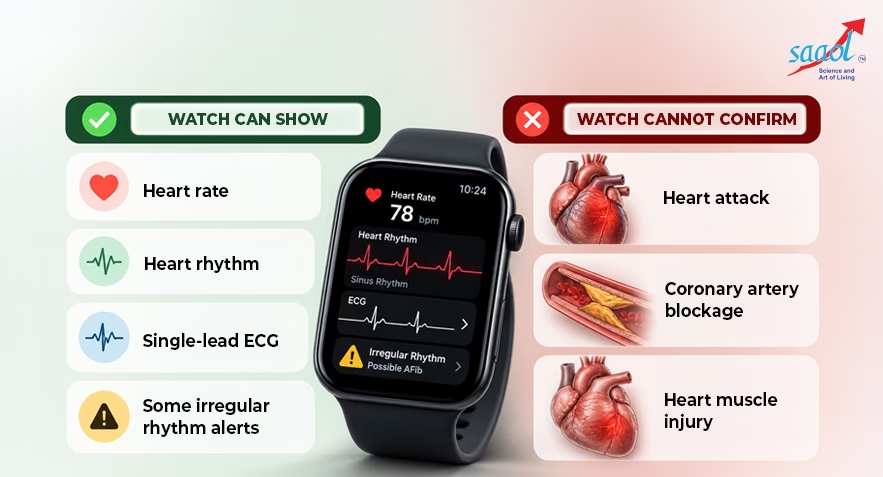
A heart attack happens when blood flow to part of the heart muscle is reduced or blocked. A smartwatch does not look inside your heart’s arteries or test your blood for heart muscle injury. It mainly measures how your heart is beating, which is different from measuring whether enough blood is reaching it.
That difference explains why a watch can seem reassuring at the wrong time:
| What your watch says | What it means | What it does not mean |
| Normal heart rate | Your heart is beating at that speed right now | Your heart arteries are clear |
| Regular rhythm | Your heartbeat looked regular during the recording | You cannot be having a heart attack |
| Possible irregular rhythm | Your heartbeat may have been irregular | You are definitely having a heart attack |
A normal reading cannot explain chest pain. An unusual reading cannot diagnose its cause. If you feel unwell, pay attention to your symptoms, not just the screen.
Can a Clinical ECG Help Detect a Heart Attack?
Yes. A clinical ECG is an important part of evaluating suspected acute coronary syndrome and can show electrical changes associated with a heart attack.
Many watch ECG apps record your heart’s electrical activity from one viewpoint, called a single-lead ECG. A standard hospital ECG uses 12 leads, giving doctors several viewpoints. Google and Apple describe this difference in their ECG app guidance and Apple Watch ECG guidance.
Here is a simple comparison: one photo of a room may show you who is standing by the door. Photos from several angles show much more of the room. In the same way, a hospital ECG gives doctors more views of the heart’s electrical activity than a usual watch ECG.
Even a hospital ECG is not the only attack evaluation.
Doctors also ask about your symptoms and may do a troponin blood test. Troponin is a protein that can enter the blood when heart muscle is injured. The American Heart Association and American College of Cardiology’s chest pain guideline recommends high-sensitivity troponin testing to help assess possible heart muscle injury. Doctors may repeat tests when they need to see whether the results change.
Which Symptoms Matter More Than a Watch Reading?
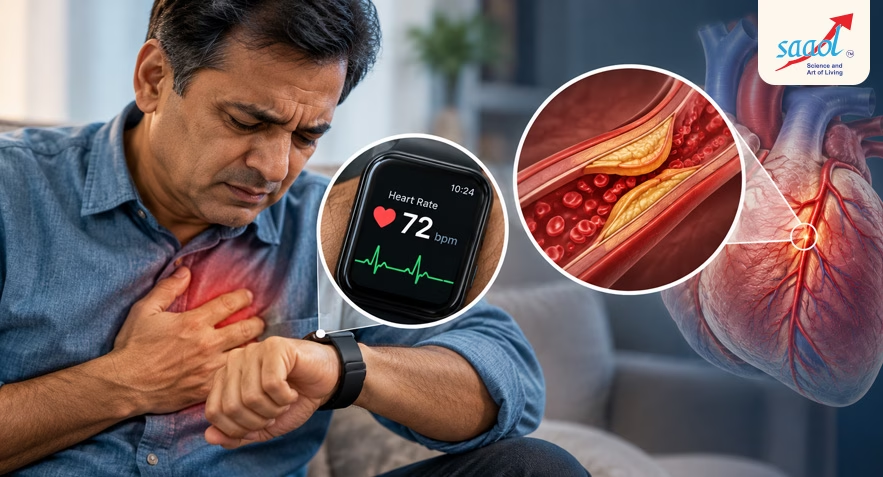
A heart attack does not always feel like the dramatic chest pain shown in films. According to the American Heart Association, symptoms may include:
- Pressure, tightness or discomfort in the chest that lasts or comes back.
- Pain or discomfort in an arm, the back, neck, jaw or stomach.
- Shortness of breath, with or without chest discomfort.
- A cold sweat, nausea, unusual tiredness or feeling light-headed.
Symptoms vary from person to person. Both men and women commonly have chest discomfort during a heart attack; women may also be more likely to have accompanying symptoms such as nausea or shortness of breath. A normal heart-rate reading cannot tell you why these symptoms are happening.
A heart attack does not always feel like the dramatic chest pain shown in films; its early warning signs can be easy to miss.
If symptoms are happening now, seek urgent help before reading further.
What Should You Do if You Think You May be Having a Heart Attack?
Call emergency services immediately.
If symptoms are happening now, do not wait for a smartwatch reading or a routine appointment. Seek emergency medical care.
If your symptoms are new, unexplained or keep returning, arrange a prompt medical assessment. Tell the doctor what happened and show them any watch recordings you have.
The recording may provide useful background, especially if you felt your heart racing or skipping beats, but your description of the symptoms matters too.
How Can You Use a Smartwatch Wisely for Heart Health?
A smartwatch can be a helpful record-keeper.
If you notice an irregular heartbeat, a compatible ECG app may capture a recording to show your doctor. A heart-rate trend may also help you describe when a change happened. These are useful starting points for a conversation, not final answers.
Use this simple rule:
- A watch alert, but you feel well: Save the reading and discuss repeated or concerning alerts with a healthcare professional.
- Symptoms, but no watch alert: Take the symptoms seriously and get the appropriate medical help.
- Possible heart attack symptoms: Call emergency services. Your watch result does not change that step.
The takeaway
A smartwatch may tell you how fast or regularly your heart is beating. It cannot tell you whether you are having a heart attack. If you have possible heart attack symptoms, seek emergency care even when the watch looks normal.
For recurring concerns or questions about your heart health, you can book a consultation with SAAOL Heartcare Delhi and discuss which checks are right for you.
FAQs
Q1. Can a smartwatch detect a heart attack while I’m asleep?
No. A smartwatch may track your heart rate during sleep, but it cannot detect or rule out a heart attack. If you wake with chest pressure, unusual breathlessness or other concerning symptoms, seek emergency help even if the watch shows no alert.
Q2. Can a smartwatch tell if I had a heart attack in the past?
No. A watch ECG cannot confirm an earlier heart attack. If you are concerned about symptoms you had in the past, tell a doctor what happened and when. They can decide whether any tests are needed.
Q3. What does an “inconclusive” smartwatch ECG result mean?
It means the app could not clearly classify the recording. This can happen because the watch moved, did not have good contact with your skin, or recorded a rhythm the app cannot identify. Try following the device’s instructions for a clear recording. If the result keeps appearing, discuss it with a doctor; if you have concerning symptoms, seek care regardless of the result.
Q4. Can stress cause a smartwatch heart-rate alert?
Yes. Stress can raise your heart rate. Exercise, dehydration, illness and some heart rhythm problems can do so too. A watch alert cannot tell you which of these caused the change. If alerts keep happening, particularly when you are resting, speak with a doctor.
Q5. If my watch alerts me to an irregular heartbeat, should I go to the emergency room?
An irregular-rhythm alert does not by itself mean you are having a heart attack. If you feel well, save the recording and arrange medical evaluation, particularly if the alert is new or keeps recurring. If you have chest pressure, severe breathlessness, fainting or other concerning symptoms, seek emergency care immediately.
Q6. Can I share a smartwatch ECG with my doctor after the symptoms have passed?
Yes. Save the recording and note what you felt, when it started and how long it lasted. It may help your doctor assess a possible rhythm problem, even if you feel well by the time of your appointment. A watch ECG cannot rule out a heart attack, so seek prompt medical advice for new or unexplained symptoms rather than relying on the saved reading.
Disclaimer: This article provides general information and cannot diagnose a condition or replace medical advice. If you think you may be having a heart attack, call emergency services immediately.
Book Appointment





In This Article
- What Does a Smartwatch Actually Measure?
- How Do Smartwatches Send Heart Alerts?
- Why Can’t a Smartwatch Detect a Heart Attack?
- Can a Clinical ECG Help Detect a Heart Attack?
- Which Symptoms Matter More Than a Watch Reading?
- What Should You Do if You Think You May be Having a Heart Attack?
- How Can You Use a Smartwatch Wisely for Heart Health?
- The takeaway
- FAQs
×
Request for a Call Back
Thank You! We'll get back to you shortly.