


All
What Are Cardiac Enzymes (Heart Enzymes) and How Do They Help in the Early Detection of Heart Disease?
Your heart doesn’t always announce damage with pain. Often, the first clue shows up quietly in your bloodstream – long before an ECG changes or a symptom appears. That clue comes from a group of proteins known as cardiac enzymes, or heart enzymes.
What Are Cardiac Enzymes?
Cardiac enzymes (heart enzymes) are proteins released into the bloodstream when heart muscle cells are damaged or under stress. In a healthy heart, these enzymes stay inside heart cells and are barely detectable in blood. When heart tissue is injured – from a heart attack, severe angina, heart failure, or chronic strain – the cell walls break down and release these proteins into circulation, where a blood test can detect them, often within hours.
This is why a cardiac enzyme test is one of the fastest, most reliable ways to catch heart damage early, sometimes before a person feels anything unusual.
Are Cardiac Enzymes and Heart Enzymes the Same Thing?
Yes. “Cardiac enzymes” and “heart enzymes” refer to the same group of biomarkers – the terms are used interchangeably in medical literature and by patients. Doctors and lab reports may use either phrase, along with the broader term “cardiac biomarkers,” which technically includes both true enzymes (like CK-MB and LDH) and non-enzyme proteins (like Troponin). In everyday use, all of these fall under the same umbrella: substances that leak from the heart when it’s injured.
What Are the Three Major Cardiac Enzymes?
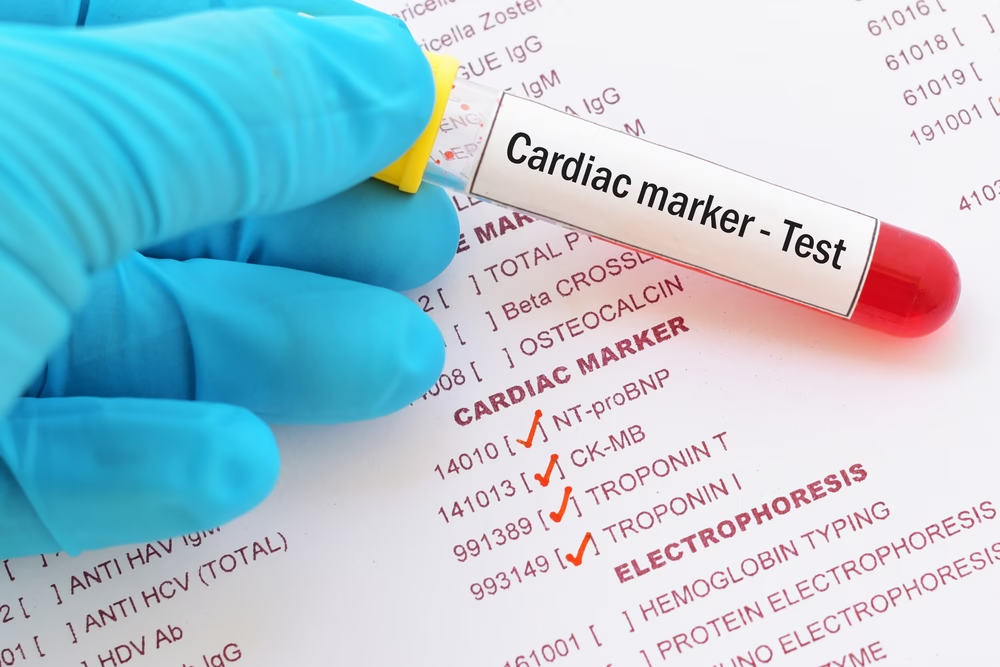
When people ask “what are the 3 cardiac enzymes,” they’re usually referring to the core panel used in emergency and cardiac diagnosis:
- Troponin (I and T) – the most heart-specific and most widely used marker today
- CK-MB (Creatine Kinase-MB) – useful for detecting recent or repeat injury
- Myoglobin – the fastest-rising marker, useful for early triage
Two additional markers, LDH (Lactate Dehydrogenase) and AST (Aspartate Transaminase), are less specific to the heart but still used to support diagnosis, especially for injuries that happened days earlier.
Why Do Doctors Check Heart Enzymes?
Doctors order a cardiac enzyme test because enzyme levels rise before ECG changes and before most symptoms become obvious. This makes the test valuable for:
- Confirming or ruling out a heart attack (Acute Myocardial Infarction) in the emergency room
- Detecting silent heart attacks, which are more common in diabetics who may not feel classic chest pain
- Investigating unexplained fatigue or breathlessness
- Monitoring ongoing heart muscle stress from high blood pressure, Coronary Artery Disease, or repeated cardiac strain
- Tracking how well a patient is responding to treatment, including non-invasive therapies like EECP
An ECG shows electrical activity; a cardiac enzyme test shows actual cellular damage. Used together, they give a far more complete diagnostic picture than either alone. If you want to see how enzyme testing fits alongside other diagnostics, our guide to the top blood tests for heart patients walks through the full non-invasive testing panel used at SAAOL.
The 5 Key Cardiac Enzymes and Biomarkers Explained
Troponin I and T – The Gold Standard
Troponin is a protein specific to heart muscle. It’s considered the most sensitive and specific marker available.
- Rises: 2–4 hours after heart injury
- Stays elevated: Up to 10–14 days
- Why it matters: Picks up even minor, silent heart attacks that an ECG can miss; useful for tracking stress in diabetics and hypertensive patients; helps monitor response to lifestyle changes or EECP therapy
Even a mild troponin rise should not be dismissed – it signals that heart tissue is under strain, even if the person feels fine.
CK-MB (Creatine Kinase-MB) – The Timeline Tracker
CK-MB is most concentrated in heart muscle, with smaller amounts elsewhere in the body.
- Rises: 3–6 hours after damage
- Why it matters: Useful when troponin is still normal but damage is suspected; helps detect repeat injury within days since it clears faster than troponin, making it good for real-time tracking
Myoglobin – The Fastest Responder
Myoglobin is a small oxygen-binding protein found in both heart and skeletal muscle.
- Rises: Within 1–2 hours – faster than any other cardiac marker
- Why it matters: Excellent for early emergency-room triage; a normal myoglobin level can help rule out very recent heart damage. It isn’t heart-specific, so it’s always interpreted alongside troponin or CK-MB.
LDH (Lactate Dehydrogenase) – The Delayed Marker
LDH is present in many tissues, including the heart.
- Rises: 24–72 hours after injury
- Stays elevated: 5–7 days
- Why it matters: Useful for identifying older or missed heart injuries when a patient presents late
AST (Aspartate Transaminase) – The Supporting Marker
AST is found in both heart and liver tissue.
- Why it matters: Not heart-specific on its own, but strengthens a diagnosis when elevated alongside troponin or CK-MB
Cardiac Enzymes Timeline After Heart Damage
| Enzyme | Starts Rising | Peaks | Returns to Normal |
|---|---|---|---|
| Myoglobin | 1–2 hours | 6–9 hours | 24 hours |
| CK-MB | 3–6 hours | 12–24 hours | 2–3 days |
| Troponin I / T | 2–4 hours | 12–24 hours | 7–14 days |
| LDH | 24–72 hours | 3–4 days | 5–7 days |
This staggered timeline is exactly why doctors often order more than one marker – each one covers a different window after the injury.
What Is a Cardiac Enzyme Test? (Procedure)
A cardiac enzyme test, sometimes called a heart enzyme test or cardiac biomarker panel, is a simple blood test:
- A blood sample is drawn from a vein, usually in the arm
- No special fasting is typically required
- In suspected heart attacks, the test is repeated every few hours to track rising or falling trends
- Results are compared against your hospital or lab’s reference range, since values can vary slightly between labs and testing methods
The test is quick, minimally invasive, and often the deciding factor in whether a patient needs emergency treatment, further monitoring, or can be safely discharged.
Normal vs Abnormal Cardiac Enzyme Levels
Cardiac enzyme reference ranges vary by lab, assay type, and equipment, so results should always be interpreted by your doctor rather than compared against a generic chart. As a general framework:
- Normal: Enzyme levels fall within (or below) the lab’s reference range, with no significant rise on repeat testing
- Borderline/mildly elevated: May indicate chronic low-grade heart strain rather than an acute event – this needs clinical context, not panic
- Significantly elevated, especially with a rising trend: Strongly suggestive of active heart muscle damage and requires urgent evaluation
A single number rarely tells the whole story – doctors look at the trend across repeat tests, alongside symptoms and ECG findings.
What Does a Positive Cardiac Enzyme Test Mean?
A “positive” result means enzyme levels are above the normal reference range, indicating heart muscle cells have been damaged. It doesn’t automatically mean a major heart attack – the degree of elevation, the specific enzyme involved, and how it changes over repeat testing all shape the diagnosis. Your doctor will combine this with your ECG, symptoms, and risk factors before deciding on treatment. For a fuller picture of what a heart attack looks like clinically, see our guide to heart attack symptoms and early warning signs.
Can Cardiac Enzymes Be High Without a Heart attack?
Yes. Elevated cardiac enzymes, particularly troponin, don’t always mean a heart attack. Other causes include:
- Heart failure or severe hypertension
- Myocarditis (heart muscle inflammation)
- Kidney disease, which slows how enzymes are cleared from the blood
- Intense physical exertion
- Sepsis or critical illness
- Pulmonary embolism
- Chronic conditions like sleep apnea or long-standing diabetes that place repeated low-level stress on the heart
This is why interpretation always needs clinical context – the same elevated number can mean different things depending on the patient’s history and symptoms.
Low Heart Enzymes – What Does That Mean?
For most people, “low” cardiac enzymes simply means levels are within or below the normal range – not a cause for concern by itself, and often the expected, healthy result. There’s no clinically significant condition defined by enzymes being “too low”; the test is designed to flag elevation, not deficiency. If you’ve been tested because of symptoms and your enzymes come back low, your doctor may look at other explanations for what you’re experiencing, rather than the heart.
Troponin vs CK-MB: What’s the Difference?
| Factor | Troponin | CK-MB |
|---|---|---|
| Heart specificity | Very high | Moderate (also found in skeletal muscle) |
| Time to rise | 2–4 hours | 3–6 hours |
| Stays elevated | 7–14 days | 2–3 days |
| Best used for | Detecting even minor damage, including silent events | Tracking recent or repeat injury, since it clears faster |
| Limitation | Can stay elevated from an older event, making a brand-new injury harder to isolate | Less sensitive for very small or silent injuries |
In practice, both are often ordered together – troponin for sensitivity, CK-MB for tracking how recent the damage is.
The Concept of “Troponin Leak”
Emerging research points to a phenomenon called troponin leak – a chronic, low-level elevation of troponin that isn’t tied to a single dramatic event but reflects ongoing, small-scale heart muscle injury. This pattern has been linked to a higher future risk of heart failure, progressive Coronary Artery Disease, and sudden cardiac events. These micro-injuries often go unnoticed without regular testing, which is exactly why enzyme monitoring matters even in people who feel well.
Limitations of Cardiac Enzyme Testing
No test is perfect on its own. It’s worth understanding where enzyme testing falls short:
- Levels can be elevated by non-cardiac conditions (kidney disease, sepsis, extreme exertion), so results need clinical correlation
- A single test can miss very early damage – repeat testing over several hours is often necessary
- Enzymes confirm that damage has occurred but don’t show where in the heart or why – imaging such as CT angiography and ECG are still needed for a full picture
- Reference ranges differ across labs, so results aren’t always directly comparable between different hospitals
This is why cardiac enzyme tests are used alongside ECG, patient history, and sometimes imaging – not as a standalone diagnosis. Enzyme levels also don’t reflect cholesterol-driven blockage risk, which is why doctors often pair them with a lipid profile test for a complete cardiovascular risk picture.
Who Should Get a Heart Enzyme Test?
Consider asking your doctor for a cardiac enzyme panel if you:
- Have a family history of heart disease or other known risk factors
- Have diabetes, high blood pressure, or a smoking history
- Experience unexplained fatigue, breathlessness, or chest discomfort – even mild
- Are monitoring the progress of a non-invasive heart treatment
- Want a clearer picture of heart health before considering procedures like bypass surgery
Cardiac Enzyme Testing and Non-Invasive Heart Care
At SAAOL Heartcare Delhi, cardiac enzyme trends are one of several tools used alongside ECG and clinical assessment to track how a patient’s heart is responding to non-invasive treatments such as EECP therapy. Dr. Bimal Chhajer’s approach, developed over 30+ years and applied with over 6 lakh patients, focuses on using objective markers like these to guide treatment decisions and help patients avoid unnecessary bypass surgery where possible – you can read more on how EECP compares to bypass surgery.
If something feels off and you’re told your results are “normal,” it’s worth asking one more question: “Can we check my cardiac enzymes, just to be sure?” That single test can catch damage long before it becomes a crisis. You can book an appointment with the SAAOL team to discuss your results or get tested.
Frequently Asked Questions
1: What are cardiac enzymes?
Cardiac enzymes are proteins released into the blood when heart muscle cells are damaged. Levels are normally low or undetectable, but rise sharply after events like a heart attack, severe angina, or chronic cardiac strain, often before symptoms appear.
2: What are heart enzymes and what do they do?
Heart enzymes don’t have a job in the bloodstream – their presence there is a warning sign. Normally kept inside heart cells, they leak out when those cells are injured, giving doctors a bloodborne signal of heart muscle damage.
3: What is a cardiac enzyme test used for?
It’s used to detect and confirm heart muscle damage, often in suspected heart attacks, but also to investigate unexplained symptoms, monitor chronic heart conditions, and track how well a patient is responding to treatment.
4: What are the 3 main cardiac enzymes?
The three primary markers are Troponin (I and T), CK-MB, and Myoglobin. Troponin is the most heart-specific and widely used, CK-MB helps track timing, and Myoglobin rises fastest but isn’t heart-specific.
5: How long does a cardiac enzyme test take?
The blood draw itself takes a few minutes. Lab results typically return within 1–2 hours in a hospital setting, though timing varies by facility and how urgently the test is needed.
6: What does it mean if cardiac enzymes are high?
Elevated cardiac enzymes usually indicate heart muscle cell damage. This could stem from a heart attack, but can also result from heart failure, kidney disease, intense exertion, or other conditions – context from your doctor is essential.
7: Can cardiac enzymes be elevated without a heart attack?
Yes. Conditions like heart failure, myocarditis, kidney disease, sepsis, and even intense physical exertion can raise cardiac enzyme levels without a heart attack occurring.
8: What does low heart enzymes mean?
Low or normal-range cardiac enzymes generally mean no significant heart muscle damage has been detected. There’s no medical condition defined by enzymes being “too low” – the test flags elevation, not deficiency.
9: What is the timeline for cardiac enzymes after a heart attack?
Myoglobin rises first (1–2 hours), followed by Troponin and CK-MB (2–6 hours), with Troponin staying elevated the longest (up to two weeks) and LDH rising later, over 24–72 hours.
10: Why do doctors check heart enzymes instead of just doing an ECG?
An ECG shows electrical activity, but it can miss small or silent heart injuries. Enzyme tests detect actual cell damage directly, often before ECG changes appear, making the two tests complementary rather than interchangeable.
11: What’s the difference between Troponin and CK-MB?
Troponin is more heart-specific and stays elevated longer (up to 14 days), making it better for detecting even minor damage. CK-MB clears faster, making it more useful for tracking recent or repeat injury.
12: Is a cardiac enzyme blood test painful?
No. It’s a standard blood draw from a vein, similar to any routine blood test, with only brief, minor discomfort at the needle site.
13: Do diabetics need cardiac enzyme testing more often?
Diabetics are more prone to silent heart attacks, where classic chest pain doesn’t occur. Regular cardiac enzyme testing can help catch damage that might otherwise go unnoticed.
14: What is “troponin leak”?
Troponin leak refers to chronic, low-level troponin elevation not tied to one dramatic event. It reflects ongoing minor heart injury and has been linked to higher long-term risk of heart failure and cardiac events.
15: Can cardiac enzyme tests replace an angiogram or ECG?
No. Enzyme tests confirm that heart damage has occurred but don’t show its exact location or cause. They’re used alongside ECG and, when needed, imaging for a complete diagnosis.
Sources
- Cleveland Clinic – Cardiac Enzymes (Biomarkers): Types & What They Do
- MedlinePlus (U.S. National Library of Medicine) – Troponin Test and Troponin Test: Medical Encyclopedia
- University of Rochester Medical Center – Cardiac Biomarkers (Blood)
- American Heart Association biomarker guidance, as referenced via URMC’s clinical summary above
Book Appointment




In This Article
- What Are Cardiac Enzymes?
- Are Cardiac Enzymes and Heart Enzymes the Same Thing?
- What Are the Three Major Cardiac Enzymes?
- Why Do Doctors Check Heart Enzymes?
- The 5 Key Cardiac Enzymes and Biomarkers Explained
- Troponin I and T – The Gold Standard
- CK-MB (Creatine Kinase-MB) – The Timeline Tracker
- Myoglobin – The Fastest Responder
- LDH (Lactate Dehydrogenase) – The Delayed Marker
- AST (Aspartate Transaminase) – The Supporting Marker
- Cardiac Enzymes Timeline After Heart Damage
- What Is a Cardiac Enzyme Test? (Procedure)
- Normal vs Abnormal Cardiac Enzyme Levels
- What Does a Positive Cardiac Enzyme Test Mean?
- Can Cardiac Enzymes Be High Without a Heart attack?
- Low Heart Enzymes – What Does That Mean?
- Troponin vs CK-MB: What’s the Difference?
- The Concept of “Troponin Leak”
- Limitations of Cardiac Enzyme Testing
- Who Should Get a Heart Enzyme Test?
- Cardiac Enzyme Testing and Non-Invasive Heart Care
- Frequently Asked Questions
- Sources
×
Request for a Call Back
Thank You! We'll get back to you shortly.