

All
Is Ghee Bad for Your Heart? What Nobody Tells You
Yes. Ghee is high in saturated fat, and eating it regularly in large amounts may raise LDL (“bad”) cholesterol. High LDL cholesterol is a major risk factor for atherosclerosis (plaque build-up in the arteries), which can increase the risk of heart attack and stroke. For this reason, the American Heart Association, and other major cardiovascular organizations recommend limiting saturated fat and replacing it with healthier unsaturated fats whenever possible as part of a heart-healthy diet.
For generations, ghee has been a staple in Indian kitchens, added to rotis, dal, vegetables, and festive dishes. While it is an important part of our food culture, it’s worth understanding what current research says about its impact on cholesterol and heart health.
In this article, is ghee good or bad for your heart, we’ll look at the nutritional value of ghee, how it affects your heart, and whether it can be included in a heart-healthy diet based on the latest scientific evidence.
What Is Ghee?
Ghee is clarified butter that is almost entirely made of milk fat. It is rich in saturated fat and is widely used in Indian cooking for its rich flavour and aroma. Also it has a long shelf life.
How Is Ghee Made?
Butter is slowly heated until the water evaporates and the milk solids separate. The remaining golden liquid is clarified butter, commonly known as ghee.
Because water and milk solids are removed during clarification, ghee contains a slightly higher proportion of saturated fat than butter. Both should be consumed in moderation, particularly by individuals with cardiovascular disease or elevated cholesterol.
What Is the Nutritional Value of Ghee?
One tablespoon (about 13-14g) of ghee has roughly 120-130 calories, 14g of total fat, close to 9g of saturated fat, zero protein, zero carbs, and small amounts of fat-soluble vitamins A, E, and K.
Here’s the full nutritional breakdown you’re likely searching for, based on standard USDA and ICMR values:
The primary nutritional concern with ghee is its high saturated fat content. Diets high in saturated fat can increase LDL (“bad”) cholesterol in many individuals, and elevated LDL cholesterol is a major modifiable risk factor for coronary artery disease and stroke.
How Much Calories Are in Ghee? By Common Serving Size
That last row matters. A single generous katori of ghee shared at a family meal can quietly use up nearly a third of your entire day’s recommended saturated fat intake, before you’ve eaten anything else.
What Are Unsaturated and Saturated Fats?
Fats fall into two broad camps, and they behave very differently inside your body:
- Unsaturated fats (found in mustard oil, olive oil, nuts, fish) tend to lower LDL (bad) cholesterol and support heart health when they replace saturated fat in your diet.
- Saturated fats (found in ghee, butter, coconut oil, red meat) raise LDL cholesterol, which builds up in artery walls over time and narrows blood flow to the heart.
Ghee falls firmly in the second camp. On the other hand, oils such as mustard, groundnut, rice bran, and olive oil contain more heart-healthy unsaturated fats.
AHA recommends choosing these unsaturated fats more often in place of saturated fats as part of a balanced, heart-friendly diet.
How Does Saturated Fat Affect Your Heart?
1. You Eat Too Much Saturated Fat
Foods like ghee, butter, cheese, and fatty meat are rich in saturated fat. Eating these in large amounts regularly increases your saturated fat intake.
2. Saturated Fat Can Increase LDL (Bad) Cholesterol
When you eat foods high in saturated fat, such as ghee, butter, or fatty meat, your liver may produce more LDL (Low-Density Lipoprotein), often called bad cholesterol.
LDL carries cholesterol through your bloodstream. When there is too much LDL, the extra cholesterol can begin to stick to the inner walls of your arteries. Over time, this build-up increases the risk of blocked arteries and heart disease.
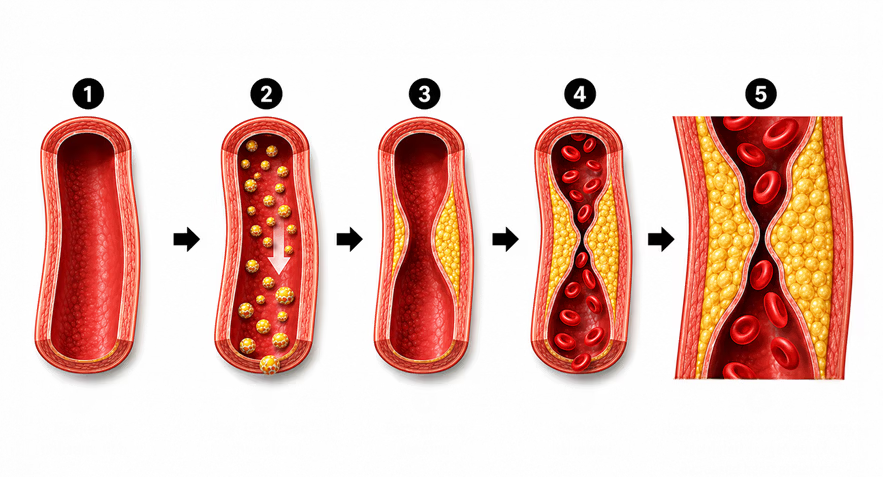
3. Cholesterol Starts Building Up in Your Arteries
Excess LDL cholesterol sticks to the walls of your arteries and slowly forms fatty deposits (plaque).
4. Blood Flow Becomes Restricted
As plaque builds up, the arteries become narrower. This makes it harder for blood and oxygen to reach your heart.
5. The Risk of Heart Attack Increases
If an artery becomes severely blocked or the plaque ruptures, it can reduce blood flow to the heart and lead to a heart attack.
How Much Saturated Fat Does Ghee Contain?
Ghee is nearly 100% fat, and 60–65% of that is saturated fat. For comparison, olive oil is roughly 73% monounsaturated (heart-protective) fat, and mustard oil is close to 60% monounsaturated. Ghee’s fat profile is almost the mirror opposite of the oils cardiologists actually recommend. This single number, the saturated fat share, is the real reason ghee keeps showing up on “foods to limit” lists.
How Is Ghee Different From Butter and Oil?
Here’s a comparison table for Ghee, Butter & Cooking Oil for better understanding:
The main difference is the type of fat they provide. Since most cooking oils contain more unsaturated fats and less saturated fat than ghee, they are generally a healthier choice for everyday cooking.
Is Ghee Good or Bad for Your Heart?
Scientific evidence suggests that regular consumption of large amounts of ghee is not recommended for heart health, primarily because it is rich in saturated fat, which can increase LDL cholesterol in many individuals.
Even research that shows a neutral effect at very low doses agrees on one thing: the moment intake goes up, so does LDL. That upward slope is the real story, not the fine print about small doses.
American Heart Association also recommends limiting, not building your diet around.
Several reasons explain why moderation is important:
1. High Saturated Fat Content
Ghee contains approximately 60–65% saturated fat. Replacing saturated fats with unsaturated fats has consistently been shown to improve cholesterol profiles and reduce cardiovascular risk.
2. May Increase LDL Cholesterol
Regular consumption of foods rich in saturated fat may increase LDL (“bad”) cholesterol. Elevated LDL cholesterol contributes to plaque formation inside arteries and increases the risk of coronary artery disease.
3. High Calorie Density
Ghee is highly calorie-dense, providing approximately 120–130 kcal per tablespoon. Excess calorie intake may contribute to weight gain, obesity, diabetes, and increased cardiovascular risk.
4. Total Dietary Pattern Matters
Most Indian diets already contain saturated fat from dairy products, sweets, fried foods, bakery products, and processed foods. Adding generous quantities of ghee can further increase total saturated fat intake beyond recommended limits.
Current dietary guidelines from AHA recommend limiting saturated fat intake and replacing it with healthier unsaturated fats whenever possible.
Can Ghee Be Included in a Healthy Diet?
If you’re healthy, have normal cholesterol levels, and don’t have a history of heart disease, enjoying a small amount of ghee occasionally can be part of a balanced diet. The key is moderation and keeping your overall saturated fat intake within the recommended limits.
However, if you’ve already been diagnosed with heart disease or have risk factors that increase your chances of developing it, it’s better to limit ghee in your daily diet and choose cooking oils that are higher in unsaturated fats instead.
This is especially important if you have:
- Coronary artery disease
- A previous heart attack or stroke
- High LDL (“bad”) cholesterol
- Diabetes
- Obesity
- Familial hypercholesterolemia (an inherited condition that causes very high cholesterol)
- Multiple cardiovascular risk factors
Remember, there’s no one-size-fits-all diet. The right amount of ghee, or whether you should have it at all, depends on your overall health, cholesterol levels, and individual heart risk. It’s always best to discuss your diet with your doctor or a qualified dietitian who can guide you based on your specific health needs.
Who Should Limit Ghee Intake?
Ghee intake should be minimal to none for:
- People with existing heart disease or a history of heart attack/stroke
- Anyone with high LDL cholesterol or diagnosed dyslipidemia
- People with diabetes, who already carry higher cardiovascular risk
- Individuals who are overweight or obese
- Anyone with a strong family history of early heart disease
For individuals in these higher-risk groups, limiting foods rich in saturated fat, including ghee, is consistent with current evidence-based dietary recommendations aimed at reducing cardiovascular risk.
The Bottom Line: Is Ghee Good or Bad for Your Heart?
Current scientific evidence indicates that ghee is a food high in saturated fat, and regular consumption in large amounts may increase LDL cholesterol, an important risk factor for cardiovascular disease.
This does not mean that ghee must be completely avoided by everyone. Healthy individuals may include small amounts occasionally within a balanced diet while keeping total saturated fat intake within recommended limits.
However, for people with existing heart disease, diabetes, high LDL cholesterol, obesity, or multiple cardiovascular risk factors, routine consumption of ghee should be minimized. Replacing part of the saturated fat in the diet with oils rich in unsaturated fats, such as mustard, groundnut, rice bran, olive, or canola oil, is supported by current cardiovascular nutrition guidelines.
Ultimately, maintaining healthy cholesterol levels, eating a balanced diet, engaging in regular physical activity, and undergoing periodic health check-ups remain the most effective strategies for protecting long-term heart health.
If your goal is a genuinely heart-protective diet, the honest move is to treat ghee as an occasional indulgence tied to taste and tradition, not a daily staple you rely on for cooking.
Let your lipid panel, not nostalgia, be the final judge.
FAQs
Q1. I have high BP. Can I eat ghee?
Ghee does not directly increase blood pressure. However, because it is calorie-dense and rich in saturated fat, excessive intake may contribute to weight gain and higher LDL cholesterol over time, both of which increase cardiovascular risk. Individuals with hypertension should consume ghee in moderation and follow an overall heart-healthy diet.
Q2. Is swapping oil for ghee good?
No, and this is one of the more common mistakes people make. Liquid oils like mustard, sunflower, or olive oil are largely unsaturated fats that support heart health. Ghee is the opposite, mostly saturated fat. Replacing oil with ghee doesn’t just fail to help your heart, it actively works against it.
Q3. Is ghee a healthy fat to cook with every day?
Not really. While ghee’s high smoke point makes it convenient for high-heat Indian cooking, “convenient” isn’t the same as “heart-healthy.” Using it as your everyday cooking fat means a steady, ongoing dose of saturated fat with every meal , exactly the pattern linked to rising LDL cholesterol over time.
Q4. Is homemade ghee healthier than store-bought ghee?
Not nutritionally. Both are still largely saturated fat if made from pure milk fat. The one advantage of homemade ghee is avoiding adulteration, since some store-bought brands blend in palm oil or vanaspati. But purity doesn’t change the fundamental saturated fat content that makes ghee a concern for heart health either way.
Q5. Can children eat ghee daily?
Small amounts are generally considered acceptable for growing children, who have different fat needs than adults. That said, habits formed early tend to stick, a child raised on daily generous ghee, especially alongside fried and sugary foods, is more likely to carry that pattern (and its cardiovascular impact) into adulthood.
Q6. Is ghee worse than butter for someone with existing heart disease?
They’re roughly comparable, both are about 60% saturated fat. For someone with existing heart disease, the real issue isn’t picking between ghee and butter, it’s that both should be minimized. Neither one earns a “safer choice” label in this situation.
Q7. Is cow ghee healthier than buffalo ghee?
Cow ghee has a marginally lower saturated fat content than buffalo ghee, but the difference is small enough that it doesn’t meaningfully change the heart-health picture. Both are still predominantly saturated fat, and portion size matters far more than which animal the ghee came from.
Q8. Can diabetics eat ghee?
This group needs extra caution. Diabetes already significantly raises cardiovascular risk, and adding a regular saturated-fat load on top of that compounds the problem. If you have diabetes, ghee is best kept minimal and occasional, with regular cholesterol monitoring rather than assumed safety.
Book Appointment




In This Article
- What Is Ghee?
- How Is Ghee Made?
- What Is the Nutritional Value of Ghee?
- How Much Calories Are in Ghee? By Common Serving Size
- What Are Unsaturated and Saturated Fats?
- How Does Saturated Fat Affect Your Heart?
- 1. You Eat Too Much Saturated Fat
- 2. Saturated Fat Can Increase LDL (Bad) Cholesterol
- 3. Cholesterol Starts Building Up in Your Arteries
- 4. Blood Flow Becomes Restricted
- 5. The Risk of Heart Attack Increases
- How Much Saturated Fat Does Ghee Contain?
- How Is Ghee Different From Butter and Oil?
- Is Ghee Good or Bad for Your Heart?
- Can Ghee Be Included in a Healthy Diet?
- Who Should Limit Ghee Intake?
- The Bottom Line: Is Ghee Good or Bad for Your Heart?
- FAQs
×
Request for a Call Back
Thank You! We'll get back to you shortly.