

All
Can Office Stress Trigger a Heart Attack? Your Heart Is Working Overtime Too
Yes. Chronic office stress, long sitting hours, poor sleep, unhealthy eating habits, and physical inactivity can increase the risk of high blood pressure, heart disease, and heart attacks over time. While stress alone may not directly cause a heart attack, it can contribute to conditions that significantly raise cardiovascular risk.
Rahul, 38, woke up on a Tuesday morning feeling like someone had placed a heavy stone on his chest. He ignored it. ‘Just acidity,’ he told himself. He had a 9 AM call. By noon, he was in the ICU. His cardiologist’s first question wasn’t about smoking or diet. It was, ‘Beta, how many hours do you sit at your desk every day?
If you work a desk job in India, in an office, from home, or both, this blog is for you. Because what’s happening to your heart between 9 and 6 is something nobody talks about enough.
And yes, office stress can trigger a heart attack. Here’s exactly how.
The Silent Connection: Desk Jobs & Your Heart
According to the PURE study, which tracked over 1,00,000 adults across 21 countries for 11 years, sitting 8+ hours a day was associated with a 20% higher risk of cardiovascular disease and early death, rising to 50% higher risk when combined with physical inactivity.
What Actually Happens Inside Your Body When You Sit Too Long?
When you walk, climb stairs, or even stand up often:
- Your leg muscles squeeze and help push blood back to the heart
- Your body uses sugar and fat more efficiently
- Blood keeps moving smoothly through your arteries
But when you sit for long stretches:
- Blood circulation slows down, especially in the legs
- Muscles become less active, so your metabolism slows
- Your body becomes less efficient at handling fats and blood sugar over time
- Excess fat and inflammation can gradually contribute to plaque buildup inside arteries, increasing long-term heart risk
That’s one reason researchers are increasingly paying attention to desk job heart disease and how work stress cardiac risk in India may combine with long sedentary hours to affect heart health.

Can Office Stress Trigger a Heart Attack?
Short answer: not overnight. But long-term office stress can quietly increase your heart risk over time.
Your body doesn’t know the difference between a tiger chasing you… and your boss sending a midnight email, work getting assigned during your pre-approved leave, or being expected to finish a week’s project in two days.
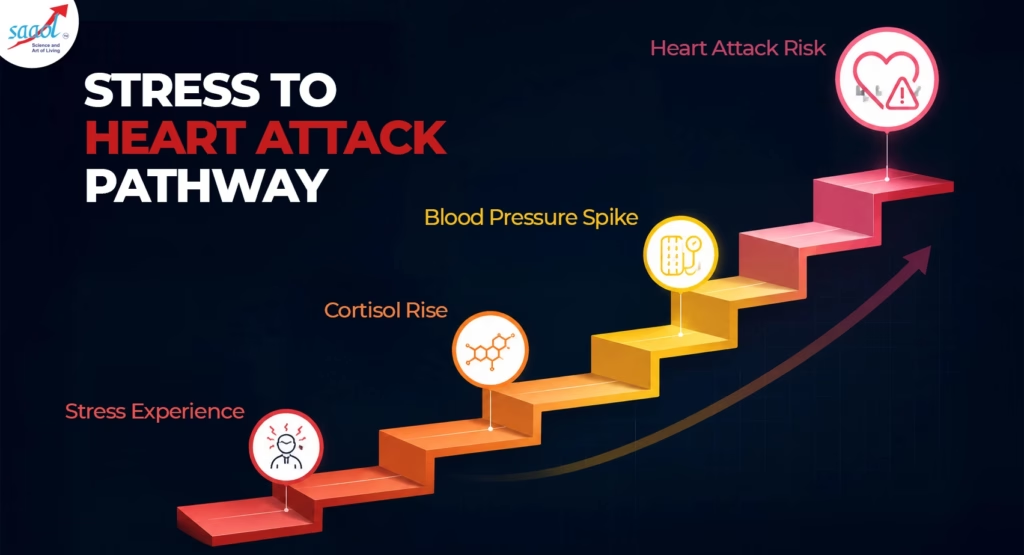
In all situations, your brain activates its fight-or-flight response that releases two stress hormones:
💡 Did You Know? Chronic elevation of adrenaline and cortisol may contribute to high blood pressure, inflammation, and increased cardiovascular risk over time.
What Happens to Your Body During Chronic Stress?
- Blood pressure stays higher for longer
- Inflammation inside blood vessels can increase
- Cholesterol and inflammatory cells may be more likely to contribute to plaque formation over time
- Existing plaque may become more unstable
That’s how office stress heart attack conversations begin. And stress rarely travels alone.
Office pressure often brings:
- Less movement
- Poor sleep
- More processed food and caffeine
- Missed exercise
- Delayed health checkups
Together, these habits can lead to high BP, which further increases cardiac risk.
One of the strongest pieces of evidence comes from the INTERHEART study, conducted across 52 countries. Researchers found that psychosocial factors, including stress, depression, and major life stressors, were associated with approximately one-third of the global population’s risk for a first heart attack.
5 Warning Signs That Your Desk Job is Harming Your Heart
Most people think desk job heart disease means a problem that appears years later. But sometimes your body starts sending smaller signals much earlier.
1. Chest heaviness or tightness after long sitting hours
If you regularly feel pressure, heaviness, discomfort, or unusual tightness in your chest after prolonged sitting or stressful workdays, don’t dismiss it as “just gas” or fatigue.
2. You get breathless climbing stairs, even though you used to be fine
Running out of breath during activities that once felt easy may be a sign that your heart and circulation are not coping as efficiently as before.
3. Frequent neck or shoulder discomfort that keeps coming back
Most neck and shoulder pain is muscular, especially in desk workers. But if discomfort appears with exertion, chest symptoms, sweating, or unusual fatigue, it deserves attention because heart-related pain can sometimes be felt in nearby areas.
4. You feel tired even after 8 hours of sleep
If you’re waking up tired, losing energy early in the day, or feeling unusually drained despite adequate sleep, your body may be under more stress than you realise.
5. Your blood pressure is creeping up at annual checkups
One high reading isn’t the story. But if your blood pressure keeps trending upward year after year, it’s worth paying attention before it becomes a bigger cardiovascular risk.
If you’ve nodded yes to even 2 of these, your heart is sending you signals. Don’t put them on mute.
Not sure whether your symptoms are stress or something more? Speak to our heart experts at SAAOL Heartcare Delhi.
Book Appointment Call NowWhat Is Actually Happening Inside Your Body When These Warning Signs Show Up?
There are often signs that changes have been building quietly inside your arteries for years.
1. Sitting too much changes how your body handles fat
When you spend long hours sitting, your body becomes less efficient at using fats and sugar.
Over time:
- HDL (good cholesterol) may reduce
- LDL (bad cholesterol) and unhealthy fats can build up more easily
- Blood pressure and metabolism may worsen
2. Plaque starts building inside your arteries
Excess cholesterol, along with inflammation, can slowly collect inside artery walls and form plaque.
Think of it like rust building inside a water pipe. At first, flow continues, but gradually the passage becomes narrower.
3. Less blood reaches your heart
As arteries narrow, your heart receives less oxygen-rich blood.
This is when signs may start showing up:
- Chest heaviness
- Breathlessness climbing stairs
- Feeling unusually tired
4. Stress speeds up the process
Constant work stress keeps stress hormones elevated, which can increase blood pressure, blood sugar, inflammation, and make clot formation more likely over time.
This is one reason many Indian desk workers discover heart blockages in their 30s–40s.
Step 5: One day, the plaque becomes unstable
Many heart attacks happen not because an artery reaches 100% blockage.
Sometimes a plaque suddenly cracks or ruptures. The body tries to repair it by forming a clot. If that clot blocks blood flow to the heart muscle, a heart attack can happen.
And this is also why many Indian desk workers are shocked to discover blockages in their 30s and 40s, because the process often starts years before the first symptom appears.
What You Can Do When Your Body Starts Showing Warning Signs
1. Follow the 30–3 rule
Every 30 minutes, stand up and move for 3 minutes. Walk, stretch, refill your water, just break the sitting cycle.
2. Take 5 minutes to breathe
Slow, deep breathing can help lower stress signals and calm your nervous system, as it’s an easy way to reduce work stress and cardiac stress.
3. Don’t skip meals
Long gaps followed by heavy eating can cause bigger blood sugar swings and may worsen long-term heart risk.
4. Protect your sleep
Aim for 7–8 hours every night. Sleep is when your body regulates stress, blood pressure, and recovery.
5. Get a heart checkup after 30
If you have a desk job, family history, stress, high BP, or low activity levels, don’t wait for symptoms.
6. Cut the after-work screen spiral
Going from office screen to phone to TV means 12+ hours of cortisol with zero recovery. Even 15 minutes screen-free before bed helps.
7. Watch your invisible salt
Packaged snacks and daily ordering quietly push sodium 2–3x above safe limits and high sodium means direct cardiac load.
8. Hydrate intentionally
Mild dehydration thickens blood and makes your heart work harder. 8–10 glasses a day is one of the easiest zero-cost cardiac habits.
9. Don’t hold your stress in
Talking to someone or journaling for 5 minutes reduces the cortisol burden your heart carries silently, especially important for Indian men trained to suppress.
Small changes, done daily, are more powerful than a gym membership you’ll never use.
Key Takeaway
Your desk isn’t your enemy. But ignoring your heart while sitting at it might be.
We all have to work. But awareness is what separates the ones who burn out at 45 from the ones still going strong at 65. Small daily shifts can add years to your life, without changing your job title.
You check your inbox every day. Check in with your heart too.
Have you noticed any warning signs? Most heart patients wish they had come in sooner and left relieved when they found out surgery wasn’t the only answer. Book a consultation with our cardiac specialists at SAAOL Heart Care Delhi.
FAQs
Q1. I’m only in my 30s. Should I really worry about heart health now?
Heart disease doesn’t suddenly appear at 50. The process of plaque buildup can begin years earlier. Your 30s are often the best time to identify risk factors and build protective habits.
Q2. Can stress alone cause blocked arteries?
Stress alone usually doesn’t create blockages overnight. But chronic stress can contribute to higher blood pressure, inflammation, poor sleep, unhealthy eating, and metabolic changes that increase long-term heart risk.
Q3. If my chest discomfort goes away after rest, can I ignore it?
Not always. Symptoms that repeatedly appear during exertion, stress, long workdays, or climbing stairs deserve attention, especially if they keep returning or are becoming more frequent.
Q4. Can a heart attack happen even if I exercise after work?
Yes. A one-hour workout doesn’t completely cancel out 9–10 hours of sitting, poor sleep, stress, and unhealthy eating. Exercise helps, but regular movement throughout the day matters too.
Q5. What’s one heart habit busy professionals can start today?
Start with movement. Set a reminder to stand and walk briefly every 30–60 minutes. It’s realistic, costs nothing, and is easier to sustain than extreme fitness plans.
Book Appointment





In This Article
- The Silent Connection: Desk Jobs & Your Heart
- What Actually Happens Inside Your Body When You Sit Too Long?
- Can Office Stress Trigger a Heart Attack?
- What Happens to Your Body During Chronic Stress?
- 5 Warning Signs That Your Desk Job is Harming Your Heart
- 1. Chest heaviness or tightness after long sitting hours
- 2. You get breathless climbing stairs, even though you used to be fine
- 3. Frequent neck or shoulder discomfort that keeps coming back
- 4. You feel tired even after 8 hours of sleep
- 5. Your blood pressure is creeping up at annual checkups
- What Is Actually Happening Inside Your Body When These Warning Signs Show Up?
- 1. Sitting too much changes how your body handles fat
- 2. Plaque starts building inside your arteries
- 3. Less blood reaches your heart
- 4. Stress speeds up the process
- Step 5: One day, the plaque becomes unstable
- What You Can Do When Your Body Starts Showing Warning Signs
- Key Takeaway
- FAQs
×
Request for a Call Back
Thank You! We'll get back to you shortly.