
Health Tips
Is Angioplasty a Permanent Fix? Understanding the Role of EECP
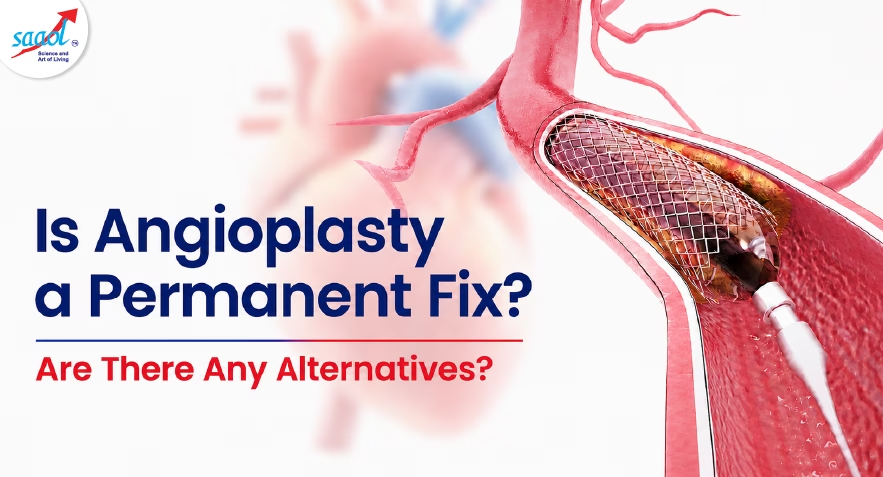
No, angioplasty is not a permanent cure for heart blockage. Many patients believe that once a stent is placed, the problem is solved forever. Unfortunately, that’s not always true. While angioplasty restores blood flow immediately, coronary artery disease continues to progress unless its root causes are controlled.
When you return home after angioplasty, the blockage has been treated, and life begins to feel normal again. But what if chest discomfort, breathlessness, or unusual tiredness returns a few months or years later?
Angioplasty can improve blood flow through a particular narrowed area, but it does not cure the underlying disease that caused the plaque to develop. That is why medicines, regular monitoring, and lifestyle changes may remain important even after a successful angioplasty.
This blog explains whether angioplasty is a permanent fix, why blockages may return, and why many patients now consider EECP Therapy for angina or activity-related symptoms.

What Does Angioplasty Actually Treat?
Angioplasty opens a specific narrowed section of a coronary artery. It does not remove plaque from every artery or cure coronary artery disease.
- During angioplasty, a doctor passes a thin catheter into an artery, usually through the wrist or groin.
- A small balloon is inflated at the narrowed area to widen it.
- A wire-mesh tube called a stent is generally placed there to keep the artery open.
Think of your arteries as roads carrying blood to your heart. Angioplasty repairs one badly narrowed section so that traffic can move through it again.
But other parts of the road may still be damaged.
A stent does not automatically control the factors that caused plaque to develop, such as:
- High LDL cholesterol
- Diabetes
- High blood pressure
- Smoking or tobacco use
- Physical inactivity
- Excess body weight
- Poor dietary habits
- Irregular use of prescribed medicines
What Angioplasty Does Not Treat
Angioplasty improves blood flow through a specific narrowed artery, but its role is limited to the treated area. It does not:
- Cure the underlying coronary artery disease
- Remove plaque from all heart arteries
- Prevent new blockages from developing
- Guarantee protection against future heart attacks
- Control cholesterol, diabetes or high blood pressure
- Replace prescribed medicines and lifestyle changes
The US National Heart, Lung, and Blood Institute clearly explains that a stent treats an obstruction but does not cure the underlying condition.
Heart Stent Before and After Angioplasty: What Really Changes?
Heart stent before and after results show improved blood flow at the treated area, but angioplasty does not make the entire coronary system healthy.
| Before angioplasty | After angioplasty |
| Plaque narrows the artery | The treated area becomes wider |
| Blood flow may be reduced | Blood flow through that section improves |
| Physical effort may trigger angina | Angina may reduce |
| A complete blockage may develop | The immediate narrowing is treated |
| Coronary artery disease is present | Coronary artery disease is still present |
You may feel much better after the procedure. You may be able to walk farther, sleep with less worry and return to work.
But feeling better does not mean the disease has disappeared.
The stent supports one section of an artery; it cannot protect every blood vessel in your heart.
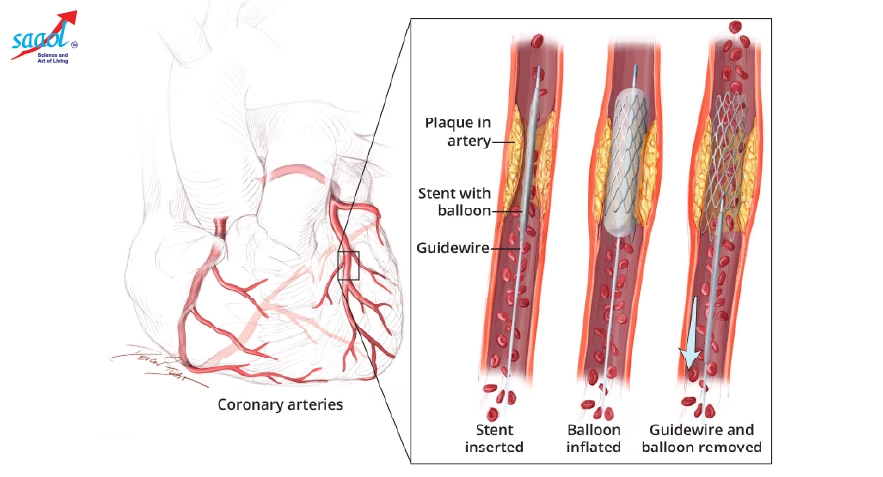
Angioplasty opens a narrowed artery, but it does not cure the underlying heart disease. It cannot prevent all future blockages or heart attacks, repair overall artery health, or stop plaque from developing elsewhere. Medicines and lifestyle changes remain essential after stent placement.
Can Blockage Return After Angioplasty?
Yes. The treated area can narrow again, and new blockages can also develop in other sections of the coronary arteries.
A recurring narrowing inside a stent is called in-stent restenosis, or ISR. It may happen when tissue grows excessively inside the treated section. With time, new plaque may also develop within or near the stent.
Modern drug-eluting stents release medicine that reduces unwanted tissue growth. They have lowered the risk of restenosis, but they have not removed it completely.
What Do Studies Show?
| Medical evidence | What it found |
| 2023 SCAI Expert Consensus Statement | In-stent restenosis occurs in approximately 10% of cases overall |
| SCAI data on second-generation drug-eluting stents | ISR occurred in around 5.7% of patients without diabetes and 8.7% of patients with diabetes |
| Systematic review in the Journal of Geriatric Cardiology | Restenosis occurred in approximately 20%–35% with older bare-metal stents and 5%–10% with drug-eluting stents |
| 2024 European Society of Cardiology Guidelines | Approximately one in five revascularised patients required another revascularisation procedure within five years |
| European Heart Journal review | Persistent or recurrent angina may affect approximately 20%–40% of patients after PCI during short- to medium-term follow-up |
Warning Signs a Heart Stent May Not Be Working
Watch for recurring chest pain, breathlessness, unusual fatigue, sweating or reduced ability to perform daily activities.
Seek prompt medical evaluation if these symptoms appear, especially if chest pain is severe or persistent.
Why Can a Heart Artery Become Blocked Again After Angioplasty?
Common reasons symptoms or blockages may return include:
- Restenosis inside the stent: The artery gradually becomes narrow again within the stented area.
- A new blockage in another coronary artery: Plaque develops in a different heart artery.
- An untreated narrowing elsewhere: Another existing narrowed area starts restricting blood flow.
- Disease in the heart’s tiny blood vessels: Small vessels cannot supply enough blood to the heart muscle.
- Temporary coronary artery spasm: A heart artery suddenly tightens and briefly reduces blood flow.
- Reduced heart-pumping capacity: The heart becomes less effective at pumping blood around the body.
- Uncontrolled blood pressure: Persistently high blood pressure puts extra strain on the heart and arteries.
- Acidity, anxiety or chest-muscle pain: These conditions may cause discomfort that feels similar to heart-related chest pain.
The risk may be higher when:
- The patient has diabetes or kidney disease
- The affected artery is very small
- The blockage is long, complex or heavily calcified
- The stent does not expand completely
- LDL cholesterol remains high
- Poor lifestyle choices
- Prescribed medicines are skipped or stopped without medical advice
Regular check-ups, proper medication, lifestyle changes and diet after angioplasty can help lower the risk, although they cannot guarantee that reblockage will never occur.
These limitations raise an important question.
Are There Any Alternatives to Angioplasty?
Yes. For selected patients with stable heart disease, EECP Therapy offers a different approach.
While angioplasty opens one narrowed area by placing a stent inside the artery, EECP works from outside the body to support blood flow across the heart’s circulation. It requires no incision, catheter, anaesthesia or implanted device.
What is EECP?
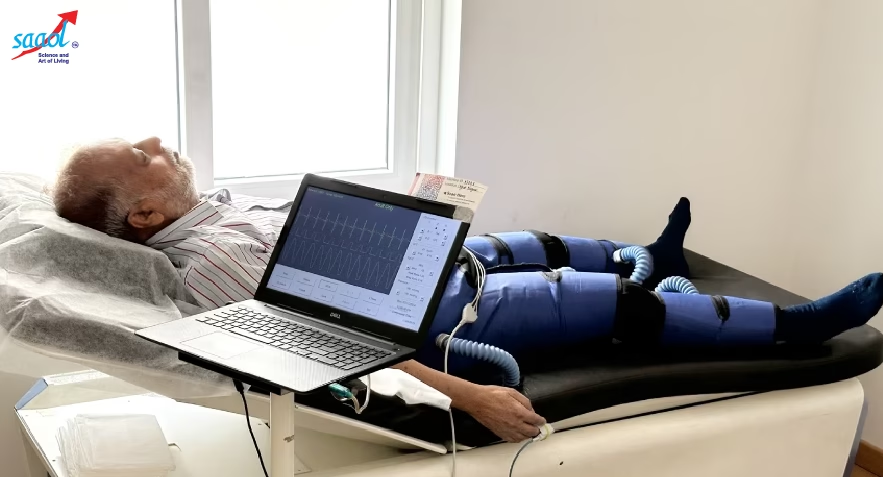
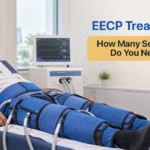
EECP (Enhanced External Counterpulsation) is a non-invasive, FDA-approved outpatient treatment generally performed over 40 sessions (1 hr each). It requires no catheter, incision or stent.
During each session, inflatable cuffs placed around the legs and lower hips inflate and deflate in rhythm with the heartbeat. This may improve blood flow to the heart and support natural collateral circulation around narrowed arteries.
For suitable patients, EECP may:
- Reduce angina symptoms
- Improve walking and exercise capacity
- Make everyday activities easier
- Improve quality of life
EECP vs Angioplasty: How Are They Different?
The following EECP vs angioplasty comparison explains how the two treatments differ in their procedure, recovery, risks and treatment goals.
| Angioplasty | EECP |
| Minimally invasive procedure | Non-invasive outpatient treatment |
| Opens a specific narrowed artery | Aims to improve circulation and symptom control |
| Usually requires a stent | No stent or incision is required |
| Can be required during a heart attack | Not an emergency heart-attack treatment |
| May require a hospital stay | Usually does not require admission |
| Carries bleeding, clotting and restenosis risks | May cause temporary pressure or leg discomfort |
| Treats an identified narrowing | Focuses on improving blood-flow support and functional capacity |
Beyond Angioplasty: The SAAOL Approach
SAAOL Heartcare Delhi’s comprehensive heart programme goes beyond treating one blocked artery by addressing coronary artery disease and its underlying risk factors.
It combines EECP Therapy, personalised medical care, a zero-oil diet, exercise, yoga and stress management to improve circulation, reduce angina, manage plaque-related risks, control cholesterol, diabetes and blood pressure, and help slow disease progression and the development of new blockages.
Every treatment plan is personalised after a detailed medical evaluation.
Understand which treatment approach is right for your heart condition.
The Final Insights
Angioplasty can save lives during a heart attack. However, it has limitations and does not cure the underlying heart disease.
For stable patients, EECP may be a safer, non-invasive alternative when medically suitable.
Before choosing a stent solely because a blockage is present, ask questions, understand your condition and explore all appropriate options.
Consult SAAOL Heartcare Delhi and take a confident step towards safer, personalised heart care.
FAQs
Q1. Does a Stent in the Heart Affect Life Expectancy?
A stent does not determine life expectancy or have a fixed expiry date. Long-term health depends on the extent of heart disease, heart function, diabetes, blood pressure, cholesterol, lifestyle, medication adherence and regular follow-ups. Managing the underlying artery disease matters most.
Q2. Can I undergo EECP if I already have a stent?
Yes, EECP may be considered after stent placement. It uses external cuffs to improve coronary blood flow and does not physically interfere with the implanted stent. However, treatment should begin only after a cardiologist evaluates your heart condition, symptoms and medical stability.
Q3. Does EECP remove plaque from the arteries?
No. EECP does not directly remove plaque. At SAAOL, EECP is combined with medical supervision, a heart-healthy diet and structured lifestyle changes to improve circulation and address the factors causing plaque build-up. This comprehensive approach helps manage and reverse heart blockage.
Q4. Can EECP help if symptoms return after angioplasty?
Yes, EECP may help selected patients with persistent or recurrent angina after angioplasty. It can improve coronary blood flow, exercise capacity and symptom control, particularly when medicines are insufficient or another invasive procedure is unsuitable. A cardiac evaluation is required before treatment.
Q5. Can a Heart Stent Fail?
Yes. A stent can sometimes narrow again due to tissue growth or a blood clot, reducing blood flow to the heart. New or recurring symptoms should be evaluated promptly by a doctor.
Q5. Who should not undergo EECP?
EECP may not be recommended for patients with uncontrolled high blood pressure, certain irregular heart rhythms, severe aortic valve leakage, active blood clots or advanced peripheral artery disease. A detailed cardiac evaluation is essential to confirm eligibility and minimise treatment risks.
Book Appointment



In This Article
- What Does Angioplasty Actually Treat?
- What Angioplasty Does Not Treat
- Heart Stent Before and After Angioplasty: What Really Changes?
- Can Blockage Return After Angioplasty?
- What Do Studies Show?
- Warning Signs a Heart Stent May Not Be Working
- Why Can a Heart Artery Become Blocked Again After Angioplasty?
- Are There Any Alternatives to Angioplasty?
- What is EECP?
- EECP vs Angioplasty: How Are They Different?
- Beyond Angioplasty: The SAAOL Approach
- The Final Insights
- FAQs
×
Request for a Call Back
Thank You! We'll get back to you shortly.