

All
Normal Pulse Range by Age: What Does Your Heart Rate Mean?
The normal pulse range for most adults is 60–100 beats per minute at rest, including after age 50. Children generally have faster pulses, while trained athletes may have lower readings. Your symptoms, medicines and usual heart rate also matter when interpreting the number.
Perhaps your smartwatch shows 96 while you sit at your desk, or a parent’s monitor displays 58. It is understandable to wonder whether something is wrong.
This blog explains the normal pulse range, provides a normal heart rate by age chart and helps you understand when a reading needs medical attention.
What Is Pulse Rate?
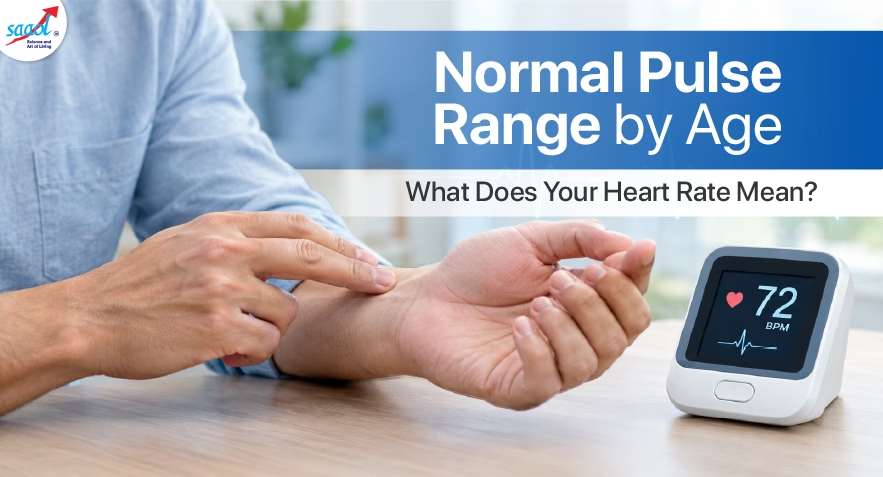
Pulse rate is the number of beats you feel in an artery in one minute. It is measured in beats per minute, usually written as bpm.
Every time your heart pumps, it sends blood through your arteries. This creates a small pressure wave that you can feel at your wrist. If you count 75 beats in one minute, your pulse rate is 75 bpm.
Your pulse usually matches your heart rate, which is the number of times your heart beats each minute.
What Is Resting Pulse Rate?
Resting pulse rate is the number of times your heart beats per minute when you are awake, calm and at rest.
Your pulse rises during activities such as climbing stairs because your body needs more oxygen. It slows down as you rest, so check it after sitting quietly rather than immediately after activity.
What Is the Normal Pulse Range by Age?
Children usually have faster pulses than adults. As they grow, their resting pulse generally slows.
For adults, the usual resting pulse range is 60–100 bpm. This pulse rate chart by age uses the resting ranges listed by MedlinePlus.
| Age group | Resting pulse range |
| Birth to 1 month | 70–190 bpm |
| 1–11 months | 80–160 bpm |
| 1–2 years | 80–130 bpm |
| 3–4 years | 80–120 bpm |
| 5–6 years | 75–115 bpm |
| 7–9 years | 70–110 bpm |
| 10–17 years | 60–100 bpm |
| Adults 18–39 years | 60–100 bpm |
| Adults 40–59 years | 60–100 bpm |
| Adults 60 years and older | 60–100 bpm |
The adult age groups are shown separately for convenience. The general resting range remains the same, including for older adults.
Your pulse does not need to increase simply because you are getting older. A persistently faster resting pulse should not automatically be dismissed as normal ageing.
Also, a reference range is not a personal target. If your usual resting pulse is around 65 but repeatedly rises to 90 under similar conditions, discuss the change with your clinician, especially if you feel unwell.
How Can You Measure Your Resting Pulse Correctly?

A consistent method makes your readings easier to interpret.
- Rest for at least 10 minutes. Sit or lie quietly before measuring.
- Find your wrist pulse. Place your index and middle fingers below the base of the opposite thumb.
- Press gently. Avoid using your thumb because it has its own pulse.
- Count for a full minute. Notice whether the beats feel regular.
- Record the context. Note the time, symptoms, recent activity and medicines.
For comparisons, check under similar conditions, such as in the morning before activity and caffeine.
For example, a reading after rushing to catch the metro tells a different story from one taken after sitting quietly. Record that difference instead of treating both as equivalent resting measurements.
You do not need to keep checking every few minutes unless a clinician has advised it. A useful record shows patterns without making the number the focus of your day.
Why Might Your Reading Be Higher or Lower?
Your heart adjusts its speed to your body’s needs. An unusual reading needs context before conclusions.
A Faster Resting Pulse
A resting rate above 100 bpm is commonly called tachycardia. Possible explanations include:
- Fever or dehydration.
- Stress and anxiety.
- Anaemia, meaning insufficient haemoglobin to carry oxygen effectively.
- An overactive thyroid.
- Certain medicines or stimulants.
- A heart rhythm problem.
A faster pulse does not automatically mean heart disease. However, repeated unexplained readings need assessment.
A Slower Resting Pulse
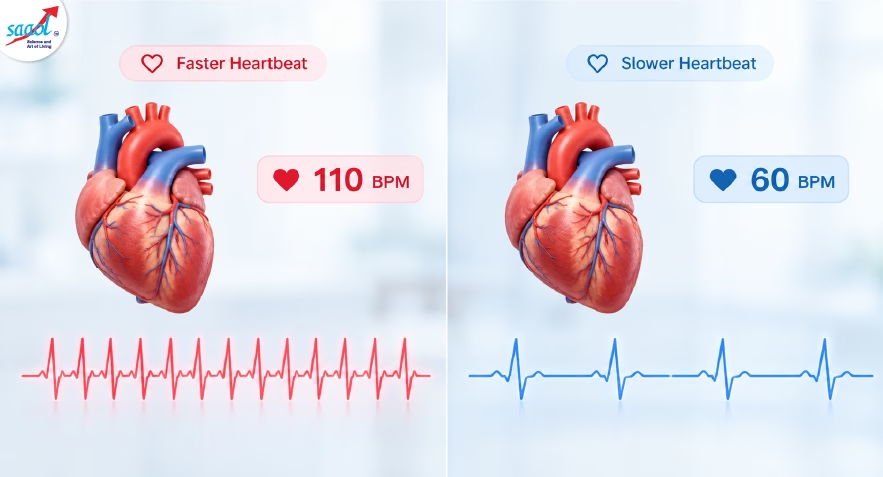
A rate below 60 bpm is commonly called bradycardia. It can occur during sleep, with athletic training or because of medicines such as beta blockers. It can also reflect a problem requiring medical attention.
A pulse below 60 bpm can occur during sleep, with athletic training or while taking medicines such as beta blockers. It is not always dangerous, but a lower pulse is not automatically healthier either. Your symptoms, fitness and medical history help your doctor decide whether it needs attention.
Exercise Readings Are Different

Your pulse normally rises during activity because working muscles need more oxygen.
According to the American Heart Association, a rough estimate of maximum exercise heart rate can be calculated by subtracting your age from 220. This is only a general guide, not a precise measurement or a guaranteed safe exercise limit. Your actual response to exercise can vary with fitness, health conditions and medicines.
If you have a heart condition or take medicines that affect heart rate, ask your clinician about an appropriate exercise target.
When Should You Seek Medical Help?

Arrange an assessment if your resting pulse:
- Repeatedly exceeds 100 bpm.
- Is frequently below 60 without an established explanation.
- Becomes irregular.
- Changes persistently from your usual pattern.
- Comes with recurring dizziness, unusual tiredness or reduced exercise tolerance.
Seek emergency help for palpitations with chest pain, breathlessness or fainting. Your doctor may suggest an ECG or ask to monitor your heart , depending on your symptoms.
FAQs
Q1. Is Pulse Rate the Same as Heart Rate?
Pulse rate and heart rate usually match, but they measure different things. Heart rate counts how often your heart contracts, while pulse rate counts the pressure waves felt in your arteries. In some rhythm problems, not every heartbeat produces a pulse strong enough to feel.
Q2. Does a Normal Pulse Mean My Blood Pressure Is Normal?
No. A normal pulse does not confirm normal blood pressure. Pulse measures how many times your heart beats per minute, while blood pressure measures the force of blood against artery walls. You can have high blood pressure with a normal pulse, so both need separate checks.
Q3. Can Pregnancy Raise Resting Heart Rate?
Yes. During pregnancy, your heart works harder to circulate more blood and support your growing baby, so your resting heart rate commonly rises. However, a persistently racing heartbeat should be discussed with your maternity clinician, especially if it comes with dizziness, breathlessness or chest discomfort.
Q4. Can Menopause Cause Palpitations?
Yes. Hormonal changes around menopause can make your heartbeat feel fast, pounding or fluttery. Poor sleep and stress may also contribute. However, do not assume hormones explain every episode. New, frequent or worsening palpitations need medical assessment to check for other causes, including thyroid or heart rhythm problems.
Q5. Can I Rely Entirely on My Smartwatch?
No. A smartwatch can help you notice heart rate patterns, but it cannot replace a medical assessment. Movement, poor skin contact and device limitations can affect readings. Share repeated alerts, saved recordings and any symptoms with your doctor, who may recommend an ECG or further monitoring.
Q6. Should I Stop My Medicine if My Pulse Becomes Low?
No. Some prescribed medicines, including beta blockers, intentionally slow the heart rate. Stopping them suddenly may be harmful. Contact your prescribing doctor if your pulse is repeatedly lower than usual, especially with dizziness or weakness. Your doctor can decide whether your treatment needs adjusting.
Q7. Does Every Abnormal Heart Rhythm Need Treatment?
No. Some heart rhythm changes need only observation, while others require medicines or procedures. The decision depends on the type of rhythm, your symptoms and any underlying heart condition. An ECG or longer heart rhythm recording may help your doctor decide what care is appropriate.
Your Pulse Is a Starting Point for Better Heart Care
The normal pulse range helps you interpret a reading, but the number makes most sense alongside your symptoms, rhythm and usual pattern.
Support your wider heart health through appropriate activity, adequate sleep and attention to cardiovascular risk factors. Personalised lifestyle management can help turn advice into manageable daily habits.
If your pulse repeatedly seems unusual or you have recurring symptoms, book a consultation with SAAOL Heartcare Delhi. Bring your readings and medicine list so your doctor can assess what they mean for you.
Disclaimer: This article provides general health information and does not replace professional medical assessment, diagnosis or treatment. Seek emergency care for serious symptoms.
Book Appointment





In This Article
- What Is Pulse Rate?
- What Is Resting Pulse Rate?
- What Is the Normal Pulse Range by Age?
- How Can You Measure Your Resting Pulse Correctly?
- Why Might Your Reading Be Higher or Lower?
- A Faster Resting Pulse
- A Slower Resting Pulse
- Exercise Readings Are Different
- When Should You Seek Medical Help?
- FAQs
- Q1. Is Pulse Rate the Same as Heart Rate?
- Q2. Does a Normal Pulse Mean My Blood Pressure Is Normal?
- Q3. Can Pregnancy Raise Resting Heart Rate?
- Q4. Can Menopause Cause Palpitations?
- Q5. Can I Rely Entirely on My Smartwatch?
- Q6. Should I Stop My Medicine if My Pulse Becomes Low?
- Q7. Does Every Abnormal Heart Rhythm Need Treatment?
- Your Pulse Is a Starting Point for Better Heart Care
×
Request for a Call Back
Thank You! We'll get back to you shortly.