

All
Does Ghee Increase Cholesterol If You Eat It Daily?
Yes, eating ghee daily can raise LDL (bad) cholesterol, mainly because of its high saturated fat content (about 60-65% of its fat), not the small amount of cholesterol it contains.
How much it affects you depends on the quantity you eat, your genetics, body weight, activity level, and existing cardiovascular risk. For healthy people with normal lipid levels, a small amount (like 1 teaspoon a day) usually fits within a balanced diet. For people with high LDL, diabetes, familial hypercholesterolaemia, or existing heart disease, doctors generally recommend much stricter limits based on individualised advice.
So ghee isn’t a heart-health remedy, and it isn’t something to automatically fear either. The more useful question isn’t “how much cholesterol am I eating”, it’s “how much saturated fat am I eating overall, and what am I eating in its place?”
At SAAOL, we see both healthy individuals and heart patients every day, and honestly, ghee’s effect on your heart depends a lot on which of these two groups you belong to. This guide breaks down a clear, separate answer for each.
Read till the end!
What Happens to Your Cholesterol When You Eat Ghee?
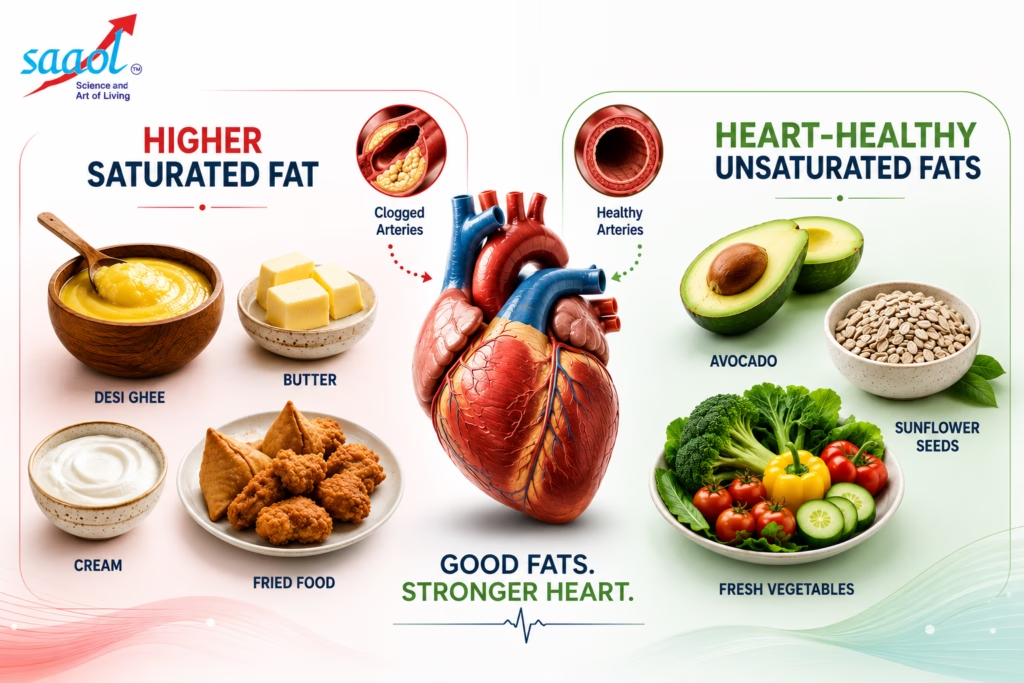
A tablespoon (14g) of ghee contains about 33 mg of cholesterol. That’s less than one large egg (around 186 mg) and only slightly more than a tablespoon of butter (around 31 mg). But cholesterol content isn’t the main story here, saturated fat is.
Your liver actually makes all the cholesterol your body needs on its own; you don’t need dietary cholesterol at all. What matters more is that saturated fat changes how your liver regulates LDL receptors, which affects how much LDL cholesterol stays in your bloodstream.
More saturated fat = higher the LDL.
In a healthy person, this is usually a manageable, gradual shift, and HDL (good cholesterol) can rise somewhat alongside LDL. But a rise in HDL doesn’t cancel out a rise in LDL.
Overall diet quality, portion size and lifestyle play a much bigger role than any single ingredient, which is why understanding the role of cholesterol in heart health is important.
In a heart patient, especially one with existing blockage, the arteries are already inflamed and narrowed, so extra saturated fat and the resulting LDL load add strain rather than being cleared efficiently.
Fat Composition of Ghee
Here’s a reader-friendly breakdown of the fat composition of ghee-
| Nutrient (Per 1 Tablespoon / 14 g Ghee | Amount (Approx.) |
| Calories | 126 kca |
| Total Fat | 14 g |
| Saturated Fat | 8.7–9 g |
| Monounsaturated Fat | 3.7–4 g |
| Polyunsaturated Fat | 0.4–0.5 g |
| Trans Fat (Natural) | ~0.4–0.5 g |
| Cholesterol | ~36 mg |
Does Ghee Increase Cholesterol? What Research Says
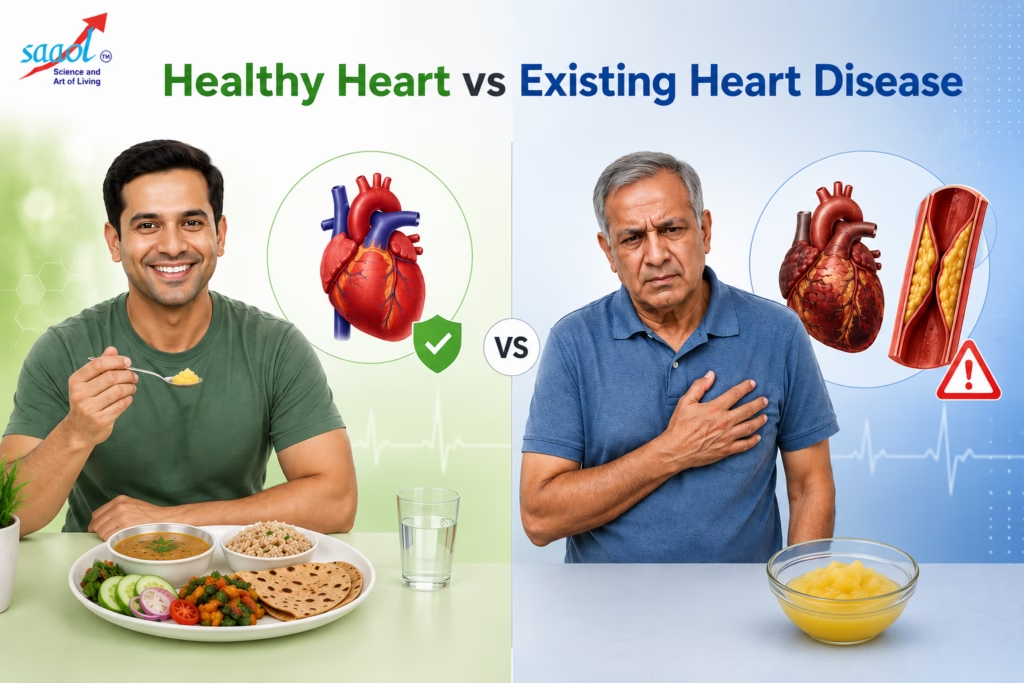
The honest answer: it isn’t black and white, and the main lever is saturated fat, not the cholesterol itself.
The 2020–2025 Dietary Guidelines recommend limiting saturated fat intake to under 10% of daily calories as part of a heart-healthy eating pattern.
The American Heart Association 2017 advisory on dietary fats states that replacing saturated fat with unsaturated fat lowers LDL cholesterol and reduces cardiovascular risk — the guidance today is framed around what you replace saturated fat with, not cholesterol limits alone.
A randomised crossover trial published in the British Journal of Nutrition compared diets rich in ghee versus olive oil in healthy adults. It found that the ghee-rich diet raised fasting apolipoprotein B (apoB) and non-HDL cholesterol compared to the olive-oil diet.
The study found no major difference in the total cholesterol-to-HDL ratio. However, it still supported replacing foods high in saturated fat with healthier unsaturated fats to reduce heart risk.
ApoB is a protein found on LDL and other harmful cholesterol particles. Since each particle has one ApoB protein, an ApoB test shows how many of these particles are in your blood. This can give a clearer picture of heart risk than LDL alone.
Is Ghee Safe for a Healthy Heart?
If your last lipid profile was normal and you have no history of heart disease, a small amount of ghee is generally not something to fear.
What makes it safe in this case:
- Your arteries aren’t already narrowed or inflamed
- Your liver can regulate the additional fat and cholesterol load
- A small amount of ghee fits within a balanced diet and regular physical activity
What you should still watch:
- Frequency: daily large quantities can shift a normal lipid profile over years
- Heating method: reheated or overheated ghee forms oxidised compounds, which are harmful even for a healthy heart
- Family history: if heart disease runs in your family, treat a “normal” report as a reason to stay cautious, not a green light to increase intake
- The bigger picture: ghee doesn’t exist in isolation — your overall pattern of fats (how much saturated vs. unsaturated fat you eat across the day, from all sources: oil, dairy, fried food, meat) matters more than any one ingredient
Is Ghee Safe If You Are a Heart Patient or Have High Cholesterol?
This is where the advice changes, and it’s the group we work with most closely at SAAOL.
If you’ve been diagnosed with high LDL, blockage, or a cardiac event, your arteries are already compromised, and adding daily saturated fat works against recovery and reversal efforts. This is also why SAAOL’s approach to managing high cholesterol through diet is built around minimising added fats rather than trying to fit them in.
What we generally recommend to heart patients (to be confirmed with your treating doctor based on your specific case):
- Avoid ghee as a daily cooking medium
- Replace it with oil-free cooking methods that don’t rely on added fat for taste or texture
- Consider a structured low-fat / oil-free dietary approach, such as SAAOL’s Zero-Oil cooking, as one option your doctor may recommend, tailored to your individual lipid profile, blockage status, and overall health
- Get your lipid profile checked more frequently, since your numbers need closer tracking than a healthy individual’s
How Much Cholesterol Is Actually in Desi Ghee?
Here is the real ghee cholesterol level per serving, based on my food data:
| Amount | Calories | Total Fat | Saturated Fat | Cholesterol |
|---|---|---|---|---|
| 1 teaspoon (5 g) | 45 kcal | 5 g | 3.2 g | 12 mg |
| 1 tablespoon (14 g) | 123 kcal | 14 g | 9 g | 32.8 mg |
| 100 g | 900 kcal | 100 g | 62 g | 256 mg |
For a healthy adult, there’s no longer a specific recommended daily limit for dietary cholesterol in the current U.S. Dietary Guidelines, the focus has shifted to limiting saturated fat. For a heart patient, most cardiologists still recommend keeping added dietary fat and cholesterol as low as reasonably possible, since the body already carries a higher baseline risk.
How to Track If Ghee Is Affecting Your Cholesterol (For a Healthy Heart)
- If you eat ghee regularly, include a lipid profile test in your routine health check-up every 6–12 months (or as advised by your doctor).
- Fix your daily ghee quantity for two weeks (1 teaspoon is a reasonable starting point).
- Repeat the lipid test after 8–12 weeks on this fixed intake.
- Compare LDL and HDL separately, not just the total cholesterol number — ask your doctor about an apoB test if you want a more precise picture.
- Adjust based on the trend, since a single reading can be affected by stress or fasting status.
How SAAOL Guides Heart Patients on Ghee and Fats
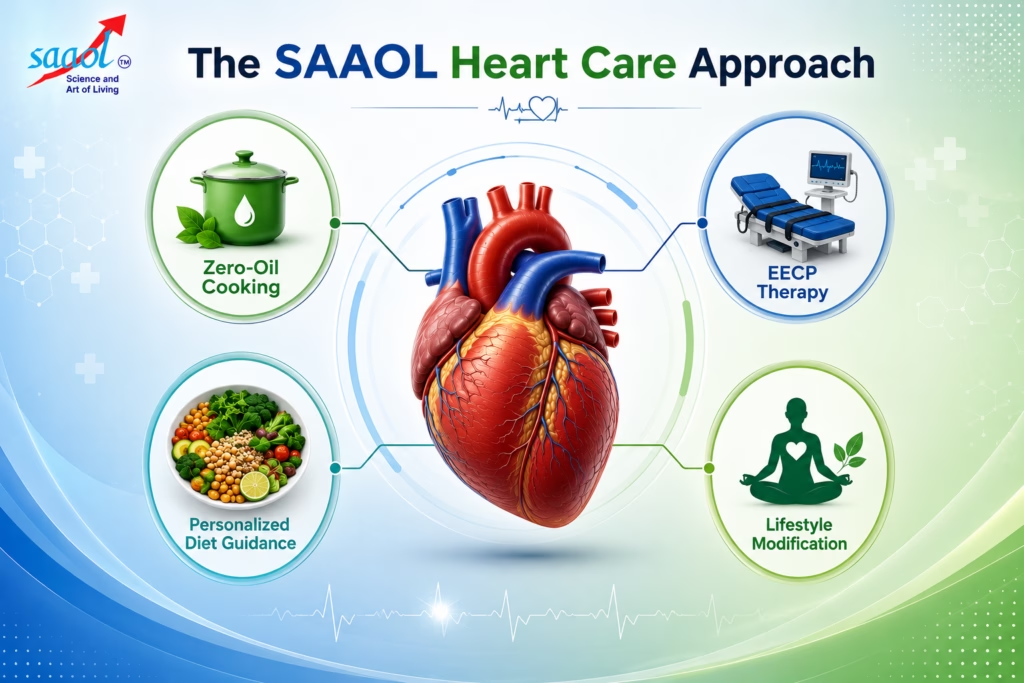
At SAAOL Heartcare Delhi, we support patients with high cholesterol through personalized diet guidance, lifestyle changes, and non-invasive EECP Therapy based on individual heart risk.
For patients with existing heart disease, the goal usually isn’t to find a “safe amount” of ghee , it’s to reduce unnecessary saturated fat intake as part of a broader heart-healthy plan that’s built around each patient’s own reports and risk profile.
- Start with a full lipid and cardiac risk assessment, so current LDL, blockage status, and cardiac history are clearly known
- Shift cooking toward oil-free and ghee-free methods that don’t rely on added fat for flavour
- Where clinically appropriate, follow a structured Zero-Oil Diet plan, individualised to the patient rather than applied as a blanket rule
- Combine dietary change with EECP therapy and lifestyle correction where indicated.
EECP is a non-invasive treatment that has been shown in clinical studies to improve exercise capacity, reduce angina frequency, and improve quality of life in appropriately selected patients with chronic or refractory angina; it’s used as part of a broader treatment plan rather than as a substitute for reducing blockage itself.
- Re-test lipid profile every 4–6 weeks during active treatment, since numbers need to be tracked more closely than in a healthy individual.
The Final Insights
Ghee is neither good nor bad on its own . Whether ghee is bad for your heart depends largely on how much you consume, your overall diet and your existing cardiovascular risk.
Swapping some saturated fat sources for unsaturated ones (like nuts, seeds, and vegetable oils rich in monounsaturated or polyunsaturated fat) alongside an overall balanced dietary pattern tends to matter more than obsessing over one ingredient.
If you’re healthy, moderate ghee intake generally fits within a balanced diet. If you have high cholesterol or heart disease, it’s best to minimize it and follow your doctor’s personalized dietary advice.
Concerned about your cholesterol? Book a consultation with SAAOL Heartcare Delhi for a personalized heart health assessment and expert guidance.
Disclaimer: This article is for general information only and isn’t a substitute for personalised medical advice. Please consult your doctor or a qualified healthcare provider before making significant changes to your diet, especially if you have existing heart disease, diabetes, or high cholesterol.
FAQs
Q1. Is ghee bad for cholesterol?
It depends on your heart health. For a healthy heart, small amounts occasionally are usually not harmful. But may not be suitable for people with high LDL cholesterol, heart disease, diabetes or obesity with cardiovascular risk factors, familial hypercholesterolemia, or anyone who already consumes a diet high in saturated fat.
Q2. Is ghee good for cholesterol?
Ghee is neither good nor bad for cholesterol on its own, it depends on how much you consume and your overall health. Ghee is high in saturated fat, which can raise LDL cholesterol if eaten in excess. However, moderate and occasional intake is unlikely to negatively effect in most healthy adults. If you have high cholesterol or heart disease, it’s a big no and you should follow your doctor’s dietary advice.
Q3. Does ghee increase cholesterol more than regular cooking oil?
Not necessarily. Ghee is high in saturated fat, while the effect of cooking oils depends on the type and amount used. For heart patients, reducing overall added fat is more important than simply replacing ghee with another oil. This is why SAAOL recommends a Zero-Oil approach.
Q4. How much ghee is safe per day?
For a healthy heart with normal lipid numbers, around 1 teaspoon daily is generally considered reasonable. For a heart patient, we do not recommend a “safe daily amount”. The goal is to remove added ghee and oil from daily cooking.
Q5. Does heating ghee make it worse for cholesterol?
Yes, for both groups. Repeated heating forms oxidised cholesterol, which is more damaging to arteries than unheated ghee. This matters even more if you already have blockage.
Q6. Should heart patients stop eating ghee completely?
Most heart patients under active treatment are advised to remove ghee from daily cooking entirely and follow a Zero-Oil Diet instead. Your treating doctor should confirm this based on your specific reports.
Book Appointment




In This Article
- What Happens to Your Cholesterol When You Eat Ghee?
- Fat Composition of Ghee
- Does Ghee Increase Cholesterol? What Research Says
- Is Ghee Safe for a Healthy Heart?
- Is Ghee Safe If You Are a Heart Patient or Have High Cholesterol?
- How Much Cholesterol Is Actually in Desi Ghee?
- How to Track If Ghee Is Affecting Your Cholesterol (For a Healthy Heart)
- How SAAOL Guides Heart Patients on Ghee and Fats
- The Final Insights
- FAQs
×
Request for a Call Back
Thank You! We'll get back to you shortly.