

All
How Many Sessions Are Needed for EECP? What Decides the Number?
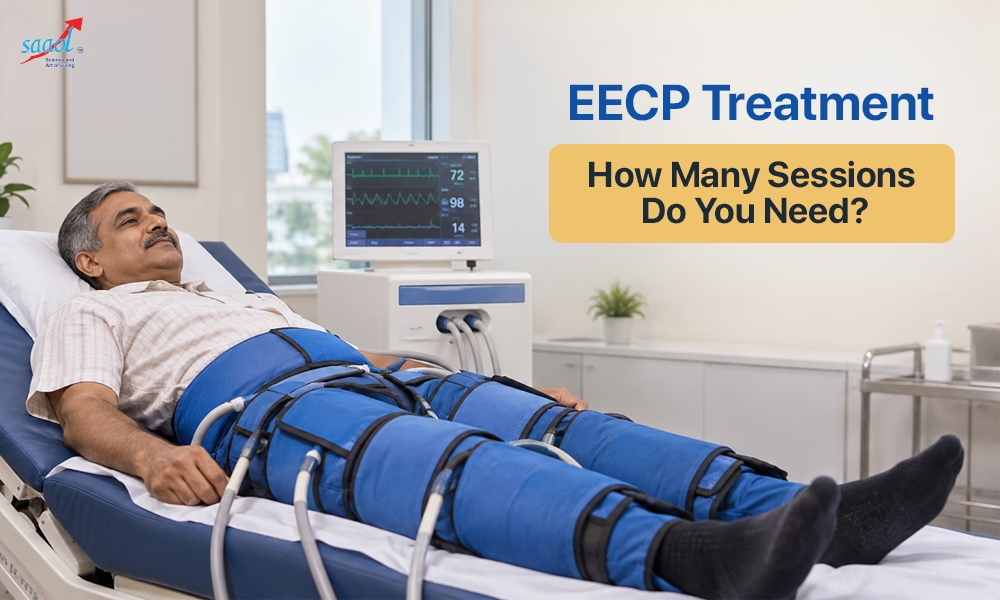
Most EECP treatment protocols include 35 one-hour sessions, usually done five days a week for about seven weeks. Some patients may need a few extra sessions based on their clinical condition and response to treatment. There’s no single “right” number for everyone. It depends on things like symptom severity, heart function, and how well you’re progressing along the way. Your doctor tracks all of this and decides the exact course that’s right for you.
If you have just been told that you have heart blockage, are experiencing recurring chest pain or have reduced heart function, you may already be trying to make sense of your reports, medicines and treatment options.
Then your doctor mentions something you may never have heard of before: EECP Therapy.
No surgery. No hospital admission. But 35 or even 40 sessions?
Naturally, your first thought may be: Why so many? Do I really need every session? How long does each session take?
In this blog, we will discuss how many sessions are needed for EECP, how long EECP treatment takes, why some patients may need a different schedule, and what you should know before starting therapy.
What Is EECP Therapy?
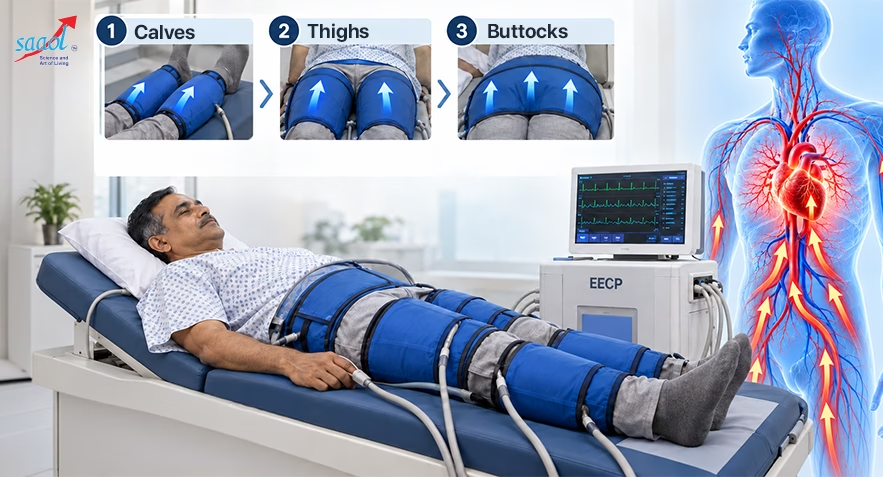
EECP, or Enhanced External Counterpulsation, is a non-invasive outpatient treatment that helps improve blood flow to the heart.
During the session, soft inflatable cuffs are wrapped around the calves, thighs and buttocks. These cuffs gently inflate sequentially during the resting phase of the heartbeat and rapidly deflate before the heart contracts.
This action can increase blood flow back towards the heart, improve coronary perfusion and reduce the workload against which the heart pumps. Clinical studies have demonstrated improvements in symptoms, exercise capacity and measures of myocardial perfusion in appropriately selected patients.
EECP does not involve surgical incisions or anaesthesia, and most patients do not require hospitalisation for the treatment itself, and most people can return to their normal routine afterwards.
A typical session lasts approximately one hour.
What Are the Benefits of EECP?
EECP is mainly used to help the heart work with less strain and improve blood flow.
For suitable patients, it may help:
- Reduce chest pain or angina
- Improve walking and exercise capacity
- Reduce breathlessness during daily activities
- Improve energy and day-to-day comfort
- Improve overall quality of life
Before starting treatment, you should know the potential benefits of EECP and what improvements you may realistically expect.
How Many EECP Sessions Are Usually Needed?
The conventional EECP protocol consists of 35 treatment hours, commonly given as one one-hour session, five days a week for seven weeks.
A 2024 study, published in the National Library of Medicine, describes the standard EECP protocol as 35 one-hour sessions, with treatment extended in some patients depending on their progress.
Earlier clinical research, including the landmark MUST-EECP trial, also used the same 35-hour EECP treatment protocol, delivered over four to seven weeks.
SAAOL Delhi currently describes its EECP treatment programme as generally involving 35–40 one-hour sessions, with the treatment extending over approximately 6–8 weeks according to the prescribed schedule.
Confused About How Many EECP Sessions You Need? Let Our Specialists Guide You.
Talk to us now.
The key point is that 35 and 40 are not contradictory numbers. Thirty-five treatment hours form the best-established protocol in the medical literature, while individual centres may extend or structure the programme differently.
Why Does EECP Need 35–40 Sessions Instead of Just a Few?
EECP works best as a complete treatment course, not as a one-time session.
During each session, the cuffs around your legs work with your heartbeat to help improve blood flow towards the heart.
With repeated sessions, these effects may gradually build up.
The exact number of EECP sessions may vary depending on factors such as:
- Severity and frequency of symptoms: Symptoms are monitored throughout the treatment course to assess progress and response.
- Heart pumping function: Ejection fraction (EF) and the overall condition of the heart are considered when determining whether EECP is appropriate and how treatment should be monitored.
- Exercise tolerance: Functional capacity and the patient’s ability to tolerate treatment are important considerations.
- Blood pressure and heart rhythm: These help doctors decide how safely and effectively EECP can be continued.
- Previous heart treatments: A history of angioplasty, stenting or bypass surgery is considered as part of the patient’s overall cardiac assessment.
- Other health conditions:Diabetes, peripheral vascular disease and other medical conditions may influence treatment suitability and monitoring.
- Response to EECP: The patient’s symptoms, functional capacity and tolerance during the treatment course help the treating physician determine whether the planned course is appropriate and whether any additional sessions should be considered.
For patients having a low ejection fraction, EECP may be considered after proper medical evaluation.
At SAAOL, EECP is also combined with lifestyle management to support overall heart health.
Can You Start Feeling Better Before Completing All EECP Sessions?
Yes, improvement can occur during the treatment course, but feeling better early does not necessarily mean the course is complete.
People respond to EECP at different rates.Some patients may notice changes in symptoms or exercise tolerance relatively early, while others may experience more gradual improvement over the course of treatment or the standard seven-week EECP course.
However, the response can vary from person to person.
Can You Feel Better Before Completing All EECP Sessions?
Yes, some patients may start noticing improvement before completing the full EECP course. However, everyone responds differently.
According to Cleveland Clinic, many patients who respond to EECP notice symptom improvement during the last couple of weeks of the usual seven-week treatment course.
A prospective study published in the PMC, followed 50 patients receiving 35 EECP sessions. Their average number of daily angina attacks fell from 2.7 to 0.9 during the seven-week treatment course, showing that symptom improvement can develop gradually while treatment is still underway.
The landmark MUST-EECP trial also found fewer angina episodes and improved time to exercise-induced heart ischaemia after a 35-hour EECP course.
You may gradually notice:
- Less frequent chest discomfort
- Better walking or exercise capacity
- Less difficulty during everyday activities
- Reduced angina-related limitations
However, there is no fixed number of sessions after which every patient should feel better. Even if your symptoms improve early, do not stop treatment on your own. Your doctor should monitor your response and decide when the prescribed course is complete.
How Is the Exact Number of EECP Sessions Decided for You?
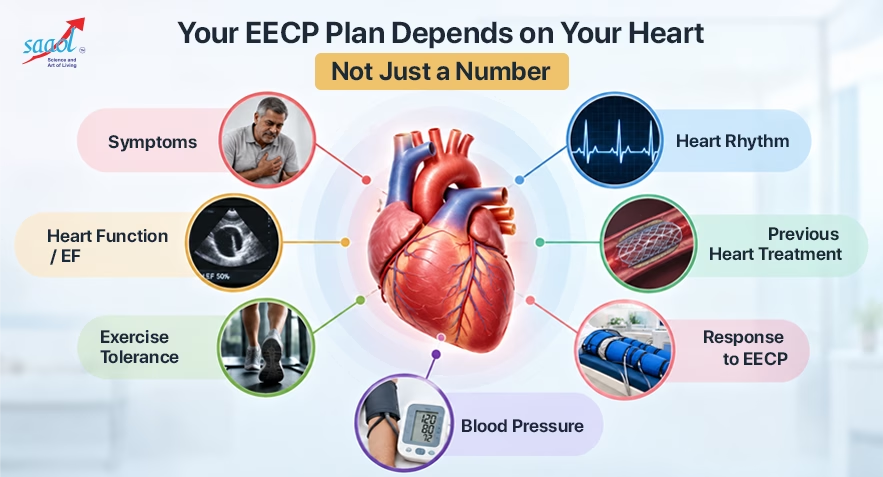
The answer should come from your clinical evaluation, not from the internet, a fixed blockage percentage or somebody else’s EECP experience.
Your doctor may need to review your symptoms, medical history and relevant cardiac investigations before deciding whether EECP is appropriate and how the treatment should be structured.
Questions worth asking during your consultation include:
- What is the main reason EECP is being recommended in my case?
- How many sessions are planned and why?
- What improvement are we expecting to monitor?
- How will my progress be assessed during treatment?
- What should I do if I miss several sessions?
- Will my medicines or lifestyle plan need adjustment during the course?
- What happens after the final EECP session?
That conversation matters more than whether somebody else completed 35, 38 or 40 treatments.
Who Should Consider EECP?
EECP may be considered for selected heart patients, especially those who:
- Have heart blockages with ongoing symptoms
- Have low heart pumping function
- Are not suitable for angioplasty or bypass surgery
- Continue to have chest pain or other symptoms even after angioplasty or bypass surgery
The final decision should always be based on a doctor’s evaluation of your symptoms, heart function and medical reports.
Where Can You Get EECP Treatment in India?
For patients in Delhi NCR, SAAOL Heartcare Delhi offers EECP Therapy through a holistic heart-care protocol that combines EECP with diet, exercise and lifestyle management.
This combined approach not only focuses on improving symptoms and circulation, but also on managing the underlying risk factors that contribute to heart disease.
With 30+ years of expertise, 7.5 lakh+ patient stories, and 10+ conveniently located centres across Delhi NCR, patients can access medically supervised EECP treatment closer to home.
End Note
So, now you have an idea about how many sessions are needed for EECP and why.
But the better question is not simply, “How many sessions do I need?”
It is: What treatment course is appropriate for my heart condition, and what outcome are we trying to achieve?
That answer requires your symptoms, heart function, reports, previous treatment and overall medical condition to be considered together.
If you are exploring EECP after being diagnosed with coronary artery disease, persistent angina or another heart condition, have your reports reviewed before deciding on a treatment schedule.
Book a consultation with a SAAOL Heartcare specialist to understand whether EECP is appropriate for you and how many sessions your individual treatment plan may require.
Your Heart Needs the Right Plan, Not Just a Number.
FAQs
Q1. Is EECP treatment painful?
EECP is generally comfortable and well tolerated by most patients. You may feel temporary pressure or mild discomfort while the cuffs are inflated around your legs, but this usually settles once the cuffs are removed after the session.
Q2. Is there an age limit for EECP therapy?
Age alone does not determine whether you can have EECP. Doctors consider your heart condition, overall health and any medical conditions that may make EECP unsuitable before recommending treatment.
Q3. Do I have to stop my heart medicines during EECP?
No. Do not stop or change your heart medicines unless your doctor advises you to. EECP is generally used along with appropriate medical treatment, not as a replacement for prescribed medicines.
Q4. Can I return to work after an EECP session?
Yes, most patients can return to their normal routine after an EECP session. It is an outpatient, non-surgical treatment and usually does not require hospitalisation or a recovery period .However, individual responses vary, and some patients may experience temporary fatigue or discomfort.
Q5. Can EECP treatment be repeated later?
Yes, EECP may be repeated in selected patients if symptoms return. However, another course should be considered only after medical evaluation. Clinical data from the International EECP Patient Registry also show that repeat EECP has been used in patients with recurrent chronic angina symptoms.
Q6. Is EECP covered by health insurance in India?
It may be covered under some policies, but coverage varies between insurers and policies. Always confirm coverage and pre-authorisation requirements with your insurance provider before beginning treatment.
Q7. What Happens If You Miss an EECP Session?
Missing one session usually does not mean restarting the full course. Inform your EECP team so the missed session can be rescheduled. Try to avoid frequent gaps, and do not stop treatment early without your doctor’s advice.
Q 8. Should I go for an EECP session if I suddenly develop severe chest pain?
No. New, severe, persistent or unexplained chest pain can be a medical emergency and should not be treated as a routine EECP appointment. Seek emergency medical care immediately, particularly if the pain is accompanied by breathlessness, sweating, nausea, fainting or pain spreading to the arm, shoulder, jaw or back.
Do not wait for your next EECP appointment if you suspect an acute cardiac problem.
Disclaimer: This article is intended for general educational purposes and does not replace personalised medical advice, diagnosis or treatment. EECP is not appropriate for every patient, and the number, frequency and duration of sessions should be determined after medical evaluation. Do not stop prescribed medicines or delay recommended cardiac treatment without consulting a qualified healthcare professional. Sudden or severe chest pain, breathing difficulty, fainting or other possible heart-attack symptoms require immediate emergency medical attention.
Book Appointment


In This Article
- What Is EECP Therapy?
- What Are the Benefits of EECP?
- How Many EECP Sessions Are Usually Needed?
- Why Does EECP Need 35–40 Sessions Instead of Just a Few?
- Can You Start Feeling Better Before Completing All EECP Sessions?
- Can You Feel Better Before Completing All EECP Sessions?
- How Is the Exact Number of EECP Sessions Decided for You?
- Who Should Consider EECP?
- Where Can You Get EECP Treatment in India?
- End Note
- FAQs
×
Request for a Call Back
Thank You! We'll get back to you shortly.