

All
What is MINOCA? Causes, Symptoms and Treatment
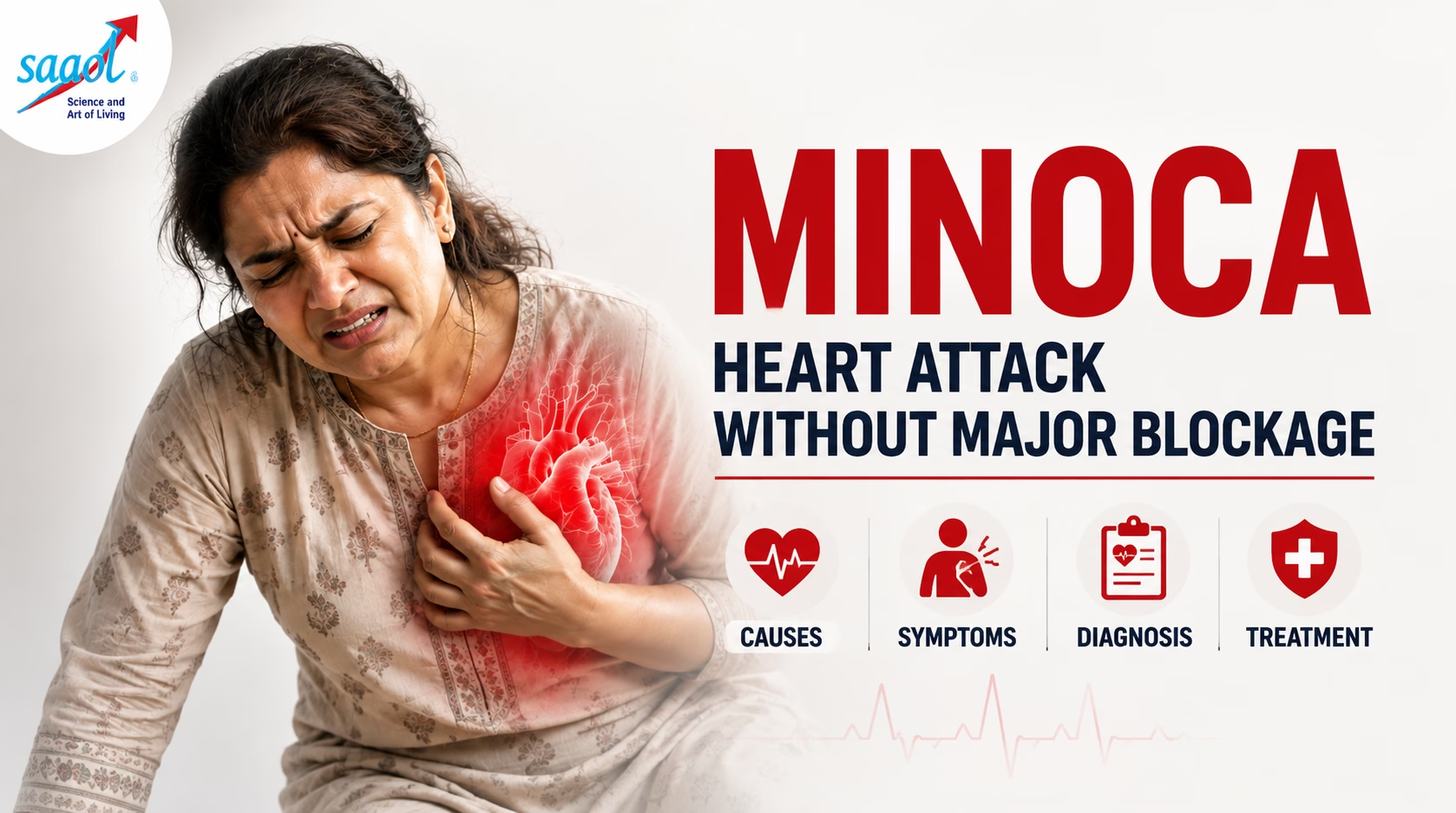
A heart attack without a major blockage may sound impossible, but it can happen. This condition is known as myocardial infarction with non-obstructive coronary arteries (MINOCA).
MINOCA is a type of heart attack that occurs even though no major coronary artery is narrowed by 50% or more. It is initially a working diagnosis because several different conditions, including plaque disruption, coronary artery spasm, SCAD and microvascular dysfunction can cause the event. . MINOCA is more common in women and younger adults than conventional obstructive coronary disease, and it should never be dismissed simply because an angiogram looks relatively clear.
At 35, Priya experienced sudden tightness in her chest and difficulty breathing. At the hospital, elevated troponin levels indicated damage to her heart muscle, but her angiogram showed no major blockage.
Like many patients, she was left wondering: How could I have a heart attack when my arteries appear almost clear?
Priya’s experience is not an isolated one, and understanding how a heart attack without blockage occurs is the first step towards recognising MINOCA and getting the right care.
This blog explains what MINOCA is, why it affects women more often, which symptoms should never be ignored and how doctors diagnose and treat it.
What Is MINOCA?
MINOCA stands for myocardial infarction with non-obstructive coronary arteries.
In simple terms, it means you have had a heart attack, but your angiogram shows no major artery narrowed by 50% or more. You may still have chest pain, raised troponin levels or ECG changes showing heart-muscle injury. Doctors therefore carry out further tests to understand what interrupted the blood flow and caused the damage.
According to the American Heart Association, the condition represents approximately 5–6% of heart attacks reported in clinical studies, and is disproportionately seen in women, especially younger women.
Is MINOCA a Real Heart Attack?
Yes. MINOCA is a real heart attack when the clinical criteria for myocardial infarction are met.
A person with MINOCA may have:
- Chest pain or pressure
- ECG changes
- A rise and fall in cardiac troponin
- Evidence of heart-muscle injury on cardiac imaging
The absence of a severe blockage does not mean that the heart is undamaged. It simply means that the heart attack was not caused by the type of fixed, obstructive narrowing usually associated with coronary artery disease.
MINOCA should therefore not be dismissed as anxiety, indigestion or an insignificant cardiac event.
What Causes a Heart Attack Without Major Blockage?
MINOCA does not have one single cause. It is a syndrome with several possible underlying mechanisms, and identifying the specific mechanism is essential because treatment differs.
1. Damage to a Small Cholesterol Plaque
A cholesterol plaque does not have to cause severe narrowing before it becomes dangerous. A small plaque may rupture or become eroded, causing a blood clot to form inside the artery.
The clot may temporarily interrupt blood flow and then partially or completely dissolve before angiography is performed. As a result, the artery may appear largely open even though heart-muscle injury has already occurred.
Specialised imaging tests such as optical coherence tomography (OCT) or intravascular ultrasound (IVUS) may help identify this type of hidden plaque damage.
2. Coronary Artery Spasm
A coronary artery spasm occurs when an artery suddenly tightens, temporarily restricting blood flow to the heart muscle. The artery may return to its normal size before the angiogram, leaving no obvious blockage.
Spasms may occur in arteries with or without visible plaque. Smoking and certain stimulant drugs can increase the risk, although a spasm can also occur without an obvious trigger.
3. Coronary Microvascular Dysfunction
The heart contains a network of very small blood vessels known as the coronary microcirculation. These vessels help regulate blood and oxygen delivery to the heart muscle.
When the vessels fail to widen properly or become unusually constricted, the heart may not receive enough blood. Because these vessels are too small to be seen clearly on routine angiography, the major coronary arteries may appear open.
4. Spontaneous Coronary Artery Dissection
Spontaneous coronary artery dissection, or SCAD, occurs when a tear or bleeding develops within the wall of a coronary artery. This can narrow the channel through which blood flows and reduce oxygen delivery to the heart.
SCAD is an important cause of heart attack among younger and middle-aged women, although it can also occur in men. It has also been associated with pregnancy, the period after childbirth, fibromuscular dysplasia and severe physical or emotional stress.
5. Coronary Embolism
A blood clot or other material may form elsewhere in the body and travel to a coronary artery. It can temporarily or permanently block blood flow to the heart.
Possible causes include certain heart-rhythm disorders, heart-valve disease, clotting disorders and infections involving the heart valves.
Why Is MINOCA More Common in Women?
MINOCA can affect men and women, but women are disproportionately represented.
The VIRGO study published in the National Library of Medicine examined heart-attack patients aged 18–55 and found that women had nearly five times the odds of having MINOCA compared with men.
Several factors may contribute to this difference:
- SCAD occurs much more frequently in women.
- Coronary microvascular dysfunction is commonly identified in women with cardiac symptoms.
- Women may be more susceptible to certain forms of coronary artery spasm.
- Pregnancy and postpartum vascular changes can increase the risk of SCAD and other coronary complications.
- Some women experience heart disease without developing the severe, fixed arterial narrowing typically seen in obstructive coronary disease.
This does not mean MINOCA is exclusively a women’s condition. Men can also experience it and require the same careful investigation.
MINOCA is particularly relevant because heart attacks can occur at a young age, including in people who appear healthy or do not have the usual cardiovascular risk factors.
What Are the Symptoms of MINOCA?
MINOCA can produce the same warning signs as a conventional heart attack. Symptoms may include:
- Pressure, squeezing, heaviness, burning or pain in the chest
- Pain spreading to the arm, shoulder, jaw, neck or back
- Sudden shortness of breath
- Cold sweating
- Nausea or vomiting
- Dizziness or fainting
- Indigestion-like discomfort
- Unusual or overwhelming fatigue
- A sudden feeling that something is seriously wrong
Women may experience heart attack warning signs such as breathlessness, unusual fatigue, nausea, back pain or jaw discomfort, either with or without intense chest pain.
Important: If these symptoms are new, severe, worsening or last more than a few minutes, seek emergency medical care immediately. Do not wait for the symptoms to settle or drive yourself to the hospital.
How Is MINOCA Diagnosed?
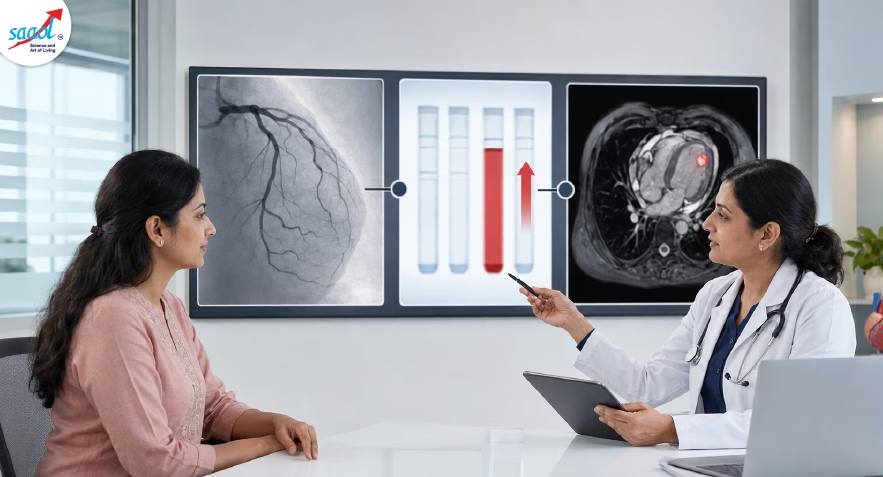
Doctors first determine whether the patient meets the diagnostic criteria for an acute heart attack. This usually involves:
- Detecting a rise or fall in cardiac troponin, with at least one value above the diagnostic limit
- Identifying symptoms, ECG changes or imaging evidence consistent with reduced blood flow
- Performing coronary angiography and finding no artery narrowed by 50% or more
- Investigating whether another condition explains the heart-muscle injury
Cardiac enzyme tests explain how troponin helps doctors detect heart-muscle damage.
MINOCA remains a working diagnosis until doctors determine whether the injury resulted from an ischaemic heart attack or a different medical condition.
MINOCA is not the final diagnosis because the word describes what doctors see during the initial investigation, not what actually caused the heart attack. Further testing is needed to identify the underlying mechanism and select the right treatment.
Why Is Cardiac MRI Important After Suspected MINOCA?
Cardiac MRI (CMR) provides detailed information about heart-muscle structure, inflammation, oedema and scar patterns, helping doctors determine whether the injury is due to myocardial infarction or another condition.
This helps doctors distinguish a true ischaemic heart attack from conditions that can produce similar symptoms and troponin changes, including:
- Myocarditis: inflammation of the heart muscle
- Takotsubo syndrome: temporary weakening of the heart, often associated with intense physical or emotional stress
- Cardiomyopathy: a disease affecting the structure or function of the heart muscle
These conditions can initially resemble MINOCA, but they are not classified as MINOCA once they are confirmed as the cause.
A 2021 Circulation study of women with suspected MINOCA found that combining OCT with cardiac MRI identified an underlying mechanism or alternative diagnosis in 84.5% of those who underwent both tests.
The findings included ischaemic causes as well as conditions such as myocarditis and Takotsubo syndrome.
This demonstrates why angiography alone may not be enough to explain a heart attack without major blockage.
What Other Tests May Be Needed?
The tests selected depend on the patient’s symptoms, angiogram and suspected cause. They may include:
- OCT or IVUS: to detect plaque disruption, small clots or problems within the artery wall
- Coronary function testing: to investigate artery spasm and microvascular dysfunction
- Echocardiography: to evaluate heart structure, movement and pumping capacity
- Blood tests: to assess cholesterol, diabetes, inflammation and certain clotting disorders
- ECG or rhythm monitoring: to look for heart-rhythm abnormalities
- Tests for embolism: when a travelling blood clot is suspected
- Further vascular imaging: when SCAD or an associated blood-vessel disorder is possible
The 2023 European Society of Cardiology guidelines support using a structured diagnostic approach in people with suspected MINOCA.
Is MINOCA the Same as INOCA?
No. Although the names are similar, they describe different clinical conditions.
| Condition | What it means |
| MINOCA | Heart attack with no major coronary artery blockage |
| INOCA | Reduced blood flow or angina with no major blockage, but no heart attack |
Both conditions can involve coronary artery spasm or microvascular dysfunction, but they are not interchangeable.
Is MINOCA Dangerous?
MINOCA is not harmless simply because no major blockage is found. Its seriousness depends on the cause and extent of heart damage, and some patients may experience recurring chest pain or another heart problem.
According to the American College of Cardiology, MINOCA has an overall one-year mortality rate of about 3.5%, making proper treatment and follow-up essential.
How Is MINOCA Treated?
There is no single treatment plan for every person with MINOCA. Treatment must address the identified or most likely cause.
Depending on the diagnosis, treatment may include:
- Plaque disruption: antiplatelet medicines, statins and management of cardiovascular risk factors
- Coronary artery spasm: calcium-channel blockers, nitrates and avoidance of known triggers
- Microvascular dysfunction: personalised medicines to control angina and improve vascular function
- Coronary embolism: treatment of the clot and the condition responsible for its formation
- SCAD: careful monitoring and individualised medical management; many stable cases are managed without an intervention
- High blood pressure, diabetes or abnormal cholesterol: appropriate medication and lifestyle management
- Recovery after heart attack: cardiac rehabilitation, gradual physical activity and psychological support
MINOCA treatment must be tailored to its cause. Stents or bypass surgery are generally unnecessary without a major blockage, but prescribed medicines should never be stopped without consulting a cardiologist.
Can Lifestyle Changes Help After MINOCA?
Yes. A heart-healthy diet, regular sleep, stress control, no tobacco and gradual exercise under medical guidance can support recovery and reduce future heart risk. Continue prescribed medicines and follow-up care, especially if you have SCAD, reduced heart pumping or ongoing chest pain.
Can EECP Help After MINOCA?

EECP therapy may be evaluated for selected individuals who continue to experience angina or evidence of reduced blood flow despite appropriate medical treatment.
EECP is non-invasive and is designed to improve circulation to the heart and reduce angina symptoms.
Its suitability depends on the underlying mechanism, heart function, current symptoms and overall medical condition. A detailed cardiac assessment is therefore essential before recommending treatment.
Final Insights: Clear Arteries Do Not Always Mean a Healthy Heart
MINOCA can cause a heart attack even when an angiogram shows no major blockage. Finding the exact cause is important for choosing the right treatment and reducing future heart risk.
For eligible and medically stable patients with ongoing chest pain, SAAOL Heartcare Delhi offers personalised care through EECP therapy, prescribed medicines, heart-friendly nutrition, exercise and stress management.
Your angiogram may look clear, but your symptoms still need attention. Book a consultation to understand the right care for your heart.
FAQs
Q1. Can MINOCA occur when cholesterol levels are normal?
Yes. MINOCA can result from coronary spasm, SCAD, a travelling clot or microvascular dysfunction, none of which requires severely elevated cholesterol. However, normal cholesterol does not completely rule out small or unstable plaques.
Q2. Can emotional stress cause MINOCA?
Severe emotional or physical stress may trigger coronary artery spasm or SCAD in susceptible people. However, stress should not be assumed to be the cause until other medical explanations have been investigated.
Q3. Is MINOCA hereditary?
MINOCA is not usually inherited as a single condition. Some underlying causes or contributing conditions, including certain clotting disorders, familial cholesterol disorders and vascular diseases, can have genetic components.
Q4. Can I exercise after MINOCA?
Many patients can gradually return to physical activity, but the timing and intensity depend on the cause, heart function and current symptoms. People with SCAD or ongoing chest pain may need specific restrictions and supervised cardiac rehabilitation.
Q5. Can MINOCA happen again?
Yes, another cardiovascular event or recurrent chest pain is possible. The individual risk depends on what caused the original heart attack and how effectively that condition is managed.
Q6. Does COVID-19 cause MINOCA?
COVID-19 can affect the heart, blood vessels and blood-clotting system. However, a MINOCA event should not automatically be attributed to a current or previous infection. Other possible causes must be investigated.
Q7. Can anxiety raise troponin levels?
Anxiety alone does not usually cause a significant rise in troponin. Elevated troponin indicates heart-muscle injury, which may result from a cardiac or another medical condition and should always be evaluated.
Q8. Can an angiogram miss the cause of a heart attack?
Yes. Angiography mainly shows the inside of the major coronary arteries. It may not reveal microvascular dysfunction, a temporary spasm, subtle plaque damage or some abnormalities within the artery wall. Cardiac MRI, OCT, IVUS or coronary function testing may be needed.
Q9. Does MINOCA require a stent or bypass surgery?
Usually not, because there is no major fixed blockage to open or bypass. Treatment focuses on the underlying cause. Certain uncommon complications may still require an intervention, so every case must be assessed individually.
Q10. Is MINOCA less serious than a conventional heart attack?
Not necessarily. Outcomes vary, but MINOCA can cause significant heart-muscle damage, recurrent symptoms and future cardiovascular events. It requires proper diagnosis, treatment and follow-up.
Disclaimer: This content is intended for general educational purposes and does not replace professional medical advice, diagnosis or treatment. Seek emergency medical care immediately for new or severe chest pain, breathing difficulty, fainting or other possible heart-attack symptoms.
Book Appointment




In This Article
- What Is MINOCA?
- Is MINOCA a Real Heart Attack?
- What Causes a Heart Attack Without Major Blockage?
- 1. Damage to a Small Cholesterol Plaque
- 2. Coronary Artery Spasm
- 3. Coronary Microvascular Dysfunction
- 4. Spontaneous Coronary Artery Dissection
- 5. Coronary Embolism
- Why Is MINOCA More Common in Women?
- What Are the Symptoms of MINOCA?
- How Is MINOCA Diagnosed?
- Why Is Cardiac MRI Important After Suspected MINOCA?
- What Other Tests May Be Needed?
- Is MINOCA the Same as INOCA?
- Is MINOCA Dangerous?
- How Is MINOCA Treated?
- Can Lifestyle Changes Help After MINOCA?
- Can EECP Help After MINOCA?
- Final Insights: Clear Arteries Do Not Always Mean a Healthy Heart
- FAQs
×
Request for a Call Back
Thank You! We'll get back to you shortly.