

All
Can TMT Test Be Wrong? Positive and Negative Results Explained
Yes, a TMT test can sometimes give a wrong or unclear result. It can provide an important clue about your heart, but it cannot confirm or completely rule out a heart blockage on its own. Doctors must also consider your symptoms, medical history, risk factors and other test results.
A TMT checks how your heart works while you walk on a treadmill. As the exercise becomes harder, your heart needs more oxygen-rich blood. The test records your heartbeat, blood pressure, symptoms and ECG changes to identify possible inducible ischemia, a condition in which the heart may not receive enough blood during physical activity.
However, movement during the test, certain medicines, existing ECG changes or not exercising hard enough can affect the result. This is why “TMT positive for inducible ischemia” does not always confirm a heart blockage, and a negative result does not always rule one out.
In this article, we will explain can TMT tests be wrong, what positive and negative TMT results mean, and which tests your doctor may recommend next.
What is a TMT Test? What Does it Measure?
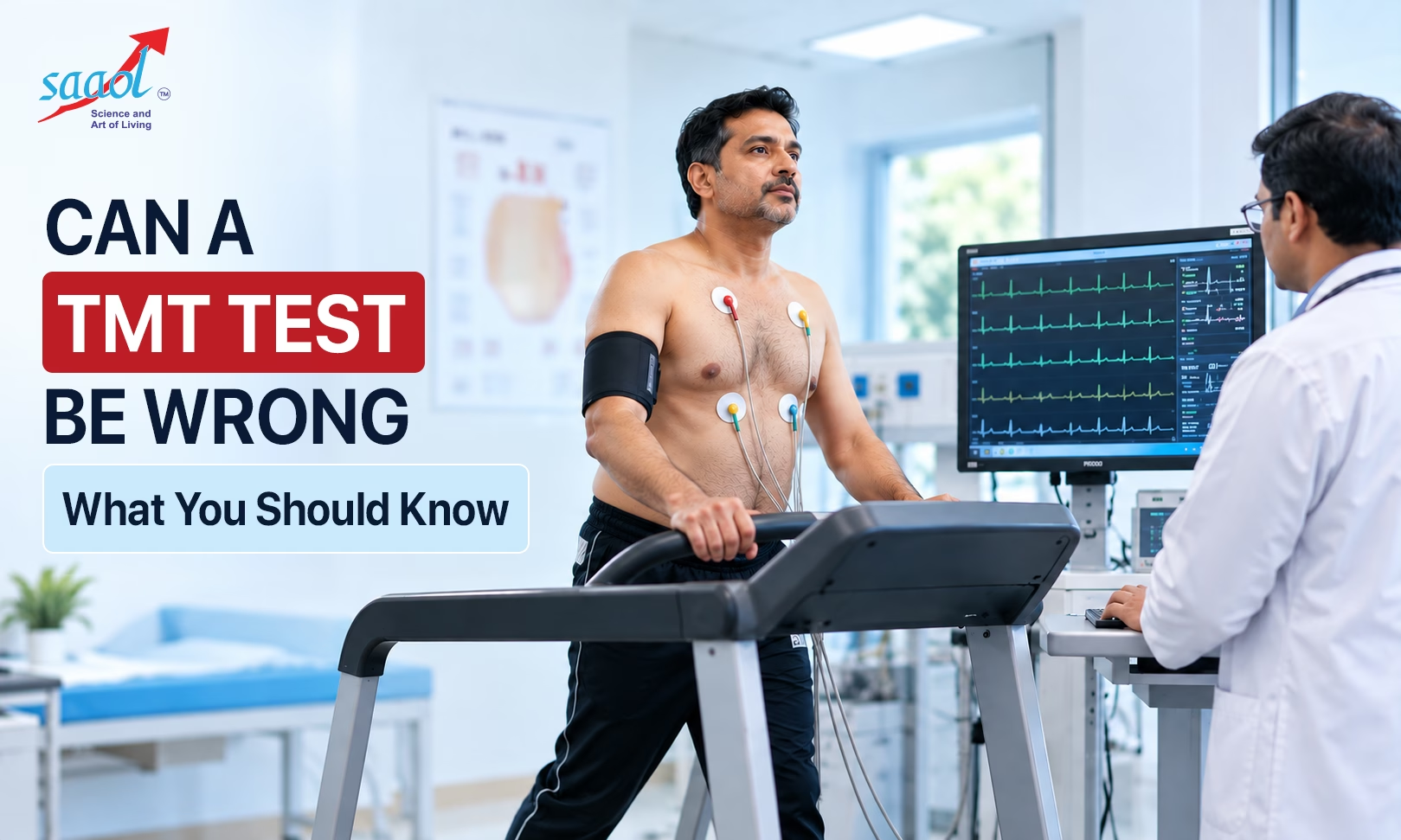
In simple terms, a Treadmill Test (TMT), also called an exercise stress test, checks how your heart responds to physical activity. You walk on a treadmill while connected to ECG leads. As the speed and incline gradually increase, the doctor monitors your heart rate, rhythm, blood pressure, symptoms and ECG changes.
During the TMT procedure, doctors closely monitor the ST segment, a small part of the ECG tracing. Certain changes in this segment during exercise may suggest myocardial ischemia, which means reduced blood flow to the heart muscle.
TMT assesses how the heart performs under stress. It checks for signs of reduced blood flow during exercise; it does not directly show blockages in the heart arteries.
What Does “TMT Positive for Inducible Ischemia” Mean?
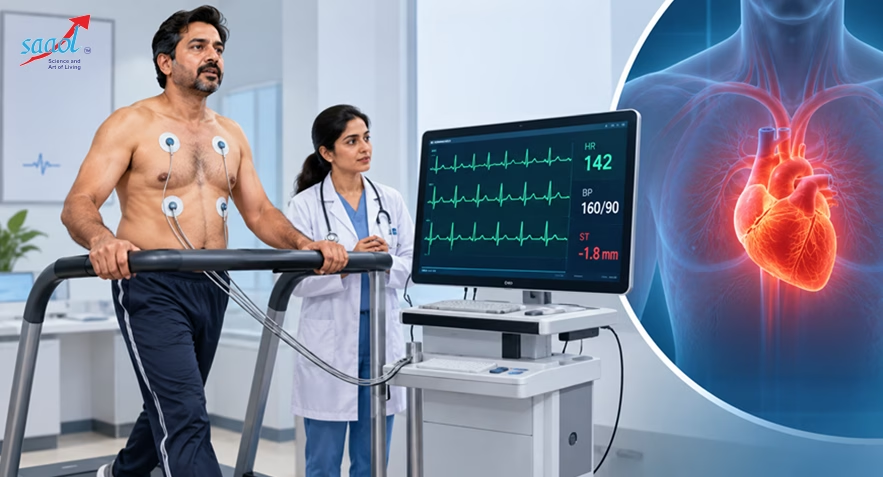
It means your heart may not have received enough blood during exercise. “Inducible” means the possible reduced blood flow appeared when your heart worked harder, not while you were resting.
However, a positive TMT alone does not confirm a heart blockage.
A report may also describe the result as “mildly positive” or “borderline positive.” These terms generally mean the findings were not strongly conclusive. Doctors must consider the ECG tracing, exercise level, symptoms and cardiovascular risk factors before deciding what the result means.
The 2024 European Society of Cardiology guidelines recommend assessing these factors before deciding whether further tests are needed.
A positive result may be linked to a major artery blockage, small-vessel problems, coronary spasms or technical errors. Therefore, treatment after a positive TMT should never be decided from the report alone.
Can a Positive TMT Test Be Wrong?
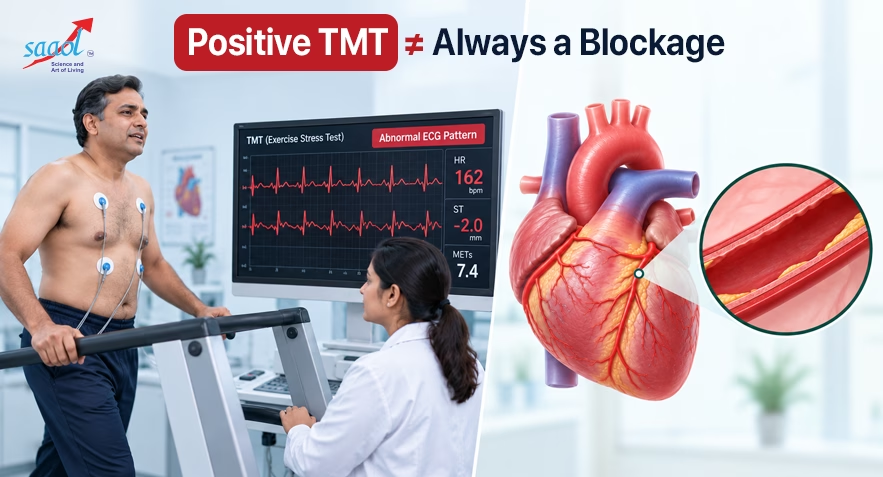
Yes. A false-positive TMT occurs when the exercise ECG looks abnormal but subsequent evaluation does not show the suspected obstructive coronary artery disease.
However, an abnormal TMT without a major artery blockage may not always be a false alarm. A 2024 study published in the Journal of the American College of Cardiology found that, in selected patients with angina but no obstructive coronary artery disease, abnormal exercise ECG findings were associated with problems in the heart’s smaller blood vessels.
This means a TMT may sometimes miss the condition or suggest a problem when none is present.
A false-positive result means the TMT suggests reduced blood flow, but no major blockage is found in the coronary arteries. This may happen because of:
- Movement or loose ECG leads: These can distort the ECG tracing.
- Existing ECG changes: Certain heart conditions can make the result difficult to interpret.
- Medicines or mineral imbalances: Some medicines and abnormal electrolyte levels may affect the ECG.
- Low risk of heart disease: Testing people with very few symptoms or risk factors may lead to more false alarms.
Therefore, persistent chest pain or breathlessness still needs proper medical evaluation, even when further testing shows no major artery blockage.
Can a TMT Be Negative Even When a Heart Problem Exists?
Yes. TMT negative for inducible ischemia means the test did not detect reduced blood flow to the heart during exercise. Although reassuring, it does not guarantee that your arteries are free from plaque or rule out every heart problem.
A false-negative or inconclusive result may occur if you could not exercise enough, did not reach the required heart rate or medicines affected your response. A systematic review also found that accuracy varies between patients and test types.
An inconclusive TMT means the test could not provide a reliable positive or negative answer, often because the person could not exercise enough or did not reach the required heart rate.
If you still have heart-blockage symptoms, consult a doctor for further evaluation.
What Should You Do After a Positive TMT?
Do not panic or start treatment on your own. First, understand how a TMT is performed and interpreted and consult a cardiologist with your complete report and raw ECG tracing, if available.
The 2021 AHA/ACC Chest Pain Guideline recommends choosing further tests according to the patient’s symptoms, risk factors and previous findings.
Your doctor may suggest stress imaging or CT angiography to assess suspected heart blockages. Invasive angiography is generally considered when the risk is higher or an intervention may be needed.
Does a Positive TMT Mean You Need Treatment Immediately?
Not necessarily.
A positive TMT alone does not mean you need a stent or bypass surgery. Treatment depends on your symptoms, confirmed diagnosis, heart function and overall risk.
The 2023 AHA/ACC guideline recommends making treatment decisions after a complete evaluation. Care may include lifestyle changes, risk-factor control and prescribed medicines.
The US Preventive Services Task Force also advises against routine TMT screening in low-risk adults without symptoms, as unclear results may lead to unnecessary tests or treatment.
When should you seek emergency care?
A test report should never delay emergency help.
Seek emergency medical care if you develop warning signs of a heart attack, such as new or severe chest pressure, pain spreading to the arm, jaw, neck or back, sudden breathlessness, cold sweating or fainting.
The NHLBI advises immediate emergency care whenever a heart attack is suspected, even if you are unsure.
The Bottom Line
Can a TMT test be wrong? Yes. However, whether the result is positive, negative or inconclusive, it should never be interpreted alone. Your symptoms, risk factors, test quality and other medical findings help determine what the result actually means.
If your TMT result is unclear or does not match your symptoms, book a consultation with SAAOL Heartcare Delhi to have your reports reviewed and understand the appropriate next steps.
FAQs
Q1. Can anxiety cause a positive TMT result?
Anxiety can increase your heart rate and reduce exercise tolerance, but it does not automatically explain a positive TMT. A doctor must review the ECG changes, symptoms and test quality before interpreting the result.
Q2. What is the difference between a false-positive and an inconclusive TMT?
A false-positive TMT suggests ischemia that is not confirmed by further evaluation. An inconclusive TMT means the test did not provide enough information, often because the required exercise level or target heart rate was not reached.
Q3. Can a positive TMT become negative later?
Yes. TMT results may change due to medicines, improved fitness, treatment or differences in test conditions. However, a later negative result does not necessarily prove that the earlier positive result was wrong.
Q4. Can a TMT be positive when the echocardiogram is normal?
Yes. A resting echocardiogram checks the heart’s structure and function while you are at rest, whereas a TMT evaluates its response to exercise. Therefore, the two tests can show different results.
Q5. Can anaemia affect a TMT result?
Yes. Anaemia reduces the blood’s ability to carry oxygen and may cause breathlessness, fatigue or ECG changes during exercise. A doctor may recommend a blood test when anaemia is suspected.
Q6. Can I exercise after a positive TMT?
Consult your doctor before returning to vigorous exercise. Whether you can exercise safely depends on your symptoms, TMT findings and whether further tests are required.
Q7. Is a stress echocardiogram more accurate than a TMT?
A stress echocardiogram generally provides more detailed information because it shows how the heart muscle moves during stress. However, the most suitable test depends on your symptoms, medical history and initial findings.
Q8. Does a negative TMT mean I cannot have a heart attack?
No. A negative TMT means the test did not detect exercise-induced ischemia at that time. It cannot identify every coronary plaque or guarantee that a heart attack will never occur.
Medical disclaimer: This article provides general education and does not replace diagnosis or treatment by a qualified healthcare professional. Test interpretation and treatment decisions must be personalised. Seek emergency medical care for possible heart-attack symptoms.
Book Appointment





In This Article
- What is a TMT Test? What Does it Measure?
- What Does “TMT Positive for Inducible Ischemia” Mean?
- Can a Positive TMT Test Be Wrong?
- Can a TMT Be Negative Even When a Heart Problem Exists?
- What Should You Do After a Positive TMT?
- Does a Positive TMT Mean You Need Treatment Immediately?
- When should you seek emergency care?
- The Bottom Line
- FAQs
×
Request for a Call Back
Thank You! We'll get back to you shortly.