


If your doctor has advised a TMT test, you may be wondering what it means and whether it’s serious.
A Treadmill Test (TMT) is a commonly used heart test to detect blockages, reduced blood flow, and early signs of heart disease.
It is also known as the cardiac stress test.
This test is performed by walking or running on a treadmill to see how the heart responds to physical stress.
In this blog, we will walk you through everything you need to know about the TMT test.
Whether your doctor has just advised you or your loved ones to get one, or you are simply curious about it, this guide will help you understand the test clearly and confidently.
What is the TMT(Treadmill) Test for Heart?
A TMT test is a diagnostic heart test used to evaluate how well your heart works when your body is exercising.
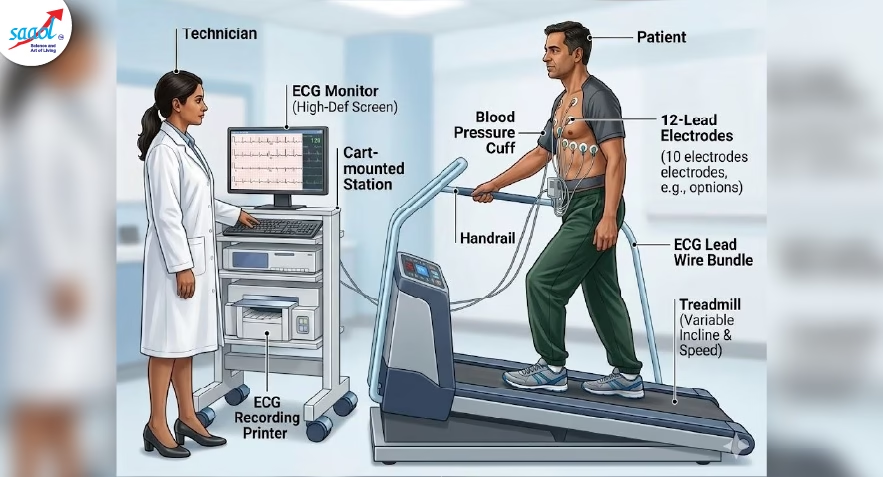
It is as simple as the patient walking or running on a treadmill, while the speed and incline are increased at specific intervals. ECG leads are connected to the chest to measure the heart rhythm.
When you walk on the treadmill, the machines watch three main things:
- Your heartbeat (ECG)
- Your heart rate
- Your blood pressure
Doctors study these signals to see whether your heart is getting enough blood and oxygen during exercise. For a detailed clinical overview, refer to the StatPearls guide on Treadmill Stress Testing (NIH/NCBI)
You can imagine it like checking how a car engine works when you press the accelerator. If the engine runs smoothly, it means things are working well. If it struggles, there might be a problem.
Why Do Doctors Recommend TMT (Treadmill Test)?
The purpose of TMT in cardiology is to check for the cardiac health of an individual and to detect any underlying heart condition that is not possible to detect when the body is resting. Like-
- Coronary Artery Disease: To identify heart blockages
- Exercise tolerance: To check someone’s exercise capacity
- Arrhythmia identification: To detect irregular heart rhythm
- Post-Treatment Monitoring: To monitor a patient’s heart health after heart surgery
- Pre-Surgical Screening: To check if the heart is fit for surgery
Dr. Vishal Sharma from SAAOL Heartcare Delhi says, “Most of the time, blockages come to the surface when you are under stress. A stress test done at the right time can save a life.”
Who Needs a TMT Test (Treadmill Test)?
You may need a heart stress test if you:
- Experience chest discomfort during walking or physical activity
- Feel shortness of breath even with mild exertion
- Notice unusual tiredness without heavy work
- Have diabetes, high blood pressure, or high cholesterol
- Have a family history of heart disease
- Need a heart health evaluation before starting intense exercise or major surgery
If you have any of these symptoms, consider getting evaluated.
Not sure if you need a TMT test? Speak with our heart care specialists for the right guidance.
Book Appointment Call NowHow is the TMT Test Done?
Stress Test is a simple procedure, done on a treadmill while the heart rhythms and breathing of the patient are monitored continuously.
Let’s have a look at it step by step in the simplest way-
- Small sticky pads are gently attached to your chest. These are connected to an ECG machine to watch your heart.
- A cuff is tied around your arm to check your blood pressure during the test.
- You stand on the treadmill and the machine begins at a slow walking speed.
- Every few minutes the speed and slope increase so your heart works a little harder.
- The machine records your heart rate, heartbeat pattern, and blood pressure every 3 minutes.
- You should tell the doctor if you feel chest pain, dizziness, breathlessness, or extreme tiredness.
- The test stops if you reach the target heart rate, feel tired, or if the doctor decides to stop it.
- The treadmill gradually slows down so you can walk slowly for a minute.
- The doctor continues checking your heart and blood pressure while you rest.
- Electrodes are taken off your chest.
- The test is completed and the doctor studies the report to see the results.
The complete procedure, including preparation, monitoring, and recovery, takes about 30-45 minutes. Walking on a treadmill alone is approximately 15-20 minutes.
How Will You Prepare Yourself for the TMT (Treadmill Test)?
Doctors will advise you on some simple steps to follow before you appear for TMT so that you become safe during the test and also the results are accurate.
- You should not drink, eat or smoke for 2-3 hours before the test.
- Try to avoid painkillers, caffeine, or any energy drinks for 24 hrs before the test.
- Inform the doctor about all medicines you are taking.
- Wear loose-fitting, comfortable clothes and a suitable pair of shoes for walking on the treadmill.
- Inform the doctor if you are sick (fever, cough, headache, etc.).
- Get proper sleep before the test.
What Happens After a TMT (Treadmill Test)?
After the test, doctors let you rest enough so that your BP and heart rate return to normal. Always inform your doctor if you feel any discomfort after the test.
Doctors advise you next steps once the results are reviewed.
How are the Outcomes Of TMT measured?
Once the test is completed, doctors analyze several parameters to understand how the heart responded to exercise. Such as-
- Heartbeat pattern
- Blood pressure
- Any symptoms
- Expected heart rate for your age
What is a Normal TMT Result?
A normal Treadmill Test result means the heart responds well to exercise. During the test, doctors look at the heartbeat pattern, blood pressure, symptoms, and the expected heart rate for your age.
If the above-mentioned parameters look normal, it means-
- Your heart is likely getting enough blood during exercise
- There may be no CAD or major blockage in the heart arteries
The test is considered normal.
Normal Ranges for a TMT (Treadmill Test):
| Parameter | Normal Value | What it Means |
|---|---|---|
| Resting Heart Rate | 60–100 bpm | Normal heart rate before starting the test. |
| Maximum Predicted Heart Rate (MPHR) | 220 − Age | Estimated maximum safe heart rate during exercise. |
| Target Heart Rate | ≥ 85% of MPHR | Indicates sufficient effort for accurate test results. |
| Exercise Capacity (METs) | 9–11 = Good 5–8 = Fair < 5 = Poor | Shows overall fitness level and heart performance. |
| Blood Pressure (Systolic) | May rise up to ~250 mmHg | Heart pumps harder during exercise, increasing pressure. |
| Blood Pressure (Diastolic) | Stable or slightly decreases | Should not increase significantly during exercise. |
| Heart Rate Recovery | Drops > 12 bpm in 1 minute | Indicates good recovery and heart function. |
| ECG Changes | No significant ST changes | Suggests adequate blood flow to the heart. |
| Symptoms During Test | No chest pain or dizziness | Indicates heart tolerates exercise well. |
| Duke Treadmill Score (DTS) | ≥ +5 (Low Risk) | Estimates overall risk of heart disease. |
Positive TMT Result
A TMT is considered positive when abnormal changes are noticed during the test.
The doctors evaluate factors like the heartbeat pattern, blood pressure, symptoms, and expected heart rate for your age. If there are ECG changes, chest pain, abnormal blood pressure, or symptoms such as breathlessness or fatigue.
The test is concluded as a positive TMT Test. It shows that the heart may not be getting enough blood during exercise and the patient might have a heart blockage, myocardial ischemia, or other heart conditions.
In this scenario, the doctor might suggest for-
- An Echocardiogram
- CT coronary angiography
Inconclusive TMT Result
Sometimes the test does not give a clear answer.
This can happen if:
- The patient could not walk long enough
- The target heart rate was not reached
- ECG changes are not clear
In such cases, doctors may recommend another heart test to confirm.
Is the TMT Test 100% Accurate?
A heart stress test is not 100% accurate, but it is useful to detect the issue early. Its accuracy is around 70–80%. Sometimes, it may give false positive or false negative results due to medications, limited exercise, or early-stage disease. In such cases, doctors may recommend further tests for confirmation.
Is There Any Risk Involved in the TMT Test?
Although a Treadmill stress Test is generally safe and performed under medical supervision, like any other medical test, it may involve a few small risks, like-
- Chest pain (angina) during exercise
- Shortness of breath or dizziness
- Irregular heartbeat (arrhythmia) during the test
- Sudden increase or decrease in blood pressure
- Fatigue or muscle discomfort
- Fainting (very rarely)
Doctors and technicians closely monitor the patient throughout the test and stop it immediately if any warning signs are noticed.
The American Heart Association confirms that stress tests are generally very safe when conducted under proper medical supervision.
The Average Cost of a TMT Test in Delhi NCR
The cost of a Treadmill Test (TMT) in Delhi NCR usually ranges from ₹1,200 to ₹3,500, depending on the hospital or diagnostic center and the facilities provided. Some premium hospitals may charge slightly higher if the test includes a cardiologist consultation or further treatments.
The Bottom Line
A TMT test is easy yet powerful to detect early signs of heart disease, identify possible blockages, and guide the next steps for treatment. Early detection through TMT can prevent serious heart problems and support better heart health.
Have you or someone you know undergone a TMT test? Feel free to share your experience or ask any questions at SAAOL Heartcare Delhi for heart stress test or complete heart-health guidance.
FAQs
Q1. What’s the Difference between TMT and CT Angiography?
A Treadmill Test is usually the first screening test doctors recommend to see how your heart behaves during exercise. If the results show a possible risk, the doctor may suggest a CT angiography for a clearer look at the heart arteries. CT angiography gives more detailed images, but it is costlier and more advanced than a TMT test.
Q2. What is the benefit of a TMT test?
The biggest benefit of a stress test is early detection of heart problems. Many heart diseases develop quietly without clear warning signs. A TMT test helps doctors identify possible blockages or reduced blood flow during exercise, allowing treatment to start early and helping prevent serious heart complications later.
Q3. Who should not take a TMT Test?
People with severe breathing problems, knee pain, mobility issues, a recent heart attack, or a very weak heart may not be suitable for a heart stress test. Since the test requires walking on a treadmill, doctors may recommend other heart tests that do not involve physical exercise.
Q4. How does TMT determine CAD?
Sometimes, heart blockages don’t cause symptoms at rest, and even an ECG may not detect them. But during activity, the heart needs more oxygen and works harder, leading to symptoms like chest pain, tiredness, or breathlessness, helping doctors identify CAD during a TMT test.
Q5. Can TMT detect 100% blockage?
A TMT can indicate reduced blood flow to the heart, which may suggest a blockage. However, it cannot show the exact percentage of blockage. For confirmation, doctors may recommend a coronary angiogram.
Q6. What does a negative ( normal) TMT test result mean?
A negative TMT test result is a good sign. It means your heart is healthy and working well under stress. There are no signs of blocked arteries or reduced blood flow during the test.
Q7. Is TMT better than ECG?
ECG checks your heart while you’re sitting still. TMT checks it while you’re walking on a treadmill. One isn’t better than the other. Your doctor picks whichever makes more sense for your situation.
Q8. Can I drive or work after a TMT test?
Yes. In most cases, you can resume normal activities such as driving or working soon after the test. But you are allowed to do so once your heart rate and blood pressure return to normal.