

Heart disease remains one of the leading causes of death worldwide, but survival rates after a heart attack have improved significantly over the years. However, one critical factor still plays a major role: age.
A 35-year-old experiencing a heart attack may recover differently compared to someone in their 70s. But does age make such a difference?.
The truth is, your Survival Rate of Heart Attacks depends on a few key things: how old you are, your overall health, and most importantly, how fast you get to the hospital. Understanding these factors isn’t about worrying; it’s about being prepared so you can stay on top of your health.
In this blog, we’ll explore how the survival rate of heart attacks by age changes across different age groups, why age matters, and what steps can help improve survival and long-term heart health.
What is a Heart Attack?
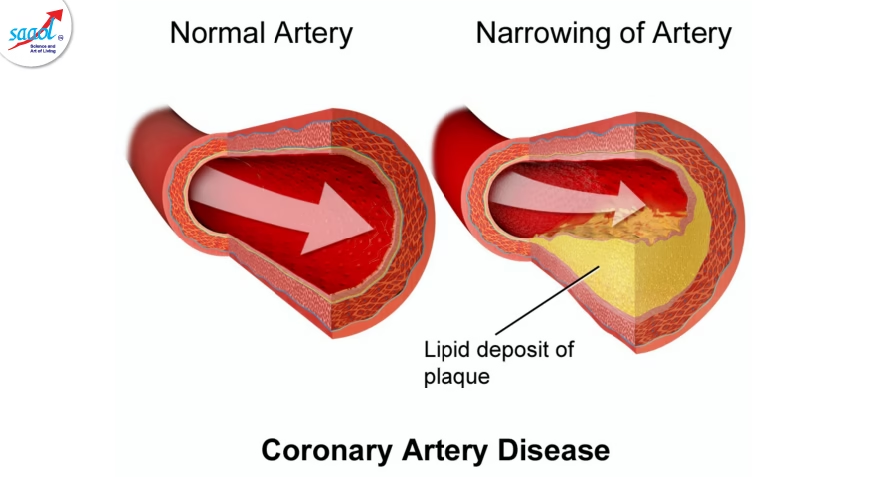
A heart attack is a serious health condition that happens when blood flow to the heart is blocked, usually by a buildup of fat or a clot (called plaque). When this happens, the heart doesn’t get enough oxygen, and the muscle can start getting damaged.
This is a time-sensitive condition, and the faster treatment is given, the better the chances of survival and recovery.
What Happens During a Heart Attack?
During a myocardial infarction, a lot is going on inside and outside the body that most people don’t realize. Let’s talk about them.
1. The Artery Gets Blocked
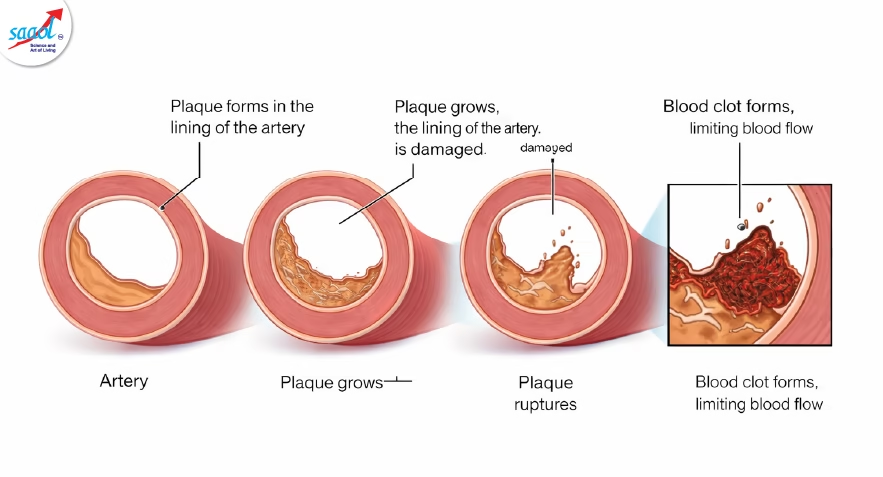
We all know that fatty deposits called plaque build up inside the arteries( known as atherosclerosis), and they are the cause of a heart blockage.
Over time, when the thin inner wall of the plaque ruptures, it triggers the formation of a blood clot that can suddenly block the blood flow completely to the heart.
This blockage causes oxygen deprivation to the heart muscle, leading to damage or a heart attack.
2. Common Symptoms You Experience
During a heart attack, your body sends warning signals like-
- A pressure on your chest: Sharp chest pain that does not go away and sometimes spreads towards the neck, shoulders, and arms.
- Shortness of breath: You feel out of breath even while sitting or resting.
- Cold sweat and nausea: You sweat even if you feel cold, also unusual sickness
3. Effects on Other Organs
A heart attack doesn’t only affect your heart; it can also disturb how other organs in your body function.
- Reduced blood flow to the brain results in less oxygen, causing dizziness or fainting.
- Blood may back up in the lungs, making it difficult to breathe.
- Kidneys can’t clean the blood properly.
- Fluid buildup and congestion in the liver.
Survival Rate of Heart Attack by Age: The 2026 Statistics
Studies show that the survival rate of heart attacks by age in India decreases as people grow older. Let’s deep dive into it.
Heart Attack Survival Rate in People Under 40
Surprisingly, today, heart attacks in people under 40 are no longer rare.
Recent reports from the American College of Cardiology (2026), the proportion of heart attacks in adults under 40 has been increasing by about 2% each year over the past decade, showing that heart disease is no longer limited to older adults.
Obesity, smoking, chronic stress, undiagnosed hypertension, and poor diet are usually the reasons and are increasingly common in younger generations.
However, the good news is that the survival rate of heart attacks in people under 40 is generally high, as studies show in-hospital mortality in younger patients is typically around 3–6%, indicating better short-term outcomes compared to older adults.
It is because the young have a stronger heart function and a better ability to recover.
Survival Rate in Your 40s and 50s
Here is something you need to hear. Studies say 50% of heart attacks in Indian men occur before age 50, and 25% occur before age 40.
In your 40s and 50s, heart attack risk begins to rise as cholesterol buildup, high blood pressure, and metabolic changes become more common.
The risk is still on the higher side for this age group. According to the National Library of Medicine, about 1 in 5 individuals are still suffering from recurrent heart attacks within five years.
The good news is that in-hospital mortality is relatively low, usually around 3% to 10%, especially when treatment is given quickly.
Heart Attack Risks and Survival at 60 and Beyond
The heart might have a weaker function after 60. Also, the comorbid conditions like hypertension, diabetes, and arterial blockage start to arise. So the survival rate of heart attack decreases. Studies report that five-year survival after a heart attack ranges from about 48% to 62% in older adults, depending on overall health.
Heart Attack Survival Rate by Age (2026 Overview)
| Age Group | Estimated Survival Rate |
|---|---|
| 20–39 | ~95% (Short-term survival) |
| 40–59 | ~90% (Short-term survival) |
| 60+ | 48–62% (5-year survival) |
These estimates vary based on timely treatment, overall health, and access to medical care.
Other Key Factors That Affect Heart Attack Survival Rate
Time to Treatment: Treatment within the first 1–2 hours can reduce serious damage.
Type & Severity: A severe heart attack or a major blockage is more dangerous than a mild one.
Existing Health Conditions: Diabetes, high blood pressure, high cholesterol, and kidney issues can make recovery harder and increase risks.
Lifestyle Habits: Smoking, poor diet, and lack of exercise lower survival chances.
Heart History: If you’ve had a previous heart attack or heart disease, the risk of another attack is higher.
Access to Care: Quick hospital access, CPR, and proper treatment can significantly improve survival.
Gender Differences: Women may have different or less obvious symptoms, which can delay treatment and affect outcomes.
How to Survive a Heart Attack?
Here are the life-saving steps to take during a heart attack-
- Understand the symptoms early
- Call emergency services immediately
- Meanwhile, just sit or lie down without doing any activity
- Stay calm and breathe slowly
- Chew aspirin if advised by a professional
- Seek hospital treatment as soon as possible
How Many Heart Attacks Can a Person Survive?
It’s not actually possible to give an exact number because it varies from person to person. Even though no two people of the same age have the same physical condition. However, each heart attack increases the risk of heart damage.
But you’ll get a sigh of relief knowing that many survive a first heart attack. Even though it largely depends on quick medical care, how much heart damage has happened, and how healthy your lifestyle is.
Can You Live Longer After a Heart Attack? The Truth About Recovery
The one-word answer is Yes.
Living longer after a heart attack mostly comes down to the choices you make every day.
Quitting smoking, eating a heart-healthy diet, and staying physically active can make a big difference in how well your heart recovers.
It’s also important to keep conditions like blood pressure, cholesterol, and diabetes under control with regular checkups.
Managing stress and maintaining a healthy weight further reduces strain on your heart and help prevent future complications
At SAAOL Heartcare Delhi, recovery focuses on both reducing symptoms and addressing the root causes without a single incision. While EECP improves circulation and relieves chest pain, lifestyle therapy, diet, yoga, and stress management work together to control cholesterol, blood pressure, and long-term heart risk.
Take the first step toward a healthier heart. Our experts are here to help. Book your consultation today.
Book Appointment Call NowEECP: The Non-Invasive Future of Recovery
Enhanced External Counterpulsation (EECP) is a non-surgical therapy that improves blood flow to the heart and helps the body develop natural pathways around blocked arteries, like a natural bypass.
EECP can support better heart function, reduce symptoms, improve exercise tolerance, and enhance overall quality of life after a heart attack when combined with proper medical care and lifestyle changes.
And, most importantly, this treatment benefits all ages.
But it is vital to take action to avoid any further complications.
How is EECP suitable for the elderly?
- Older people have a weak heart that sometimes does not support surgery.
- Most of the time, they have underlying health conditions.
- They may have undergone surgery before and may fear going through another one.
The Final Insights
Many people ask, “Heart attacks occur at what age?” In reality, they can happen at any age. The good news is that most people survive with quick action and proper care.
Heart health isn’t something that can even wait for a ‘better time.’ Every minute counts. Don’t leave your health to chance. Take control of your Survival Rate of Heart Attacks by Age by getting an expert assessment now.
Contact SAAOL Heartcare Delhi today and book your life-saving consultation before your next symptom appears.
Book Appointment Call NowFAQs
Q1. How long can a person live after a heart attack?
Many people live 10–20 years or more after a heart attack. But lifespan after a heart attack solely depends on factors such as age, severity of the heart attack, overall heart health, existing medical conditions, and how well a person follows the medication, diet, and exercise advised.
Q2. What is the difference between a stroke and a heart attack?
A stroke is a condition in which blood flow to the brain is blocked or a blood vessel ruptures, causing symptoms such as sudden weakness, speech difficulty, or facial drooping. A heart attack occurs when blood flow to the heart is blocked, damaging the heart muscle and causing symptoms like chest pain, shortness of breath, fatigue, and discomfort.
Q3. Does gender affect the survival rate of a heart attack?
Yes, women have a higher mortality rate than men, which is reported by several studies. Women having less typical symptoms, biological differences, smaller blood vessels, and older age at the time of heart attack can contribute to lower survival rates compared with men.
Q4. Is the first heart attack usually fatal?
No. Most people survive their first heart attack, especially with fast medical attention. However, it is a serious warning sign. Early attention reduces the risk of permanent heart damage.
Q5. How to prevent another heart attack?
To prevent another heart attack, follow your doctor’s advice carefully and take medicines regularly. Go for timely check-ups, eat a healthy diet, exercise moderately, avoid smoking and excessive alcohol use, manage stress, and control blood pressure, cholesterol, and diabetes.