

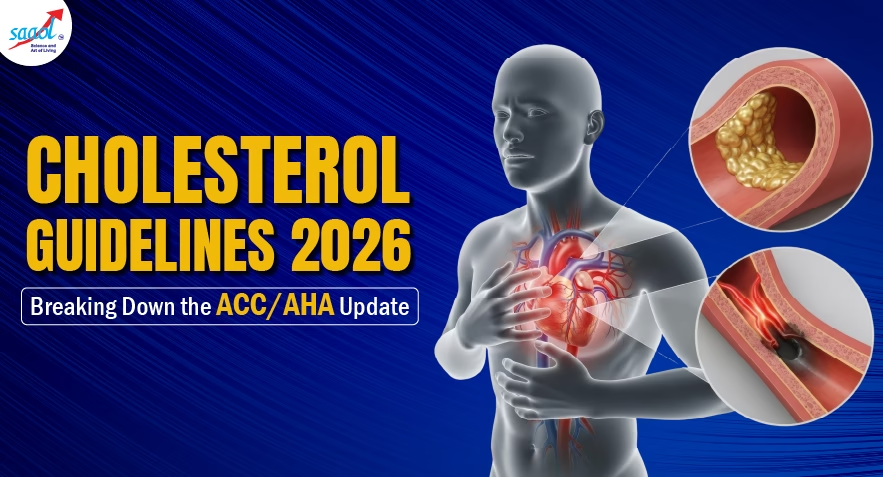
The American Heart Association and American College of Cardiology, along with 9 other leading medical associations, have released a new guideline on the management of Dyslipidemia recently. After 2018, this is a major update on cholesterol and triglycerides.
The new guidelines primarily focus on detecting cholesterol issues early, lowering LDL more aggressively, and managing heart risk over a lifetime rather than just in the present.
They also emphasize personalized treatment using better tools, tests, lifestyle plus medication together as heart problems aren’t just for older people anymore. More young people are at risk, partly because of today’s lifestyle, such as less movement and unhealthy eating.
It is shocking to know that in the U.S, one in 4 adults has high LDL levels. Study also reveals that in India, about 272 out of every 100,000 people die from heart disease, and many develop it nearly 10 years earlier than the global average, largely due to cholesterol problems.
Given this growing burden, the need for updated guidelines has become more important than ever.
In this blog, we’ll explain the new cholesterol guidelines by ACC/AHA, what’s changed and what it simply means for you.
Understanding Dyslipidemia
Dyslipidemia means having too much “bad cholesterol” (LDL) or not enough “good cholesterol” (HDL) in your blood.
Why does it matter? Because if the bad cholesterol(LDL) is high, it can slowly stick to your blood vessels (called plaque), making it hard for blood to flow. Over time, this can lead to serious problems like a heart attack.
That’s why managing it early, with healthy habits and treatment if needed, helps keep your heart strong and your body working smoothly.
What’s New in the Latest ACC/AHA Cholesterol Guidelines
This update is based on a careful review of the latest research from trusted medical sources and focuses between October and late December 2024 on how to check, treat, and manage different types of cholesterol problems in the best possible way.
Why Are the 2026 Guidelines Recommending Earlier Treatment?
Previously, we used to wait until cholesterol levels became a problem. Now, the focus is on starting early with healthy habits and treatment if needed, so problems can be prevented before they even begin. This also means screening is being recommended earlier, especially because heart risks are now seen more in younger people.
The guideline also says cholesterol problems can start even in childhood. So, it recommends checking cholesterol in all children aged 9–11 years to identify risks early and guide proper care.
What Are the New LDL Cholesterol Target Levels in 2026 ?
Before, having safe cholesterol levels was considered enough. Now, the goal is to keep LDL (bad cholesterol) even lower.
Dr. Pamela Morris, MD, FACC, FAHA, vice-chair of the guideline writing committee and the Paul V. Palmer chair of cardiovascular disease prevention and director of the Seinsheimer Cardiovascular Health Program at The Medical University of South Carolina, says that the lower your LDL (bad cholesterol), the better, especially if you’re at higher risk.
Experts also highlighted that lowering it even more than before can further greatly reduce the chances of plaque building up in the arteries and blockages.
Focusing on Lifetime Risk, adding medications
Earlier, doctors mainly looked at your current cholesterol numbers. Now, they focus on your lifetime risk, understanding that small issues over many years can turn into serious problems later.
Dr. Roger Blumenthal, MD, FACC, FAHA, chair of the guideline writing committee, director of the Johns Hopkins Ciccarone Center for the Prevention of Heart Disease, and the Kenneth J. Pollin Professor of Cardiology at Johns Hopkins Hospital in Baltimore, says that approximately 80% of heart disease can be prevented if you improve your lifestyle, such as by eating healthy and exercising.
But if healthy habits and first-line treatments aren’t enough to lower cholesterol, doctors now suggest starting medicines earlier than they used to in the past. Because keeping your bad cholesterol low for a longer time, just like keeping your blood pressure low, helps protect you much better from heart attacks and strokes in the future.
Doctors may add other medicines like ezetimibe, bempedoic acid, or injectable options like inclisiran or PCSK9 inhibitors. But your doctor will decide the right time and need for these medicines based on your overall health condition.
The guideline gives special advice for certain high-risk people:
- Start cholesterol-lowering treatment earlier in people with conditions like kidney disease, HIV, or diabetes
- Continue treatment even during cancer care (unless not safe)
- Avoid most cholesterol medicines during pregnancy and breastfeeding
Worried about your heart risk? Get expert guidance at SAAOL Heartcare Delhi today!
Book Appointment Call NowUsing New Tools to Detect Risk Early
The new guideline uses a better tool called PREVENT to check your future risk of heart attack or stroke. Earlier tools often guessed heart risk too high. Now, the new tool gives a more accurate risk level.
What Is the PREVENT Calculator and How Is It Different?
PREVENT is a tool that checks your risk of having a heart attack or stroke in the future.
The PREVENT-ASCVD (atherosclerotic cardiovascular disease) equations generally provide 10-year risk estimates that are 40% to 50% lower than PCE (pooled cohort equations) estimates because the PCE calculator often overestimates risk in adults.
PREVENT is used for adults aged 30–79 years who do not already have heart disease to estimate their 10- and 30-year risk, and puts you into categories like:
- Less than 3% (Low risk): Very small chance
- 3% to <5% (Borderline): Slight risk
- 5% to <10% (Intermediate): Moderate risk
- 10% or more (High risk): High chance, needs attention
This new tool, which combines cardiovascular, kidney, and metabolic health factors, uses simple health details such as your cholesterol, blood pressure, age, and habits to assess your heart risk better, then further adjusts the assessment to determine whether you need treatment.
New Tests Included
Earlier, basic cholesterol tests were the main way to check risk. The new guideline suggests using additional tests to better assess heart risk and determine whether further cholesterol management is required. They include-
- A heart scan (CAC test) checks if fat or calcium is already building up in your heart arteries.
- An Lp(a) test looks for a genetic type of cholesterol risk that doesn’t change much with lifestyle.
- An ApoB test helps find hidden risks, especially in people with diabetes or high triglycerides.
LDL Cholesterol Targets: 2018 vs 2026 Guidelines
| Risk Level | 2018 AHA/ACC Guideline | 2026 AHA/ACC Guideline |
|---|---|---|
| Moderate (Borderline/Intermediate) | ~<100 mg/dL (30–49% reduction focus) | < 100 mg/dL |
| High Risk | ~<70 mg/dL (≥50% reduction with statins) | < 70 mg/dL |
| Very High Risk (Existing Heart Disease) | <70 mg/dL (threshold to add more therapy) | < 55 mg/dL |
Can You Have High Cholesterol Even With a Healthy Diet?
Earlier, cholesterol was mostly linked to lifestyle. Now, the guidelines also highlight that genetics and family history can play a big role.
So this is considered while deciding treatment, along with conditions like diabetes or obesity, certain backgrounds, and health issues such as early menopause or pregnancy-related problems. This means that even if you live a healthy lifestyle, your family history can still affect your risk.
They may also check special blood markers to get a clearer picture of your heart risk and decide the right treatment.
More Personalized Care (Not the Same for Everyone)
In the past, many people received similar advice. Now, treatment is more personalized, based on your age, lifestyle, risk factors, and test results, so care fits your specific needs. Doctors may also use risk calculators to understand your future heart risk better and guide treatment decisions. With new tools and tests, doctors can personalize treatment for each person.
The complete American Heart Association (AHA) guidelines look like a “rulebook” to help protect your heart sooner and more effectively.
What Do the 2026 Cholesterol Guidelines Mean for Indians Specifically?
Indians are more likely to develop heart disease earlier, about 10 years before the global average, with cholesterol being a major reason. By the time many people reach their 30s or 40s and begin to notice symptoms, damage may already be underway.
This is why early diagnosis and treatment are important, and exactly what these new guidelines aim to address.
South Asians often have higher insulin resistance, more belly fat even at normal weight, and a tendency for higher triglycerides and lower HDL. That’s why the 2026 guidelines focus on lifetime risk, helping catch problems early that a single cholesterol test might miss, even in someone who looks healthy
SAAOL’s Non-Invasive Approach: Aligned With the 2026 Philosophy
What’s particularly encouraging about the 2026 update is how closely it aligns with SAAOL Heartcare’s founding philosophy.
Dr. Roger Blumenthal, chair of the guideline-writing committee, emphasised that approximately 80% of heart disease is preventable through lifestyle changes.
SAAOL has championed this exact principle for decades. Prioritising diet, stress management, and non-invasive therapies before medication or surgical intervention wherever safely possible.
The Final Insights
For a long time, doctors relied on 2018 guidelines, even as new research kept coming in, so this 2026 update was much needed. It clearly shifts the focus to early action, lower LDL, and lifelong heart care.
The message is simple: don’t wait for symptoms. Start early and stay aware.
If you are Indian, above 30, and have never had a full lipid profile, including Lp(a), Apo A1, and ApoB tested.
Your heart risk may be higher than you think, and the earlier you know, the better you can act.
FAQs
Q1. What are the new LDL cholesterol target levels as per the 2026 ACC/AHA guidelines?
The new targets are: below 100 mg/dL for moderate risk, below 70 mg/dL for high risk, and below 55 mg/dL for very high-risk individuals, such as those who already have heart disease.
Q2. At what age should I get my first cholesterol test done?
The 2026 guidelines recommend cholesterol screening for all children between the ages 9–11. Adults should get tested regularly, especially after 30, or earlier if there’s a family history of heart disease.
Q3. Is high cholesterol genetic? Can it affect me even if I eat healthy?
Yes. A condition called Familial Hypercholesterolemia (FH) causes high LDL due to genes, not lifestyle. Even with a healthy diet and regular exercise, your family history can significantly raise your cholesterol and heart disease risk.
Q4. What is Lp(a) and why is it now being tested for heart risk?
Lipoprotein(a), or Lp(a), is a genetic type of cholesterol that doesn’t respond to lifestyle changes. High Lp(a) increases heart risk significantly and can go undetected on a standard cholesterol test, so the new guideline recommends testing it at least once.
Q5. What are ApoA1 and ApoB, and why are they important in cholesterol testing?
ApoA1 and ApoB are proteins linked to cholesterol particles. ApoA1 is related to “good cholesterol” (HDL), while ApoB is linked to “bad cholesterol”(LDL) and shows how many harmful particles are in your blood. The new cholesterol guidelines highlight ApoB as a more accurate marker of heart risk than LDL alone.
Q6. How is ApoB more accurate than LDL?
ApoB is more accurate because it shows the number of harmful cholesterol particles, while LDL only shows the amount of cholesterol. Even if LDL is normal, you could still have a high number of harmful particles and that increases your heart risk.
Q7. Is it safe to take cholesterol-lowering medicines during pregnancy?
No. The 2026 ACC/AHA guidelines advise avoiding most cholesterol-lowering medications during pregnancy and breastfeeding. Women who are planning to conceive should discuss a safe management plan with their doctor well in advance.