
Jitender Singh smiles with pride when he says he can now do 25 push-ups a day and 100 jumps without stopping. His eyes light up when he talks about it. And there’s a reason for that happiness.
In 2022, he suffered a heart attack. Doctors found a 100% blockage and immediately suggested angioplasty. Like many patients, he was frightened, not just of the condition, but of the surgery, hospital stay, and what life would look like afterwards.
Today, his blockage has reduced to 69% and he is living a normal, active life. What changed? Instead of undergoing an invasive procedure, he chose SAAOL’s Natural Bypass therapy, also known as EECP, along with structured lifestyle management and detox therapy.
In this blog, we’ll explore how Natural Bypass (EECP) alleviates heart blockage and how combining it with the right diet and lifestyle changes can support long-term heart health.
If you or your loved one is looking for a safer, non-surgical option, this might open a new perspective on heart care.
Understanding Heart Blockage
A heart blockage is a condition where the blood vessels that supply blood to the heart become narrowed or blocked.
Heart blockage is slow and silent. Most cases do not show any warning signs unless the blockage reaches 70-80%. An undiagnosed heart blockage can be concerning causing serious consequences like a heart attack.
In general, doctors usually suggest two common treatment options for heart blockage, depending on how severe the blockage is:
- Stent/ Angioplasty
- Bypass surgery
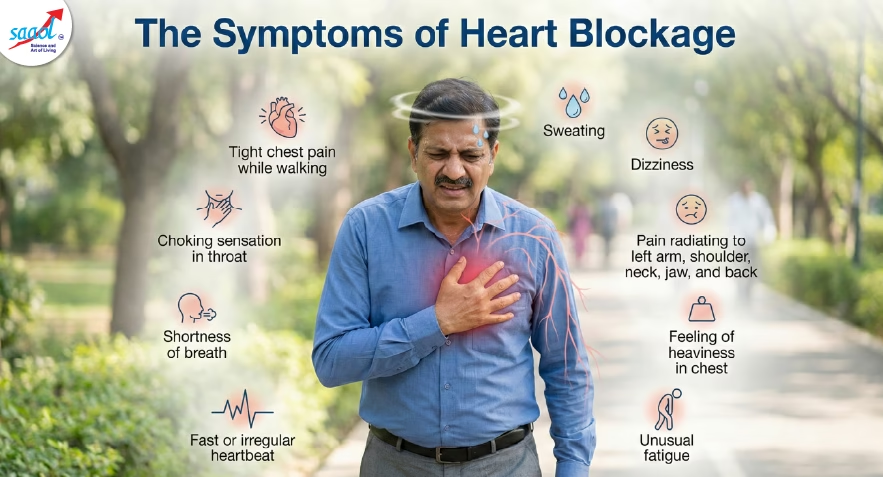
The Symptoms of Heart Blockage
Why Heart Blockage Happens?
This happens because fatty and oily substances like cholesterol and triglycerides slowly build up on the inner walls of these blood vessels. As the build-up increases, less blood flows through them. When the heart does not get enough blood and oxygen, it can cause chest pain or even a heart attack.
Other things like high blood pressure, smoking, obesity, stress, lack of exercise, unhealthy food, family history, and too much alcohol can make the problem worse. Keeping these under control can greatly lower your risk of heart blockage.
Dr Bimal Chhajer, the founder of Saaol, says 70-80% of people have heart blockage due to family history, even with no bad diet or lifestyle as such.
What is Natural Bypass Therapy (EECP Therapy)
Natural Bypass Therapy, also known as EECP, is a simple, safe, and non-invasive treatment that helps your body build its own natural detours around blocked arteries. No surgery, no stents, no risk!
It’s called “Natural Bypass” because your body does the bypassing itself, naturally! When arteries get blocked, EECP encourages tiny dormant blood vessels inside your body to wake up, open up, and start carrying blood around the blockage, just like a diversion that bypasses a traffic jam.
No surgeon does this, no stent creates this. Your own body builds these new pathways all by itself. That’s what makes it truly “natural!”
How Does Natural Bypass Therapy (EECP) Work to Ease Heart Blockage?
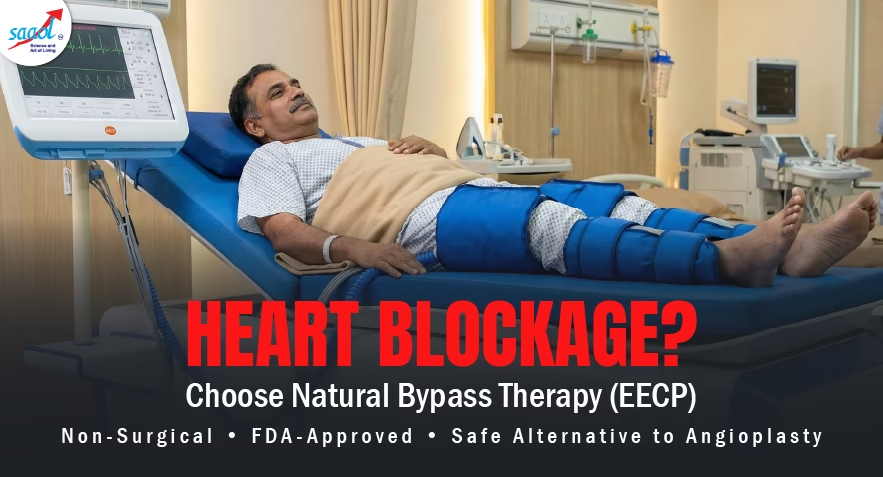
During EECP, the patient lies comfortably on a bed. Special cuffs (like jackets) are wrapped around the legs and the buttocks. The machine is connected to an ECG and a computer. The computer guides the cuffs on exactly when to inflate and deflate.
A compressor maintains air pressure, and this air inflates and deflates the cuffs in a controlled manner. When the heart relaxes (diastole), that is the time when pressure is applied to the legs. This pushes blood back to the heart at the right moment.
In this way, blood is pushed toward the heart, creating pressure that helps improve circulation in the heart’s blood vessels.
This repeated increase in blood flow improves oxygen supply to the heart muscles and encourages the opening of natural bypass vessels (collaterals). Over time, circulation improves around the blocked arteries, alleviating heart blockage, reducing chest pain (angina), improving stamina, and supporting better heart function, all without surgery or anaesthesia.
Who Can Benefit From Natural Bypass Therapy?
EECP or natural bypass therapy can be beneficial for:
- Patients with heart failure.
- Patients with low pumping capacity of the heart (low ejection fraction).
- Patients with chronic stable angina that is not controlled by medications.
- Those who have a fear of surgery.
- Patients with existing health conditions.
- Elderly patients who are not fit for surgery.
- Patients with low ejection fractions
- Patients with failed cardiac procedures or re-blockages
EECP Therapy vs Angioplasty vs Bypass Surgery: A Clear Comparison
EECP (Natural Bypass), Angioplasty (Stent), and Bypass Surgery are all used to manage heart blockage. Here’s a simple comparison to help you clearly understand the difference between them.
| Factor | Bypass Surgery | Angioplasty (Stent) | SAAOL Model (EECP + Lifestyle) |
| Invasiveness | Major chest-opening surgery | Minimally invasive (catheter through artery) | Non-invasive, external therapy |
| Hospital Stay | 7–10 days | 1–3 days | Outpatient, walk in–walk out |
| Recovery Time | 3–6 months | 1–2 weeks | No downtime; routine activities continue |
| Anaesthesia | General anaesthesia required | Local anaesthesia | Not required |
| Risk of Complications | Infection, stroke, bleeding, repeat blockage | Re-blockage (restenosis), clot risk | Minimal (FDA-approved therapy) |
| Cost | ₹3–6 lakhs | ₹1.5–3 lakhs (depending on stent type) | 40–60% more affordable than surgery |
| Addresses Root Cause? | No, reroutes blood flow | No, opens blocked segment | Yes, supports risk factor correction through lifestyle program |
| Best Suited For | Severe multiple blockages | Single or limited blockages | Stable patients seeking a non-surgical option |
Is EECP safe?
Safety is not only about avoiding danger during a procedure. It also includes the risks of anaesthesia and surgery, the need for hospitalization, possible post-surgery complications, side effects, recovery time (downtime), efficacy of the procedure and even the financial burden of treatment. In other words, true safety covers physical, emotional, and financial well-being.
When all these factors are considered, EECP is regarded as a safe heart treatment. It is non-surgical, does not require anaesthesia or a hospital stay, and is s
Authenticity of EECP Treatment
Is EECP FDA-approved?
Your answer is yes. EECP was approved by the US FDA in 1994 after a multicentric randomized controlled trial published in The Lancet, which is considered one of the most stringent forms of medical approval.
There are more than 200 research studies available on this procedure. In 1999, the American medical insurance company Medicare began covering the treatment.
In 2002, the American College of Cardiology and the American Heart Association recognized the procedure.
In 2006, the European Society of Cardiology also approved EECP. The Chinese Medical Association has likewise approved it.
Today, EECP is considered a highly authentic and well-recognised treatment worldwide. Government sectors have also started providing Mediclaim coverage for this therapy, further supporting its safety and acceptance.
Benefits of EECP Treatment at SAAOL Delhi Heart Centre
At SAAOL Heart Centre Delhi, the approach is not just one treatment; it is a complete, composite heart care program. It combines:
- Natural Bypass (EECP) to improve blood circulation naturally
- Personalized diet plans to control cholesterol, sugar, and weight
- Lifestyle modification guidance to reduce stress and strengthen heart health
- Medicinal support (if required) for proper medical management
- Detox therapy to support internal cleansing and better circulation
- Monitoring the SAAOL Safety Circle to understand the improvements of the patients.
With 30+ years of expertise, a network of multiple centres across Delhi NCR and India, and a successful history of treating 6+ lakh patients, SAAOL has built strong trust in non-surgical heart care.
SAAOL Delhi not only focuses on reducing blockage but also prevents the root causes for each patient with personalized guidance, building a long-term, sustainable heart health, safely throughout the journey.
Heart Blockage Reduction By Natural Bypass: Success Stories
In this heartfelt testimonial, Mr. C. L. Bhaya shares his journey from being advised to undergo surgery to feeling active, healthy, and out of risk again. Since he was not ready for surgery, he spent many sleepless nights worrying about his condition. After coming to SAAOL Heart Centre, he followed a complete treatment plan that included EECP therapy along with lifestyle changes. With the right diet, stress management, and regular exercise, he experienced a significant improvement in his heart health, regained his energy, and is now living with greater confidence.*
Watch the inspiring story of Vasant Kumar Agarwal, who was diagnosed with three heart blockages. After undergoing SAAOL’s non-invasive heart treatment, combined with lifestyle management and a zero-oil diet, his blockages have reduced by nearly half. Today, he feels healthier, more confident, and hopeful about his heart health journey.
*Results may vary
The Bottom Line
For many people, the thought of traditional bypass surgery brings fear and it’s completely natural to feel so. But it’s also important to know that surgery is not the only path available. EECP can alleviate heart blockage.
If you or your loved one is dealing with heart blockage, don’t wait in confusion or fear. Schedule a consultation at SAAOL Heartcare Delhi today to speak with an expert, understand your options, and take the first confident step toward a healthier, stronger heart. Hope begins with one informed decision.
FAQs
Q1. Are There Any Side Effects of EECP?
EECP therapy is generally very well tolerated without any major problems. In some cases, mild leg discomfort, muscle soreness, or slight skin irritation may occur at the site of the cuffs. These effects are temporary and usually settle on their own after the session.
Q2. Should I stop my regular medicines before the session?
No. Continue your prescribed medicines unless your doctor advises otherwise. Medicine optimization is done under medical supervision.
Q3. How many EECP sessions are needed?
Approximately 35-40 sessions are needed for EECP treatment. The duration for a session is 1 hour and is usually conducted once daily, five to six days a week. But the numbers vary.
Q4. Who should not go for EECP therapy?
It is generally not recommended for patients with:
- Recent or ongoing heart attack
- Unstable angina
- Leg blood clots (DVT)
- Uncontrolled high blood pressure
- Serious irregular heartbeat (arrhythmias)
- Active bleeding disorders
- Unstable severe heart failure