

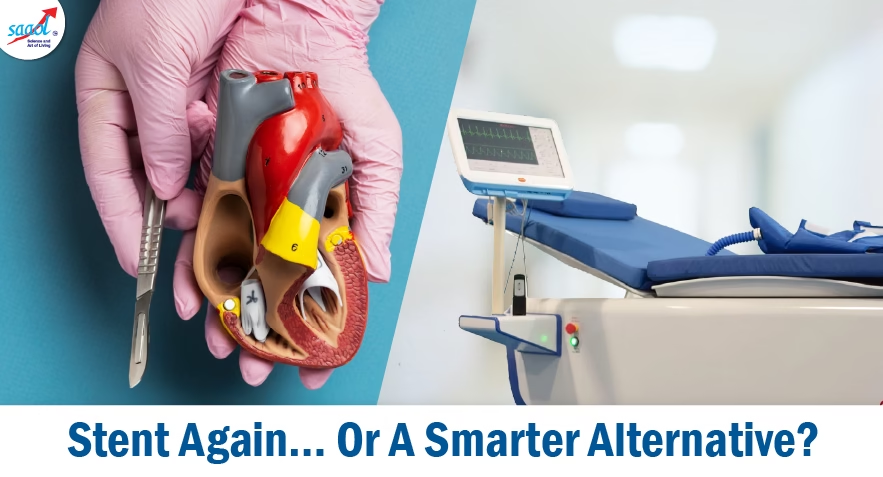
In 2021, the heart attack survivor Devender Kaushik thought he’d fixed his heart with two stents,
But three years later, the blockages came back. 50% in his main artery. Even the stent itself was clogged.
His doctors had one word: Again.
Another procedure. More risk. The same cycle.
That’s when Devender said NO.
Instead of going under the knife, he walked into SAAOL Heartcare Delhi and discovered something most heart patients never hear about EECP therapy.
The result? A significant improvement in his heart’s pumping capacity, without the need for surgery.
Is EECP better than angioplasty? Let’s break down the science.
Understanding the Traditional Approach: Angioplasty
Angioplasty is a procedure where doctors widen a blocked artery using a catheter and a balloon. A metal-wired mesh called a stent is usually placed to keep the artery open.
Angioplasty is recommended if-
- If a patient has more than 70% blockage.
- A patient with positive TMT
- Persistent angina symptoms
- During a heart attack
The Non-Invasive Alternative: EECP
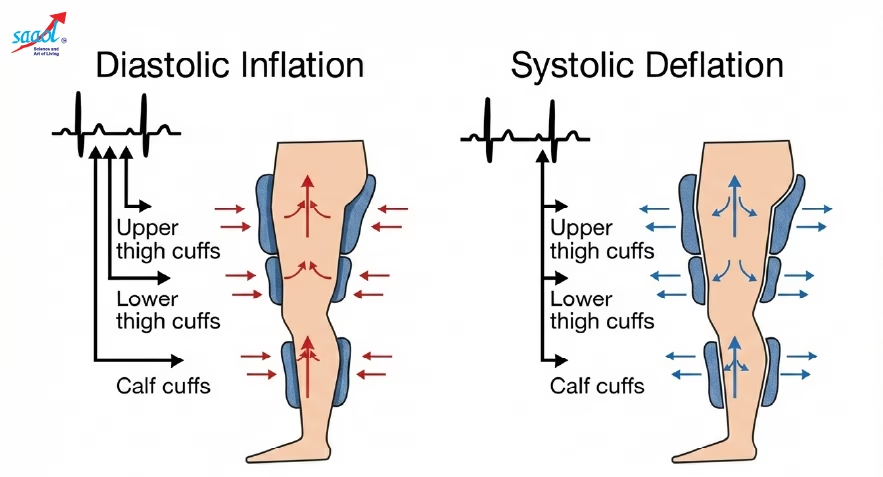
EECP (Enhanced External Counterpulsation) is a non-surgical, “walk-in & walk-out” treatment. While the patient lies on a bed, six special cuffs gently squeeze the legs in rhythm with the heartbeat.
This process is known as Natural Bypass, as it forces blood into tiny, dormant vessels, opening new pathways for blood to reach the heart.
This novel therapy is backed by science and has also been proven effective in helping reverse heart disease when combined with lifestyle modification.
How EECP Works Without a Hospital Stay
During the therapy, the patient lies on a bed, and six special cuffs gently squeeze the legs in rhythm with the heartbeat to push more blood back toward the heart.
Over time, this helps improve circulation, increase oxygen supply, and encourage the development of natural alternate blood pathways, often called a “natural bypass.”
An EECP session lasts for one hour, and a complete EECP treatment may require around 40 sessions, depending on the patient’s current health condition.
EECP is painless, and the patient can go home after each session and continue living a normal life.
Most of the time, EECP is combined with Diet and Lifestyle management, which includes homemade food without oil, yoga, exercises and stress management that help reduce the blockage and prevent further increase.
EECP Vs Angioplasty: A Side-by-Side Comparison
| Parameter | Angioplasty (Stent) | EECP (Enhanced External Counterpulsation) |
|---|---|---|
| Type of Procedure | Minimally invasive (catheter inserted into artery) | Non-invasive, external therapy |
| Hospital Stay | Usually 1–3 days | OPD-based (no admission required) |
| Recovery Time | 1–2 weeks for routine recovery | No downtime; normal routine continues |
| Procedure Length | 30–90 minutes (single procedure) | 1 hour per session (35–40 sessions typically) |
| Anesthesia | Local anesthesia required | Not required |
| Risks & Complications | Bleeding, clot formation, restenosis (re-narrowing), infection (rare) | Minimal; occasional leg discomfort goes away after the session |
| Side Effects | Possible bruising, artery damage, reaction to dye | Temporary leg soreness by compressed cuffs settles down in no time |
| Cost (India, approx.) | ₹1.5–3 lakhs (depending on stent type and hospital) | Generally lower than angioplasty (varies by centre) |
| Eligibility | Recommended for significant blockage, heart attack, or severe symptoms | Suitable for stable patients with chronic angina or reduced blood flow |
| Mechanism | Physically widens the blocked artery with a balloon and stent | Improves blood flow by enhancing natural collateral circulation |
| Natural vs Mechanical | Mechanical widening with implant | Encourages natural blood vessel development |
| Long-Term Focus | Fixes the blocked segment | Improves overall circulation and functional capacity |
| Repeat Procedure Risk | Possible re-blockage (restenosis) over time | May require booster sessions in some cases |
Angioplasty: What It Can’t Fix (And What You Should Know)
- The stent is a foreign object, so the artery can sometimes narrow again (reblockage).
- Angioplasty removes blockage but doesn’t cure heart disease (CAD).
- Unhealthy lifestyle habits after angioplasty can cause new plaque to build up.
- Blood clots or incorrect stent placement can lead to complications.
- Blood-thinning medicines may cause bruising, bleeding, or stomach issues.
A study published in the National Library of Medicine says that even with second-generation drug-eluting stents, the reblockage rate is 5-10%. Whereas, patients who follow exercise and diet plans as part of cardiac rehabilitation, and take their prescribed medications regularly, can reduce the risk of complications.
Why Many Patients Choose EECP Over Angioplasty
Non-invasive – No surgery, no cuts, no stent inside the body.
Works naturally – Helps improve blood flow from outside the body.
No internal complications – No risk of stent clotting or improper placement.
No hospital stay required – Usually done as an outpatient procedure.
Faster recovery – Patients can continue their daily routine during treatment.
Least future complications – No internal cuts or implants inside the body.
Better heart function –Improves existing heart health with lasting benefits
Safe for high-risk patients – Suitable for patients who may not be fit for surgery.
Success Rate of EECP Treatment
Success with EECP usually means:
Lower angina symptoms
More stamina for exercise
Better quality of life
Less chance of major cardiac events in the future
More than 200 clinical studies have demonstrated the safety and effectiveness of outpatient EECP therapy.
- Symptom Relief: The JACC reports 70–80% clinical improvement rates in angina patients.
- Long-Term Survival: The National Library of Medicine notes that 83% of high-risk patients remained stable two years after treatment.
- Better Stamina: The PEECH trial showed a 35% increase in exercise tolerance
How does SAAOL Delhi contribute?
At SAAOL Heartcare Delhi, we often meet patients who still struggle with chest pain, breathlessness, or fatigue even after stents or bypass surgery.
That’s where our non-surgical approach helps. Through EECP therapy, along with proper diet guidance, lifestyle correction, and required medications, we focus on improving blood flow naturally and managing heart disease at its root.
Also read: How SAAOL helps after Angioplasty.
Several patients who were advised stent procedures chose a non-surgical approach at SAAOL Delhi and reported meaningful improvements in their heart health.
Virender Singh (56): When Mr. Virender Singh was diagnosed with 80% heart blockage at 56, he feared stents were his only option. Instead, he chose non-invasive treatment at SAAOL Heartcare Delhi. After EECP therapy, along with lifestyle modification and detox, his blockage reduced to 10%. Today, he walks daily, practices yoga, and feels stronger, healthier, and more confident.
Aas Mohammed: Aas Mohemmad from Chhatarpur was advised stents after doctors found 90% and 70% heart blockages. At SAAOL Heartcare, he tried non-invasive treatments, a zero-oil lifestyle, and physical activity instead. According to his current report, his blockages dropped to 60% and 40%, and heart pumping improved from 35% to 54%. Now he feels stronger, healthier, and confident again.
Jitender Singh: In 2022, Jitender Singh suffered a heart attack with severe blockages (100%, 97%, 95%) and was advised to undergo stenting. Seeking a non-invasive option, he chose SAAOL Delhi Heart Care. After EECP therapy, detox, and lifestyle changes, one year later, his angiography report says 69%, 71% and 65%, blockage, respectively. Today, he exercises daily, does push-ups and jumping jacks, and feels fitter, stronger, and healthier than ever.
Every heart journey is different but with the right guidance and lifestyle changes, improvement is possible.
End Note:
Stents fix a single segment, but EECP focuses on the entire heart’s vascular network. If you’re confused about which treatment is right for you, let’s talk. At SAAOL Heartcare Delhi, our specialists will help you choose the safest path toward better heart health.
Book your consultation today and take the first step toward a surgery-free life.
Book Appointment Call NowFAQs
Q1. Does insurance cover EECP?
In India, many insurance plans cover EECP, especially for patients with chronic stable angina. However, coverage depends on the policy, and some standard plans may not include it. It’s always best to check with your insurer to be sure.
Q2. Can I do EECP if I already have a stent?
If you already have a stent, EECP can still be an option. It doesn’t disturb the stent because the treatment works from outside the body to improve blood flow. Many people consider EECP if they still have symptoms or want to strengthen their heart circulation after a stent.
It’s always best to get evaluated by a heart specialist to see if it’s right for you.
Q3. Is EECP painful?
No, EECP is not painful. You may feel firm pressure on your legs during the treatment, but it should not hurt. Most people find it comfortable and get used to the sensation after a few sessions. If you feel any discomfort, the pressure can be adjusted.
Q4. Can I undergo EECP if my arteries are reblocked after angioplasty?
Yes, in many cases you can undergo EECP even if arteries narrow again after angioplasty, especially if symptoms like chest pain or fatigue continue. It helps improve overall blood flow, including smaller vessels. Since it’s non-invasive, it can be a good option, but a doctor’s evaluation is important first.
Q5. Does EECP remove plaque from the arteries?
No, EECP does not remove plaque or clear blockages like surgery or angioplasty. Instead, it helps the body create new small blood vessels that improve blood flow around the blocked areas. This natural process, often called a “natural bypass,” helps the heart receive more blood without surgery.